Report of Kuwaiti interest in Canadian oil sands companies highlights the treasure trove of oil riches in the North American country.
Canada has the world's third largest crude reserves after Venezuela and Saudi Arabia, and its energy sector has been an magnet for investors over the past few years.
It has certainly been a favourite of major oil companies who are worried about shrinking opportunities in the face of increased nationalisation of resources across the world.
The Canadian Association of Petroleum Producers (CAPP) expects oil sands production alone to rise from 1.6-million barrels per day to 5-million bpd by 2030. Including conventional oil production, total Canadian oil production is expected to rise to 6.24 million bpd by 2030 - making it the world's fourth largest producer after Saudi Arabia, Russia and the United States.
Foreign investors have taken note.
Royal Dutch Shell, Statoil, ExxonMobil, Total, Chevron has massive operations in the country and all are looking to ramp up production in the oil sands.
Canadian companies have also been open to foreign investment. Currently, the Canadian government is contemplating whether to give the go-ahead to a USD15-billion bid by Chinese oil giant CNOOC for Nexen, a Canadian oil sands developer that has been underperforming for years.
Meanwhile, a number of other Canadian oil and gas companies have tied up with Asian investors to invest in oil sands, apart from gas assets. In the western province of British Columbia, Shell is working with Chinese, Japanese and Korean energy companies to ship LNG from the western port to Asian markets, emerging as a strong rival to Qatar.
However, Gulf energy companies and sovereign wealth funds have kept a low profile in Canada, even though it is inextricably linked to the world's largest oil market - the United States.
In 2010, a unit of Abu Dhabi's Taqa bought the gas assets of Suncor, Canada's largest oil company, for USD274-million.
The company's Taqa North subsidiary is Calgary-based and has oil and gas operations in Alberta and British Columbia; Southwest Saskatchewan; Southeast Saskatchewan; and the Northwest Territories, according to Zawya.com data.
But after an initial burst of investment, Taqa North has kept a low profile in the country even as the energy sector has been a hive of investment and opportunities.
Indirectly, Qatar has a stake in the Canadian energy sector, via Royal Dutch Shell which has substantial projects under way across the North American country. Qatar has a 3-5% stake in Royal Dutch Shell, which gives it some exposure to the Alberta oil sands, apart from British Columbia's shale gas resources and the deep waters off the eastern coast of Canada.
But Gulf sovereign wealth funds and national energy companies may want to take a second look at the country.
In 2011, there were 138 deals in Canada's oil and gas sector, and analysts expect the trend to continue.
"Companies are approaching deals with a longer-term vision, a well-thought-out partnering arrangement, and a seamless integration plan," said Kevan Holroyd, Associate Partner in Ernst & Young's oil and gas practice. "Not only that, they're looking for transactions that are strategic to both sides of the table -- as these are the ones that are understood, embraced and endorsed by the marketplace."
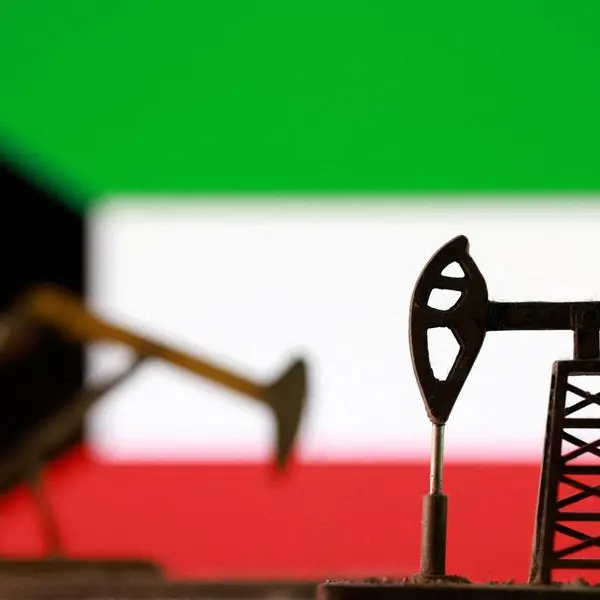
It is interesting that Kuwait Petroleum Company, rather than the more ambitious corporations in Abu Dhabi and Qatar has reportedly made a move to sign a deal with Athabasca Oil Corporation.
While KPC has denied signing any agreement, Athabasca has clarified that it has agreed a deal with an unnamed partner.
"Athabasca confirms that it has signed a letter of intent that contemplates a joint-venture involving Athabasca's Hangingstone and Birch properties," the company said in a statement.
"The proposal contained in the letter of intent is conditional upon, among other things, finalisation of definitive documentation and the receipt of all necessary internal and regulatory approvals. Athabasca cautions that no assurance can be given that the transaction contemplated by the letter of intent will be completed."
Kuwait Petroleum Corporation has also been linked to Connacher Oil and Gas, a smaller Canadian energy company, although neither parties have confirmed the deal.
"According to people familiar with the discussions, Calgary-based Connacher Oil and Gas Ltd. is seeking to transfer a large portion of its oil sands properties into a development venture that Kuwait Petroleum has agreed, on a preliminary basis, to finance," according to Globe and Mail, the Toronto-based newspaper.
The biggest Gulf investment in the North American energy space is Saudi Aramco's USD10-billion Motiva refinery in collaboration with Royal Dutch Shell in June. But the project was severely disrupted nine days after it was commissioned and may be idled for a full year, according to the company's estimate.
The embarrassing problems at the 325,000 bpd crude distillation unit have been a setback for Saudi Arabia which had hoped to regain some of its lost market share in the United States.
Investments in Canadian oil and gas companies can be strategic for Gulf states and could be a way to gain access to the larger American market.
The oil sands are part of the larger North American energy renaissance that's turning into a game-changer for the global energy sector. The shale gas and oil revolution, tight oil and the development of sophisticated drilling in deepwaters in the Gulf and Arctic regions has led many people to call North America 'The New Middle East.'
"Abundant shale plays, accessed by hydraulic fracturing and horizontal drilling technology, are a key driver behind North America becoming the globe's "energy island" by 2020," said Citibank in a report.
"U.S. shale liquids projections could see +3.8-million bpd of growth by 2020... and if the U.S. has become the fastest growing oil and gas producing country in the world, then Canada is not far behind and is likely to see annual +200,000 bpd growth for the next 20 years," the bank noted.
The Canadian oil and gas sector offers tremendous advantages for the Gulf states:
1. Gulf states are steadily losing their market in the United States. Access to Canadian oil sands offers a foothold in one of the most important energy markets in the world.
2. Canadian oil sands higher costs given their remote location and higher drilling expenditure. It needs patient, long-term capital with deep pockets - which fits the profile of most Gulf sovereign wealth funds.
3. Gulf sovereigns can also benefit from Canadian oil and gas expertise which is cutting-edge, especially in hydraulic fracturing, apart from shale oil and gas and deepwater drilling. Those skills can then be exported back home, especially Gulf states look to drill in their own backwaters and look to extend the life of their own mature fields. Hydraulic fracturing, or fracking, has been credited for revolutionising the North American energy sector as it has allowed companies to monetise oil and gas deposits that were previously considered inaccessible.
4. Canada and the United States are some of the few jurisdictions in the world that offer open foreign investment with largely predictable regulatory environments, especially at a time when most of the energy resources are in the hands of national companies.
However, the Canadian oil and gas landscape is not without its challenges:
- The high-cost of developing Canadian resources can be a challenge especially at times of low crude and gas prices. This has come in sharp focus in the natural gas sector where prices have hit a decade-low in North America and forced many companies to cut production.
- Canada may have huge energy resources, but it has trouble accessing world markets. Pipeline proposals to ship Canadian crude to the Gulf Coast and to Western Canada have been met with fierce opposition by environmentalists and aboriginal groups.
- The oil sands have also become a political football between various warring provinces within Canada. The provincial divisions have delayed a number of projects and subjected them to excessive regulatory and environmental requirements.
- Canada presents itself as an alternative to Opec control to the global oil markets. Politically, the Canadian government may be less likely to approve investments which may give an Opec-based company or sovereign wealth fund control of a Canadian oil sands company.
Regardless of the challenges, the Canadian energy space offers Gulf sovereigns key advantages and strategic positioning and a great way to diversify its hydrocarbon revenues.
© alifarabia.com 2012