As many parts of the global community continue to languish under the vestiges of the global recession, Middle East companies are shaking off the fiscal gremlins and turning their attention to sustainability and innovation, said Samita Khawar, head of Growth Implementation Solutions-Middle East and North Africa at Frost & Sullivan.
The financial crisis undoubtedly had a profound knock-on effect on the economic growth of countries worldwide. This translated into a more challenging business climate for many companies, especially those seeking to expand their corporate footprint.
In an interview with Zawya, Khawar argued about the need to adopt innovative methods to reduce the impact of food security, water scarcity and rising energy consumption - challenges that are no longer exclusive to the MENA as they increasingly become of significant international interest.
She highlighted the regional governments' efforts to promote economic sustainability while pursuing new approaches to urbanization and modernization, and how these have opened up opportunities for local and international companies seeking to tap the MENA market.
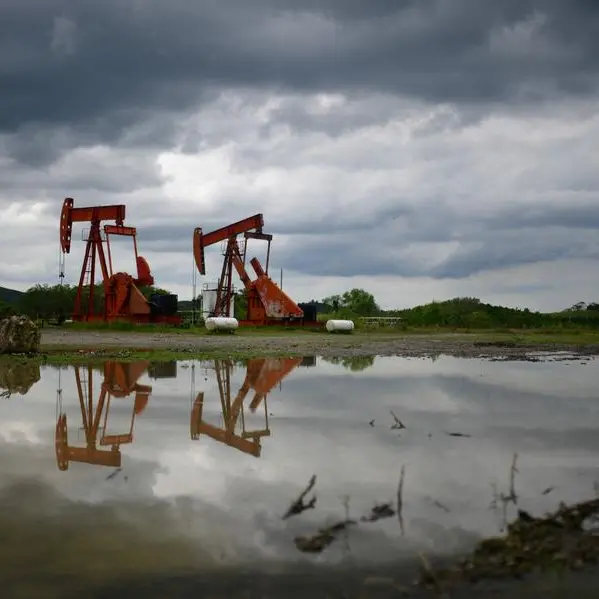
Khawar also spoke about the MENA region's strong macroeconomic fundamentals - thanks to years of high oil revenues - and how governments have used this to design a roadmap for their future growth.
How can organizations, especially those with plans to expand their business or engage in new projects, be encouraged to adopt innovation?
There are three major challenges that the MENA region faces today: water scarcity, food insecurity and rising power consumption. Individuals and organizations will both be affected by these elements, if not now, at least in the near future.
So far, the region has been able to withstand these deterrents owing to its oil wealth and ability to import food. However, as these challenges increasingly become global concerns, MENA countries will soon feel the crunch (if they haven't experienced it yet) to reduce imports and diversify their oil-based economy to increase domestic food production and growth of other industries.
It is therefore imperative for all regional organizations to have a commitment to adopt innovation in order to mitigate these challenges. Innovation need not necessarily mean breakthrough technologies. It could be as simple as an operational improvement to save water and power consumption or the optimization of available resources to ensure more food and water in the future. Some companies have resorted to adopting socio-cultural changes to reduce power costs - for example, altering formal dress codes to slash air conditioning costs in the workplace.
For organizations planning to expand their business footprint or implement new projects, the focus should also be on how to implement global food production and manufacturing strategies locally. Adopting this approach will have lesser demand for resources that are in short supply and this can only be achieved if organizations embrace innovation.
How do you see business organizations in the Middle East achieving long-term sustainability?
Unlike emerging nations such as China and India, where rapid urbanization has outpaced sustainability efforts, the MENA region has the advantage of its oil wealth. The region's strong ties with mature economies have likewise exposed it to technologies and best practice standards that support sustainable development trends.
The Middle East has been keen on competing globally and diversifying its economy away from traditional hydrocarbon resources. These aspirations are manifesting themselves into well planned visions for 2020 and 2030. All economic and infrastructural developments in the region are geared towards these future goals. The larger oil-rich countries are focusing on both manufacturing and service industries, while smaller countries like Qatar and Oman are looking at developing the services sectors. Frost & Sullivan foresees a well-balanced, well-planned and sustainable growth of business organizations and corporates in the Middle East in the next 15-20 years.
How does industry convergence help organizations uncover new and emerging areas of revenues?
Industrial growth and development cannot be sustainable without a reliable solution to the previously mentioned challenges (water, food and power) facing the region. The water-energy nexus (power for water and water for power) further exacerbates these challenges.
The creation of global growth partnership companies, industrial zones, logistics hubs, international power and transport corridors, transcontinental gas grids and economic cities are some of the trends emerging from these challenges, where industries share resources such as infrastructure, water, power and real estate. These trends have given light to new service and business models in the region and bringing up fresh areas of revenue and employment.
For challenges that are unique to the MENA, governments, regulatory agencies and policy makers have to focus on region-wide instead of country-specific solutions. The GCC has been able to achieve this to an extent, but the rest of MENA has yet to catch up.
Globalization has created an interconnected world, but it also resulted to a financial domino effect following the recent crisis. How can MENA achieve sustainability in a world still grappling with slowing economic recovery?
The Middle East meets 58% of its food demand from imports. Europe is aiming to import 20% of its power from MENA in the next 20-30 years. There couldn't be a more interconnected and interdependent world than what it is today.
As the Middle East is the world's largest oil exporter, its fiscal sustainability is crucial to the overall stability of the global economy. The International Monetary Fund (IMF) estimates MENA's economy to expand by 3.1% in 2013, which is lower compared to the 5.7% growth recorded in 2012. Falling oil prices and weakening business confidence in turmoil-hit countries are putting a downward pressure on the region's economy this year.
However, we believe that the region can counter the downtrend by continuing to diversify its economy and preserving its macroeconomic stability. Fortunately, MENA governments have laid out a well-planned growth path for the next 15-20 years.
© Zawya 2013