09 April 2008
With the price of oil hovering around $100 per barrel, oil-importing countries are turning to ever more creative ways of alleviating the cost of fuel, including developing their own upstream capacities. Jordan has begun to explore its hydrocarbon and oil shale potential in an effort to stave off continuing fuel inflation and establish a degree of energy self-sufficiency.
In a bid to jumpstart upstream development, Jordan's National Resources Authority (NRA) has implemented a new oil exploration policy, recently offering favourable terms on production sharing agreements (PSAs) for the country's nine hydrocarbon concession blocks. According to industry insiders, the PSA regulations, which award concession holders up to 60% of the total oil or gas production from a development, have made Jordan an attractive country for new exploration and production projects.
Ala Nuseibeh, CEO of Jordan-based KAN International Petroleum Services, told OBG, "Jordan has really opened up to exploration and production across the entire country, helped in part by the rising cost of imported oil. As a result, where there was previously only one foreign company active in the upstream sector, a number of international companies have now moved in and begun signing PSAs for new blocks."
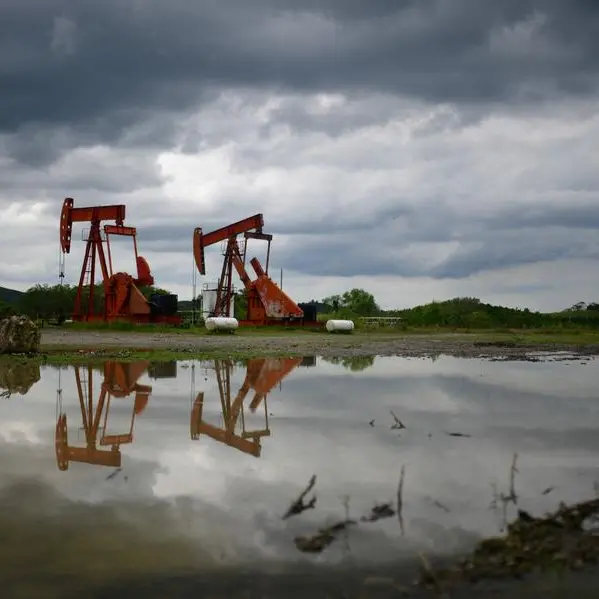
Jordan's hydrocarbon resources have historically been meagre compared to other regional producers, with only one oil field, the Hamza field in the eastern Azraq block, currently yielding around 25 barrels per day (bpd) of light crude, as well as a single gas project - in the Risha field along the Iraqi borders - which churns out some 30m cubic feet per day.
Jordan enjoys a favourable location alongside the rich oil-production basins of the Gulf Coast Geosyncline, but nearly 60% of the 100 or so wells drilled in Jordan were clustered around discoveries, with only a few wells extending through the entire sedimentary spectrum. There have been few attempts to invest in exploration within Jordan, leading to a dearth of up-to-date data on Jordan's subsurface geology.
However, encouraging seismic data being culled from re-processed mapping and new 3D techniques has encouraged a raft of new PSA signings for the available blocks. US-based Sonoran Energy inked one of the first new PSAs in 2005 to take over wells in the 11,000 sq km Azraq block, as well as to initiate a new exploration and development programme.
The recent enthusiasm has been buoyed in part by the discovery of extended gas reservoirs in the Risha district in 2003, which has prompted the Jordanian National Petroleum Company (NPC) to seek strategic partners in an attempt to further boost the field's capacity.
In addition to Sonoran, several other companies signed exploration and production agreements with Jordan in 2007, including India's Universal Energy and Ireland's Petrel Resources.
For Jordan, the historical lack of upstream capacity and proven reserves has meant that the kingdom imported nearly all of its fuel requirements. Prior to the 2003 US-led invasion of Iraq, Jordan imported approximately $700m worth of crude from its eastern neighbour. A large portion of the Iraqi oil was offered free, while the remainder was provided at substantially discounted rates. The agreements fell apart following the collapse of Saddam Hussein's regime, causing fuel costs to rise dramatically and leading the Jordanian government to recast its oil subsidies. Fuel imports now account for a sizeable amount of Jordan's GDP - as much as 20% according to some industry experts. The majority of Jordan's oil supply currently comes from Saudi Arabia, Kuwait and the United Arab Emirates (UAE); in 2006, the kingdom's crude oil imports from Saudi Arabia came to almost $1bn.
While the possibility of Jordan having greater reserves than previously believed has led to stepped-up interest, the government has remained cautious. Responding to reports in local media that significant oil deposits had been found in the kingdom, Minister of Energy Khaldoun Qteishat emphasised in parliament last month that Jordan has yet to see any commercially feasible discoveries.
The kingdom is pressing ahead with more definite upstream alternatives, however. Jordan's massive reserves of oil shale, for example, have come under particular scrutiny. With an estimated 40bn tonnes of proven oil shale reserves in over 18 known fields, Jordan boasts one of the world's largest deposits of the sedimentary kerogen-infused rock. In 2006, Jordan awarded a grant to US-based America Asia Petroleum to study the feasibility of shale oil extraction and recovery, and Royal Dutch Shell and Brazil's Petrobras have signed MOUs to carry out exploration and production projects on a testing basis. However, while the reserves may be confirmed, oil shale production still comes with a set of unique challenges - including high extraction costs, heavy pollution and energy consumption - that must be overcome before it becomes economically viable.
With the price of oil hovering around $100 per barrel, oil-importing countries are turning to ever more creative ways of alleviating the cost of fuel, including developing their own upstream capacities. Jordan has begun to explore its hydrocarbon and oil shale potential in an effort to stave off continuing fuel inflation and establish a degree of energy self-sufficiency.
In a bid to jumpstart upstream development, Jordan's National Resources Authority (NRA) has implemented a new oil exploration policy, recently offering favourable terms on production sharing agreements (PSAs) for the country's nine hydrocarbon concession blocks. According to industry insiders, the PSA regulations, which award concession holders up to 60% of the total oil or gas production from a development, have made Jordan an attractive country for new exploration and production projects.
Ala Nuseibeh, CEO of Jordan-based KAN International Petroleum Services, told OBG, "Jordan has really opened up to exploration and production across the entire country, helped in part by the rising cost of imported oil. As a result, where there was previously only one foreign company active in the upstream sector, a number of international companies have now moved in and begun signing PSAs for new blocks."
Jordan's hydrocarbon resources have historically been meagre compared to other regional producers, with only one oil field, the Hamza field in the eastern Azraq block, currently yielding around 25 barrels per day (bpd) of light crude, as well as a single gas project - in the Risha field along the Iraqi borders - which churns out some 30m cubic feet per day.
Jordan enjoys a favourable location alongside the rich oil-production basins of the Gulf Coast Geosyncline, but nearly 60% of the 100 or so wells drilled in Jordan were clustered around discoveries, with only a few wells extending through the entire sedimentary spectrum. There have been few attempts to invest in exploration within Jordan, leading to a dearth of up-to-date data on Jordan's subsurface geology.
However, encouraging seismic data being culled from re-processed mapping and new 3D techniques has encouraged a raft of new PSA signings for the available blocks. US-based Sonoran Energy inked one of the first new PSAs in 2005 to take over wells in the 11,000 sq km Azraq block, as well as to initiate a new exploration and development programme.
The recent enthusiasm has been buoyed in part by the discovery of extended gas reservoirs in the Risha district in 2003, which has prompted the Jordanian National Petroleum Company (NPC) to seek strategic partners in an attempt to further boost the field's capacity.
In addition to Sonoran, several other companies signed exploration and production agreements with Jordan in 2007, including India's Universal Energy and Ireland's Petrel Resources.
For Jordan, the historical lack of upstream capacity and proven reserves has meant that the kingdom imported nearly all of its fuel requirements. Prior to the 2003 US-led invasion of Iraq, Jordan imported approximately $700m worth of crude from its eastern neighbour. A large portion of the Iraqi oil was offered free, while the remainder was provided at substantially discounted rates. The agreements fell apart following the collapse of Saddam Hussein's regime, causing fuel costs to rise dramatically and leading the Jordanian government to recast its oil subsidies. Fuel imports now account for a sizeable amount of Jordan's GDP - as much as 20% according to some industry experts. The majority of Jordan's oil supply currently comes from Saudi Arabia, Kuwait and the United Arab Emirates (UAE); in 2006, the kingdom's crude oil imports from Saudi Arabia came to almost $1bn.
While the possibility of Jordan having greater reserves than previously believed has led to stepped-up interest, the government has remained cautious. Responding to reports in local media that significant oil deposits had been found in the kingdom, Minister of Energy Khaldoun Qteishat emphasised in parliament last month that Jordan has yet to see any commercially feasible discoveries.
The kingdom is pressing ahead with more definite upstream alternatives, however. Jordan's massive reserves of oil shale, for example, have come under particular scrutiny. With an estimated 40bn tonnes of proven oil shale reserves in over 18 known fields, Jordan boasts one of the world's largest deposits of the sedimentary kerogen-infused rock. In 2006, Jordan awarded a grant to US-based America Asia Petroleum to study the feasibility of shale oil extraction and recovery, and Royal Dutch Shell and Brazil's Petrobras have signed MOUs to carry out exploration and production projects on a testing basis. However, while the reserves may be confirmed, oil shale production still comes with a set of unique challenges - including high extraction costs, heavy pollution and energy consumption - that must be overcome before it becomes economically viable.
© Oxford Business Group 2008