Education in GCC Countries: a Trump Card disregarded by the National Investor
The investment volume in the private education sector at the Gulf Cooperation Council (GCC) countries increased during the past three years. It is expected to reach USD 3.5 billion in 2012, while the investment volume in the tertiary education sector is expected to reach USD 1.2 billion.
A report issued by Alpen Capital (ME) on education in the GCC countries for 2010, indicated that this sector will witness an unprecedented growth, supported by the high contribution of the private sector, the educational needs of the region in addition to the government initiatives to improve the educational system.
Investment Volume
Alpen Capital expects the total number of students in the GCC countries to grow at an annual rate of 1.8% from 2010 to 2020, and reach 11.3 million in 2020, compared to 9.5 million in 2010. The number of higher education students is expected to grow at a high annual rate of 5.5% and it is expected to increase from 11% out of the total number of students in 2010 to 15% in 2020, while the rate of primary education is expected to decrease from 46% to 43% during the same period. It is also expected that the private sector rate in the primary and secondary education will increase from 16% in 2010 to 19% in 2020, as shown in Charts 1 and 2.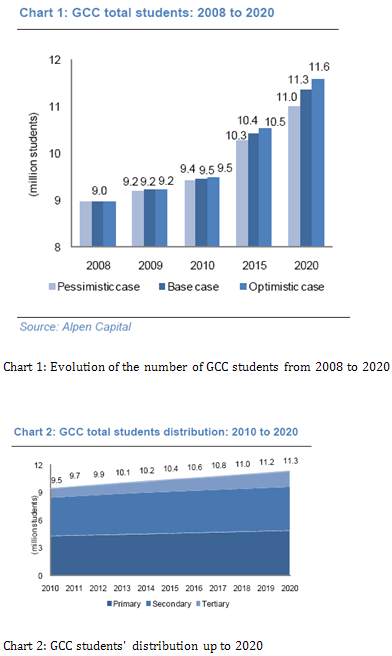
With this high number of students in the GCC countries, an increase in the investment volume in the schools construction will be necessary. According to Alpen's report, the total number of schools is expected to grow at an annual rate of 1.2% for the period from 2010 to 2020. Alpen Capital expects that the growth rate of private schools will exceed that of the public schools, as the number of private schools in the region will increase by an annual rate of 3.2% between 2010 and 2020, while the number of public schools will increase at a lower rate of 0.9% during the same period. The report estimates that by 2020, an additional number of 6,200 schools will be needed to meet the growing demand, as shown in Chart 3.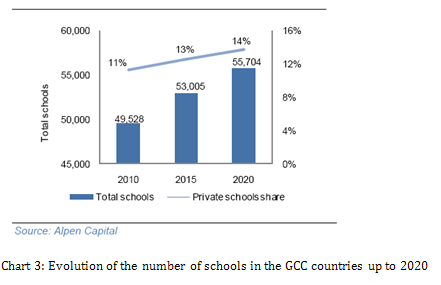
The high number of schools will necessitate a greater investment in human resources, i.e. the number of qualified teachers to work in the private sector. The report states that the need for additional teachers in the education sector will consist of 163,200 teachers by 2020, compared to the number of teachers in 2010. Consequently, higher education rate will increase from 6% in 2010 to 12% in 2020. The Kingdom of Saudi Arabia is expected to meet 74% of the demand, while the United Arab Emirates and Oman will contribute by 11% each for this period, as shown in Chart 4. 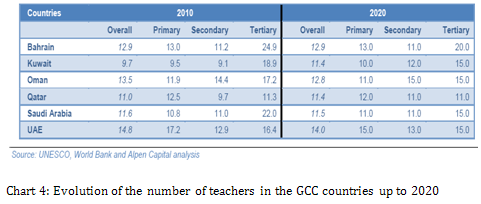
The increase of the investment volume in the education field led to an increase in the expenditure rate of the GCC countries' budget for 2010, as this rate reached 25% of the budget in KSA, 22.5% in UAE, 12.9% in Kuwait, 20.5% in Qatar and 11.7% in Bahrain, as shown in Chart 5.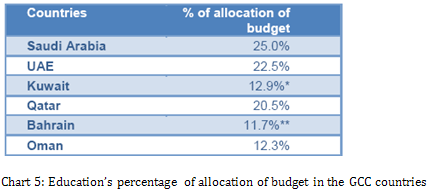
The Coming Period
Alpen Capital's report confirmed that there are several private and public education projects in the GCC countries that are expected to be completed by 2015. The report estimated the size of these projects by more than USD 17 billion, as shown in Chart 6.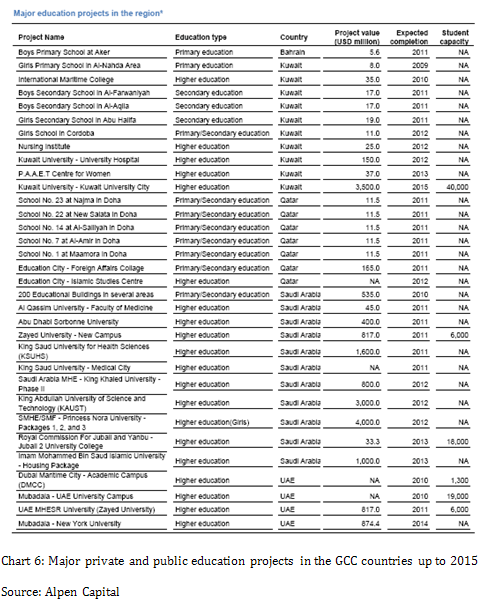
A study performed by The Parthenon Group, the leading strategic advisor to the global education industry, on October 27, 2011, revealed that the investment volume in the primary and secondary education sector in the GCC countries may reach USD 3.5 billion in 2012, while the investment volume in the tertiary education sector is expected to reach USD 1.2 billion. The study included a survey of more than 1,100 schools and universities in the GCC countries in general, with a particular focus on the UAE and Saudi Arabia.
The study revealed that students are more and more oriented towards private education and towards mixed and international school curricula, because they choose to learn in English in the secondary and tertiary education stages. For instance, the private tertiary education sector in KSA is growing at an annual rate exceeding 35%, despite its small size, while the public education growth rate is of 10% only. This highlights the fact that the students and parents choose the private sector as the lessons are taught in English.
Another report issued by the Saudi Ministry of Education stated that the Government is expected to inject more than USD 8 billion during the coming ten years to support higher education projects in the private sector, which will incite the investors to meet the needs of the national universities and colleges. The report added that the private sector is currently establishing vocational training institutes, based on the expectations of the General Organization for Technical Education. The latter estimates that it will train more than 16,000 in the technical colleges and more than 14,000 in the training institutes. It was also agreed to establish a large solidarity project with a group of investors, including the construction of 3,000 schools based on construction and operating, then to transfer the property at a cost up to SAR 13 billion (USD 3.4 billion). The private sector is establishing joint stock companies in the education sector for all stages (primary, secondary and tertiary), in order to invest in this knowledge-based industry sector and provide qualified manpower and skills.
An earlier report by The Parthenon Group indicated that with the growth of the private schools, the development of higher education in the Middle East and the major political developments in the region, the education sector in the GCC countries became one of the fastest growing sectors in the world. It added that the higher education is of great importance to the GCC countries, which aim at diversifying their economies and competing on a global level. The economic power and the Gross National Income per capita are closely related to the enrollment rate in the higher education in each country, and in order to increase competitiveness in the region in general, and in UAE in particular, it is necessary to improve the quality of higher education. However, the total enrollment average in post-secondary education is much lower than many other countries with similar income levels. This will form the most important challenge for the GCC countries in the next twenty-five years.
The Saudi National Commission for Education in Jeddah Chamber of Commerce, confirmed in a study, that investment in private education in KSA has great returns that vary from one region to another. Abdul Aziz Al-Hanafi, member of the Saudi National Commission for Education, stated that the volume of these investments will not be less than SAR 5 billion, if not higher. He added that private education undoubtedly complements public education, as private schools are based on good education quality and on modern technology and educational laboratories that some public schools are not able to provide. Thus, the investment in private education has enormous potential compared to that of public education.
Dr. Jamal Al Matir, a Saudi businessman, stated that investment in private education has become very fruitful in the GCC countries as these are spending generously on the education field, particularly the tertiary education. They began to attract international universities from the USA and Europe to open branches in the Gulf, not to mention the support of these countries to the primary education stages, which increased the number of private schools in the Gulf region.
In Saudi Arabia, investments in the education field exceeded SAR 5 billion during the past two years and they are expected to double during the coming period up to 2012. Dr. Al Matir believes that investments in private education are new to the Arab companies as these companies are still afraid to operate in this field, which increased the number of foreign companies investing in education.
By: Mohamed Abdulzaher
mohameda@zawya.com
© Zawya 2011