Thursday, Nov 17, 2011
(This story was originally published Wednesday.)
--Taqa CFO says won't leave refinancing till last minute but no timing yet
--Sees great appetite from Asia, Mena region to provide funding
--Taqa in the market for project financing for Jorf Lasfar power plant expansion
--Says energy demand from Asia robust
By Leila Hatoum and Oliver Klaus
Of ZAWYA DOW JONES
ABU DHABI (Zawya Dow Jones)--Abu Dhabi National Energy Co. (TAQA.AD), better known as Taqa, is mulling various options to refinance $1.5 billion worth of debt due by the end of 2012 and sees strong appetite from the Middle East and North Africa as well as Asia to provide funding, the company's chief financial officer said.
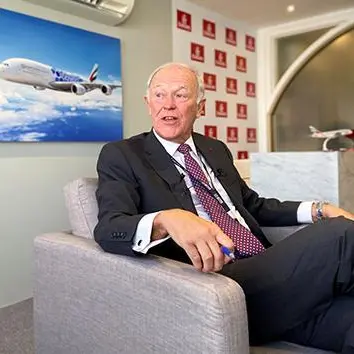
Stephen Kersley told Zawya Dow Jones in an exclusive interview Tuesday that the company won't "leave matters till the last minute" to arrange the refinancing but that the timing was still open.
"We will not say when we will go out until we are ready and we have found the right window," Kersley said, speaking at Taqa's Abu Dhabi headquarters. "We can go to the (U.S. rule) 144a market, which we have done before. Sukuk (Islamic bonds) also give us an option to refinance."
Kersley said that although markets were volatile at the moment he was still seeing windows of opportunity to arrange different types of financing, both regionally and internationally.
"There is plenty of funding sources in Mena (Middle East and North Africa), but frankly we are a global player and we access global markets in terms of funding. Traditionally, we have borrowed heavily from Europe and the U.S., and from the roadshows we have done during the past 12 months there is a great appetite from Asia, and also from Mena," he said.
He acknowledged that European banks specifically had become more selective amid the ongoing sovereign debt crisis and that there had been a flight towards quality, which worked in Taqa's favor.
"We package credits that are attractive to the markets," he said.
Kersley said Taqa was presently seeking project financing for the expansion of its Jorf Lasfar power plant in Morocco and the response from lenders had been good so far.
"It is about $1.2 billion and we have no worries in getting finance. The trick is to get several sources of finances and we have plenty of coverage...Liquidity is there and it is all about timing...We sit on north of $3 billion of liquidity in terms of our credit lines and cash," he added.
Taqa in October announced that it was setting up a 3.5 billion Malaysian ringgit ($1.1 billion) sukuk program in a bid to cash in on the increased appetite for regional and Asian debt at a time of heightened concerns over the health of the U.S. and European economies.
The energy company is majority owned by state-owned Abu Dhabi Water and Electricity Authority and has 24.9% of its shares listed on the Abu Dhabi stock market. It owns about 116 billion United Arab Emirates dirhams ($32 billion) worth of assets ranging from power generation to water desalination, upstream oil and gas, pipelines and gas storage.
Taqa is among several Persian Gulf private and sovereign investors that have used cash generated from high oil prices to buy cheap foreign assets to extend their influence outside the Middle East.
The company Tuesday said net profit in the third quarter more than doubled on the year to 537 million U.A.E. dirhams ($146 million) as oil and gas revenues surged, while the appreciation of the U.S. dollar against the rupee provided a net foreign exchange gain.
"It's been a strange quarter in terms of the currency market," Kersley said when asked about currency fluctuations this year. "We assess the risks and look at the fluctuation and if the risk is large we do hedge against that, but we don't have any hedging to currency exposures so far."
Kersley said Taqa would continue to concentrate half of its portfolio on oil and gas assets, with the remaining half to be in the power and water sectors.
"The intention is to maintain the balance within the portfolio. We are roughly split even between both businesses," he said, adding that Libya was one of several countries in the Mena region of interest for Taqa going forward.
Taqa would continue to base its oil price forecast on conservative numbers after this year's planning had been based on $80-85 a barrel, and energy demand from Asia was expected to remain robust, Kersley said.
"We don't see a value destruction in Europe that would lead to a catastrophic decrease (in oil prices) because demand from Asia will support it," he said. "We feel quite confident where oil prices will be but we plan conservatively and we regularly test against downside risk."
Taqa shares closed up 2.5% at AED1.21 in a slightly negative overall market.
-By Leila Hatoum and Oliver Klaus, Dow Jones Newswires; +971-4-446-1686; leila.hatoum@dowjones.com
Copyright (c) 2011 Dow Jones & Co.
(END) Dow Jones Newswires
17-11-11 0359GMT