Moving high-tech industries forward is about more than just speed
The roll out of Information and Communications Technology (ICT) in the United Arab Emirates has mirrored the rapid urban development of the most commercially active of the seven emirates, Dubai.
In 1979, the city limits of Dubai ended at the newly built World Trade Center (WTC), then the tallest building in the UAE, on Sheikh Zayed Road. Beyond it lay empty plots of land and desert devoid of any form of ICT other than electricity pylons and buried cables. There were no public telephone booths outside of the urban areas. According to a report in The National the only mobile means of communication available were the analog car phones Sheikh Zayed had distributed to some 100 government and court employees as early as 1969, during the discussions that led to the formation of a federation of the emirates 40 years ago this month.
By 1976, telecommunications provider Etisalat had been established as a joint stock company between local partners and British technology firm International Aeradio, which laid 36,000 exchange lines to bolster communications and in subsequent years became one of the first networks in the world to support mobile phones.
Dubai only became computerized in the early 1980s. Yet the sector was given a boost at the WTC when the region's first ever ICT event was held in 1981, the Gulf Computer Exhibition, attracting just 46 exhibitors and 3,038 visitors.
"Back then, computers were at such a primitive stage that they would not help us much in achieving our tasks and goals. The bugs and the costs would often make the experience cumbersome, and electronic transactions were unimaginable," recalled Salem Khamis al-Shair al-Suwaidi, director general of Emirates e-Government. "But the development of ICT in the UAE has been phenomenal. As we all know, the use of computers amongst the government and the public became popular with the launch of the Internet."
This was spurred on in 1989 when Etisalat released its Electronic Mail (email) network.
Thirty years after the first computer fair, which was renamed Gulf Information Technology Exhibition in the 1980s and today is known as GITEX Technology Week, the October 2011 event was the biggest yet, attracting some 3,500 companies from 57 countries and over 170,000 visitors.
"The number of registrants at GITEX is incredible and there is clear government support from [the ruler of Dubai] Sheikh Mohammed bin Rashid al-Maktoum," said George DeBono, general manager for the Middle East and Africa of Red Hat, an open source technology solutions provider. "Despite all that is happening in the region for him to consider, he walked around all of GITEX on the first day. That sends a message, and he was back again on the second day of GITEX as something must have clearly interested him."
Indeed, while Dubai used to end at the WTC, it now extends almost uninterrupted as far as the Jebel Ali Free Zone to the south, with wireless Internet and mobile communications as omnipresent as in any other modern metropolis on the planet. In fact, the Emirates are getting ahead of the curve with the introduction of fourth generation (4G) telecommunications and with Dubai aiming to be the first city in the world with 100 percent fiber-optic deployment by 2012. Indicative of the ongoing e-transformation in the UAE is that investment in ICT is projected to reach AED18.4 billion ($5 billion) this year, up from AED16.1 billion ($4.38 billion) in 2010, according to the Abu Dhabi Department of Economic Development.
An ICT oasis
Instrumental to Dubai's economic diversification plans in the 1990s was attracting ICT companies, which would have knock-on benefits for commerce and the overall economy. To do so Dubai applied the free zone concept successfully rolled-out at Jebel Ali, setting up in 2000 the Dubai Internet City (DIC), which became a hub for IT companies through shared human resources and administration, servers and better bandwidth than elsewhere in the emirate.
"I recall when the vision was put out in the late 1990s to set up DIC. People were asking if it was possible and there were many questions, but there was a strong belief in Dubai becoming a business hub for the Middle East and connecting to Asia," said Michael Bayer, president of operations for Europe, Middle East and Africa at Avaya, a computer networking and telecommunications company. "It has been a major milestone in Dubai's success and has benefited the whole area, with a ripple effect on Saudi Arabia. This stepping stone occurred between 2000 and 2005, experiencing an incredible start during Dubai's construction boom."
During the halcyon days of Dubai's double-digit, year-on-year growth that came to a grinding halt in late 2009, IT companies were waiting a year to 18 months for an office at the DIC, attracted by the free zone concept and wanting to get a slice of the action in the region. Since then, the waiting time has come down considerably, but demand for office space at DIC remains considerable.
Ixia, a British IT solutions company specialized in converged Internet protocol testing, decided to base themselves at DIC this year. "In IT and telecoms the DIC is a good area to be in," said Chris Mlynarczyk, regional sales manager of Ixia. "There is critical mass, which can be customers or partners, and the DIC introduced a starter system to allow small and medium size companies to expand without large investments. We believe we will have decent growth just by being there."
Ixia was not without other choices of location. In 2004, the DIC was augmented by a much larger and more ambitious development, the 7.2 square kilometer Dubai Silicon Oasis (DSO), which was set up as an integrated technology park. But the DIC had the advantage of opening earlier as well as its close proximity to Sheikh Zayed Road and nearby residential areas, whereas the DSO is out on the city's eastern periphery, 34 kilometers away from the Jebel Ali commercial area, 22 km from central Dubai and 17 km from the airport. To keep in the running against the DIC as well as Dubai Media City (DMC), the DSO has had to become more competitive despite its fast bandwidth and cutting-edge infrastructure.
"The DSO was forced to lower its prices even though vendors like Fujitsu are there and not at DIC. It is far away, but has cheap and good bandwidth, which is what IT companies expect," said Hassan Hamadani, marketing and business development manager at Brocade, a networking solutions company.
However, the DIC still retains the upper hand, according to Emmanuel Durou, senior manager at management consultants Value Partners Dubai. "DSO has good connectivity and low meter-square costs so it is attractive, although it is a bit far out and not all the towers have been completed in the periphery. But if companies are coming to Dubai, they are probably looking at DIC and DMC first, and the DSO as a second priority."
Futurama
The UAE, and Dubai in particular, now stand at a crossroads in the development of ICT technology. To move forward and expand on the foundations already created, industry players think there has to be a substantial shift in what Dubai offers ICT companies, developing into information hubs, not merely improving real estate. Greater competition equally needs to be developed in ICT infrastructure, such as through a third telecommunications provider to end the duopoly of Etisalat and relative newcomer Du.
"What needs to happen is they need to stretch beyond 'enhanced' real estate and provide facilities to incubate a local eco-system where there is content creation and local enterprise. It is about making links to institutional investors," said Durou. "I think the [Abu Dhabi government-backed project] twofour54 Abu Dhabi Media Zone is doing this, and DMC as well."
Adrian Pickering, vice president of Juniper Networks, an IT and computer networking products multinational, thinks Dubai has to move beyond being essentially a regional hub for sales and services offices.
"Dubai is a hub for aviation and shipping but what they've not cracked is being an information hub -- providing the right incentives to attract more than just high-tech sales offices. Let's not kid ourselves, that is what DSO and DIC are," he said. "I think there is a great opportunity for Dubai to become an information hub, a connectivity hub and around it a high tech industry to attract, say, a Google, as well as research and development."
On a regional level, Dubai is in ICT competition with Egypt and Jordan, which have created hubs for software development and outsourcing centers for multinational IT firms such as Intel.
None, though, are at the level of the Israeli software industry, with exports of $3.6 billion in 2010. Industry players say that Dubai could, given the right focus, become a rival by developing Arabic content to cater to the regional market that the Israelis are not able to tap into due to political and linguistic constraints.
"It took the Israelis 40 years to develop a high-tech base; Dubai and the wider UAE could do that a lot faster if there is support for localization," said Ixia's Mlynarczyk. "English is arguably the technical language of IT right now, but that may change over time.
"And if you look at the size of the Arab population and Arabic speaking world on the Internet, there is big demand for Arabic content and we are seeing more Arabic domain names. They should be hosting this in the UAE," said Pickering
"In terms of first mover advantage, the UAE is number one, but to retain this they need to develop the skill-sets India has," he added. "Right now the majority of skills are expatriate, so they need a greater proportion of [Emirati] graduates in science and engineering that see the UAE as more than a trading hub."
The UAE government is certainly keen on promoting local enterprise and Arabic language orientated ICT.
"There is a willingness to provide money for start-ups to Emiratis, as the government will invest in you and you don't need venture capital," said Red Hat's DeBono.
Crucial to such development is infrastructure and low-cost connectivity. "Part of the problem the UAE is facing is infrastructure and the free zone mentality for connectivity. Another problem is the cost of connectivity itself," added Pickering.
Indeed, low cost connectivity is paramount to the ICT sector's productivity, but equally to UAE residents. Despite Du and Etisalat dropping prices last year, a monthly package for broadband, television and landline connection is around AED400 ($108), whereas by comparison in Britain it is roughly 70 percent cheaper, around AED120 ($32).
Voice-over Internet protocol (VOIP) also needs to be improved, with Skype and other applications currently banned in the UAE. While Etisalat is to release its own version soon, it is to be more expensive than international VOIP providers. "VOIP and other applications are frowned upon here. It needs to be more accessible," said DeBono. "And for hyper-connectivity to improve, there needs to be video conferencing capabilities."
Video conferencing is considered one of the next big things in IT services, but this will also require higher bandwidth.
"What we are seeing over the past year is more visual communication, and video conferencing is increasingly moving out of executives' offices. Smaller companies say it is too expensive right now, but soon it will go down as an operating expense, then it will move into the home," said Gary Rider, president for Europe, the Middle East and Africa at Polycom, which specializes in unified communication and collaboration solutions. "It is about cost savings on travel, and it's very easy to justify savings in just one year, while it results in increased productivity. There is also social responsibility in terms of cutting down on a company's carbon footprint."
A need for deregulation
What could bring connectivity prices down is deregulation, as occurred in Jordan and Bahrain when the number of telecom providers increased, making connectivity among the cheapest, and most competitive, in the region.
"The Gulf needs more deregulation. The UAE is considering it, but all telecoms go through Du and Etisalat," said Samer Taha, chief executive officer and founder of Jordan's Waseela, a telecom system integrator and managed services provider. "Once there is more liberalization there will be a new wave of ITC players investing and involved in innovation."
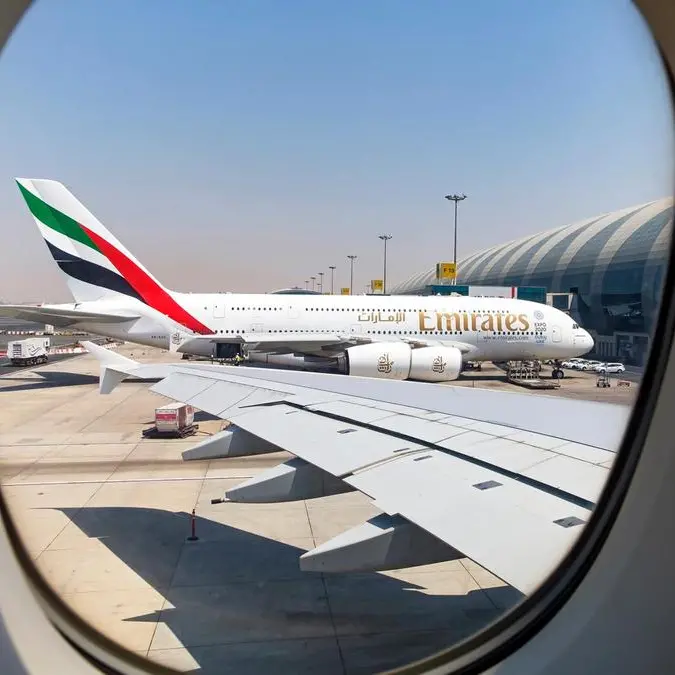
ICT companies and others are pushing for deregulation, including foreign governments angling for lucrative telecoms contracts. However, while a third provider is slated to launch in the UAE within the next three years, deregulation is unlikely and is politically tied up with a seemingly unrelated issue: airlines. Over the past year European carriers have accused Gulf carriers, notably Emirates Airline and Etihad, of unfairly subsidizing fuel and thereby undercutting European airlines' profits. While the Gulf airlines deny they are getting a helping hand financially from state coffers, the issue has become politicized to the degree that the UAE is using it as a playing card over delaying the deregulation of the telecoms sector, according to industry insiders.
Somewhat ironically, one of the ways that Emirates Airlines has been able to offer cheaper flights is through the adoption of innovative software at its airline management and travel company Dnata. "The reason they have [been able to] strategically lower costs is due to the use of open source. This has made flights cheaper, reduced costs and resulted in more profits," said DeBono.
Regulatory oversight
While telecommunications needs to be de-regulated, conversely there is a need for greater regulatory oversight of the sector. E-commerce is growing fast, cybercrime looms over the industry and the legal framework needs to be hammered out to deal with the pace of change in IT.
"We estimate 76 percent of e-citizens are attacked one way or another. And we are seeing more attacks in the region. Why? Simply because the economy is in better shape; no one is attacking Greece," said Johnny Karam, regional director for the Middle East at Symantec, a security software firm.
The Egyptians are providing advice to the Emirati authorities on how e-signatures could work and utilizing the experience of Egyptian law, on which the UAE bases its own laws.
"If you look at the legal system, many lawyers don't know or believe in e-signatures. If the signature is not from a trusted route, it means nothing in front of a court," said Yasser el-Kady, chief executive officer of Egypt's Information Technology Industry Development Agency, while attending GITEX. "We're here to provide advice to the authorities about e-signatures as Egypt is number one in the region when it comes to a certification authority in e-signatures."
With Middle Eastern retailers selling some $90 billion in goods and services online last year, regulations need to be up to speed as e-commerce continues to grow.
"I'd like to see unified e-commerce regulations in the Gulf, and then rolled out in the rest of the Middle East," said Brocade's Hamadani. "The authorities are still in the process of doing so, maybe it will be there in the next two to three years."
© Executive 2011