Driven by a determination to maintain the kingdom's status as prominent regional financial hub, Bahrain Financial Harbour is proving resilient to the considerable economic and geopolitical challenges it faces
Over the last decade, the Bahrain Financial Harbour (BFH) has billed itself as the location of choice for top banking and financial institutions.
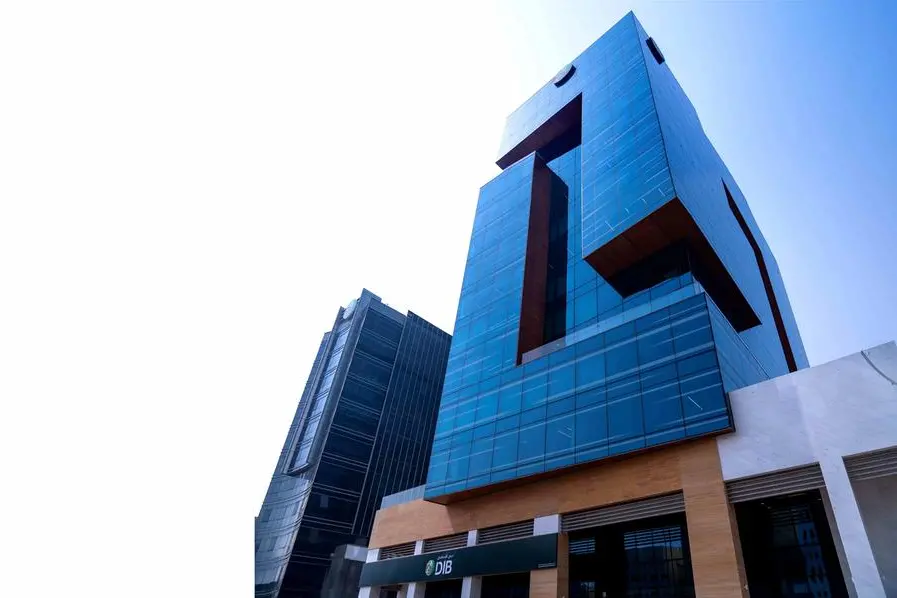
In design, the $3 billion development close to Bab al Bahrain, the country's historic and symbolic gateway which decades ago served as a key trade entry point, has redefined Manama's skyline.
A mixed-use complex, BFH's development blueprint is grand in scale. Office accommodation, commercial projects, residential apartments, a planned resort hotel, as well as cultural and retail facilities have all been earmarked for the prominent site in the capital.
But as the foundation stone for the hugely ambitious project - envisaged as cementing the kingdom's status as the Gulf's top banking and financial hub - was laid in December 2002, few would have predicted the sequence of events that followed - the global financial crisis, a regional real estate collapse and political unrest in Bahrain.
Today, the 53-storey twin towers at the development's heart are still emblematic of the kingdom's long-term economic hopes. And for Omar O al Mardi, the managing director of Bahrain Financial Harbour Holding Company (BFHHCO) since 2007, they still represent a beacon of hope.
From a vantage point on the 30th floor of the West Tower, al Mardi surveys the various phases of the project - some complete, some under construction, others yet to start. He confirms that work on the $650 million Villamar project - a well-known landmark with three distinctive yet unfinished twisting towers, will restart "quite soon".
Al Mardi also insists that BFH is fielding increased interest as it matures, claiming that the strategic benefits of its location are becoming increasingly more apparent to tenants and investors.
He points to the general development cluster around BFH and the critical mass of the waterfront and coastal strip towards Bahrain Bay - a multi-billion dollar mixed-use development a stone's throw away - being progressively enhanced. Even road access to the Harbour, for long a source of frustration for tenants and visitors in this prestigious yet congested corner of Manama, has been vastly improved recently.
"The vision for BFH is not just an ordinary one," says al Mardi. "It is a unique idea to build the kind of business community to accommodate all financial institutions in one place and provide them all the necessary services starting from communications, security and services to support the various professions, such as auditors and lawyers.
"At the same time, BFH provides the necessary accommodation for families in nearby buildings together with social requirements including shopping areas, sports clubs and medical clinics. The location itself is very well chosen as it is the literal gateway into and out of Bahrain," he continues. "The Villamar project will re-start very soon and other similar buildings around it are part of the phased development. We have fabulous real estate which we reclaimed from the sea, and it has given Manama a new look and a more sophisticated business environment since it has been established.
Al Mardi insists that, despite the difficulties of the past year, BFH's occupancy levels have remained firm. "The maximum drop we have had, considering a very difficult year in real estate, is not more than 10 per cent. We are seeing business starting to pick up again and I am negotiating with one of the European banks which has already applied for a licence for Bahrain," he remarks.
Another positive indicator he cites is that, although about half of the leases from the initial five-year lease period from 2007 expired this year, almost 95 per cent have already been renewed. "This is extremely encouraging and makes us very optimistic," al Mardi says, pointing out that a recently-introduced policy to provide grace periods for tenants rather than reducing rates has also paid dividends.
Al Mardi emphasises that BFH is a private development which enjoys full support from the banking community. "Wherever we go to do our presentations while seeking financing or talking to financial people about BFH we do not find it difficult to convince them about what this investment represents.
"Local banks are willing to lend because BFH is proving to be a very good project that investors find attractive.
"We raised $240 million locally and this at a very difficult time when nobody is putting a hand in their pockets to pay for anything. Last year, we also managed to pay all the Islamic Sukuk, amounting to $150 million," he adds.
Al Mardi stresses the advantages Bahrain has over neighbouring countries - a central land registry for property which clarifies land ownership; a strong regulatory environment; and a range of bench-marked professional services and expertise, independent agencies, and banking and financial systems all recognised internationally.
"Bahrain has always been a gateway to Saudi Arabia and I have had the opportunity of working with a number of Saudi families and Saudi businessmen across the King Fahd Causeway over many years. The Saudi component is very important to Bahrain and the Saudis have deep roots and work very closely with their Bahraini partners or even alone here in Bahrain," he explains.
Like the Chinese proverb that translates the word challenge into opportunity, al Mardi sees a healthy growth period ahead, with plenty of opportunities for investors in BFH and Bahrain thanks to the relatively high liquidity levels in the Gulf compared to other regions of the world.
"Services in Bahrain are very competitive and the cost of living is better here," he says.
"We are seeing growth in specific industrial sectors such as energy, metals and petrochemicals based upon the strong strategic partnerships between Saudi Arabia and Bahrain," he adds.
Al Mardi is confident that the developments shaping the next phase of BFH, including a hotel, residences and other facilities will add a new dimension to a value proposition which has without question been hurt by global, regional and local events over the last three years.
But in addition to the Middle East, al Mardi is looking at Asia, one of the world's continued economic success stories which overcame its own financial Armageddon in 1997. "I have been to the Far East more than six to seven times in the last year, with a focus on India and China and I think the potential for a prosperous relationship between Bahrain and these countries and the wider Far East is very promising," he concludes.
© The Gulf 2012