It doesn't take much for markets to drain away their confidence these days.
The Saudi Tadawul market fell 4.2% on Saturday while other regional markets were also in the red when they opened on Sunday, as they reeled from the triple whammy of a rotten U.S. jobs report, slowing growth in China and India, and the escalating European debt crisis.
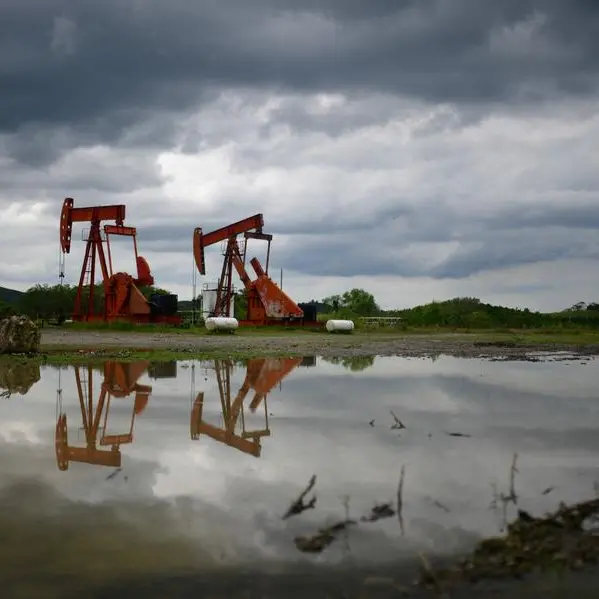
Oil has fallen below USD100, just like the Saudis wanted, but it's unclear what their next steps are going to be. There are real fears now that crude could fall further as the global economic slowdown, combined with oversupply of the product, conspire to push prices down (more of that later).
"Even before the latest weak data, we were in very dangerous territory, owing to the downward spiral in the Spanish and Italian bond markets and broadening concerns of a break-up of the eurozone," notes Sherry Cooper, chief economist at BMO Capital in a note over the weekend.
"Turmoil in Europe has exacerbated the slowdown worldwide as European banks retrench, reducing their lending to Asia and elsewhere, and capital flees to safe havens such as the U.S., German and Canadian bond markets. Bond yields in these countries have fallen to record lows."
MORE THAN GREECE
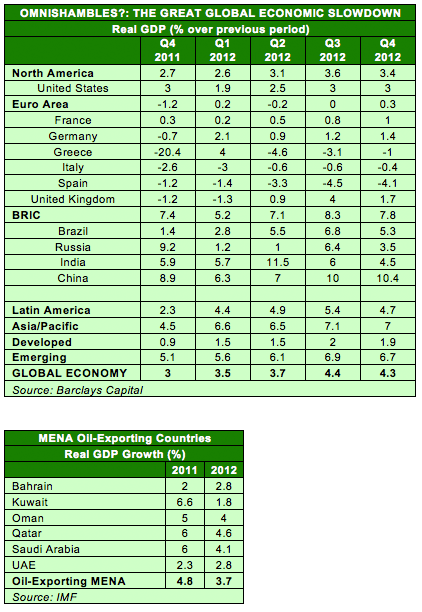
Omnishambles is a new word being bandied around in Europe to describe how apparently carefully crafted policy stance unravels in a bewildering number of dimensions, leaving all affected parties in a state of incredulous despair. This is exactly what's happening in Europe and is spilling over to its closest trading partners, such as the United States and China.
"The outlook for Greece and, therefore, the euro, remains cloudy. The opinion polls do not give a clear view as to whether Syriza or New Democracy will be the largest party although our sense is that ND has the stronger momentum at present," says Simon Hayes, analyst at Barclays Capital.
"Interestingly, one recent poll showed that not only do 81% of Greeks think the country should stay in the euro but 52% think that if the austerity measures are a prerequisite to remaining in the euro then they should be adhered to."
Spain is not helping matters either, as its fourth-largest bank, Bankia, has announced the capital injection needs (additional €19bn).
Barclay's Hayes says with the bank recapitalisation details yet to be communicated and the completion of the entire banking system assessment by the ECB, IMF, and independent firms three months away, markets are likely to be particularly nervous pending these announcements.
"Meanwhile, the Spanish government continues to assert that it does not need official financial help to recapitalise the banks," notes Hayes. "The significant moves in government yields, even if under very illiquid conditions, should however remind everybody that time is running out and that Spain and EU leaders may have to announce a clear recapitalisation strategy shortly."
AN OIL CRASH?
Akram Annous, an analyst with Dubai-based Rasmala Investment Bank, offers great insight into oil economics, which could have a huge impact on Gulf states.
He offers this quote from the Saudi oil minister, which shows how oil markets are out of synch with global economics:
"For the record, as things stand today, our inventories in Saudi Arabia and around the world are full. Our Rotterdam inventory is full, our Sidi Kerir facility is full, our Okinawa facility is full - 100 per cent full."
"How often does a major commodity producer come out and tell you that all their storage full, that they are producing at record volumes, and that they have plenty of spare capacity? If you answered almost never, you are correct," says Annous.
There are plenty of reasons for the oil market to remain elevated: the Iran crisis, rising inventory stockpile in the U.S. and other countries, and the Saudis inventory build up ahead of the opening of its Motiva refinery in Port Arthur, Texas.
"There is no doubt that the spot market was being supported by geopolitical Iran related fears, and that these fears roughly coincided with the beginning of an unwind in the passive inflation hedge trade," says Mr. Annous. "The combination of the two along with a China slowdown, weak demand in Europe, demand trends in the US, and rising production in the US lead one to believe that a 2008 like crash in crude cannot be ruled out."
While Gulf economies can still live with an USD80 per barrel for some time, a further decline to USD60 levels could make things uncomfortable, especially as their social expenditure bill remains high.
Standard & Poor's believes that the region's oil-exporters will continue to prosper on the back of emerging market growth.
"The distribution of GDP growth that we project for the next three to five years supports our view that oil prices will remain on a mildly upward trend," said Jean-Michel Six, Standard & Poor's chief economist for Europe.
S&P expects growth in emerging markets to recover gradually in 2012 on the back of easier monetary policies, to make up for weak growth in the Organization for Economic Cooperation and Development (OECD) economies.
"This contrasting outlook implies to us that oil demand growth will be mainly dominated by China, India, Brazil, and Saudi Arabia this year and in 2013, while oil demand from OECD countries will contract modestly."
But China could be heading for a harder landing than analysts originally thought. In May one of its key purchasing manager's index fell sharply, suggesting that the world's economic engine may be slowing down.
The Chinese government is expected to launch new projects to ensure that the economy continues to grow at 8.1% this year.
"It is worth noting that the [Chinese] government now accepts that slower growth is necessary to rebalance the economy and improve the quality and sustainability of growth," notes Barclays Bank. "Although most government officials still expect GDP to expand by 8.0-8.5% in 2012, higher than the official target of 7.5%, expectations are clearly shifting toward slower growth. It is hoped that the projects approved by the government to support growth are also positive for improving the quality of growth in the long run."
Similarly, India - another key oil export market for the Gulf - is experiencing a slowdown on the back of decelerating growth and delays in economic reform.
While most emerging economies are better positioned than the developed economies, a worsening of the Euro crisis could speed up the slowdown, bringing down commodities with them.
GEORGE SOROS' VIEW
George Soros, the billionaire contrarian investor whose razor-sharp pronouncements can turn the markets, believes there's not much time for the European Union leaders to fix the continent's economic woes.
Mr. Soros believes that the European Union itself is like a bubble.
"In the boom phase the EU was what the psychoanalyst David Tuckett calls a 'fantastic object' - unreal but immensely attractive. The EU was the embodiment of an open society -an association of nations founded on the principles of democracy, human rights, and rule of law in which no nation or nationality would have a dominant position."
Mr. Soros believes that Germany, and Germany alone, can fix the Eurozone. Its sterling economic performance is in sharp contrast to other EU economies that are dithering and have no clear growth paths.
"In my judgment the authorities have a three months' window during which they could still correct their mistakes and reverse the current trends," said Mr. Soros in a speech in Trento, Italy on June 2. "By the authorities I mean mainly the German government and the Bundesbank because in a crisis the creditors are in the driver's seat and nothing can be done without German support."
While the Greek public will be sufficiently frightened by the prospect of expulsion from the European Union that it will give a narrow majority of seats to a coalition that is ready to abide by the current agreement.
"But no government can meet the conditions so that the Greek crisis is liable to come to a climax in the fall. By that time the German economy will also be weakening so that Chancellor Merkel will find it even more difficult than today to persuade the German public to accept any additional European responsibilities. That is what creates a three months' window."
Speaking in apocalyptic terms, Mr. Soros believes that Germany will do its best to preserve the euro, as a return to the deutsche mark will hurt its export potential apart from the political fallout that could devastate its economy. In any case, Bundesbank will be left with trillions of dollars of debt obligations.
"So Germany is likely to do what is necessary to preserve the euro - but nothing more," said Mr. Soros, adding that it would mean an EU dominated by Germany and in which the divergence between the creditor and debtor countries would continue to widen and the periphery would turn into permanently depressed areas in need of constant transfer of payments.
"That would turn the European Union into something very different from what it was when it was a 'fantastic object' that fired peoples imagination. It would be a German empire with the periphery as the hinterland."
All eyes are on the Eurozone as the next few months are crucial for the global economy. With the U.S. Presidential elections in November, expect President Barack Obama to inject economic stimulants to revive the battered American economy.
All this presents a tricky situation for the Gulf economies which are looking to head to the market to finance a number of their key projects. While oil-driven reserves will continue to keep Gulf countries afloat for some time, prolonged spells of uncertainty and global economic depression could derail many of their plans under way.
© alifarabia.com 2012