Once considered a hub for financial services in the Middle East and North Africa region with ambitions to rival Dubai, Bahrain has taken a battering in recent years with unrest leading to droves of firms pulling out of the country and a drying up of new entries. The 'Day of Rage' protest last year, prompted by disaffection among the country's Shia population, has resulted in a year of uncertainty that has seen the country's business-friendly reputation torn to pieces. However, the dangers posed by Bahrain's ongoing social issues have been exaggerated by the media, according to Graham Hayward, Middle East financial services leader at PricewaterhouseCoopers and there are positive medium and long terms factors that will push the country towards a gradual rise in confidence and an eventual return to business as usual .
BAHRAIN has suffered economically in recent years with the double impact of the global financial crisis and social unrest leading to a severe lack of confidence. However, robust oil prices, GCC solidarity and a determination by the authorities to bring back stability have begun to restore the country's business-friendly reputation.
Disaffection among the country's Shia population led to a first demonstration known as the 'Day of Rage' last year. They were protesting over discrimination against Shias by the Sunni dynasty and disrespect for human rights. Activists called for a new constitution and a democratically elected government.
While those and subsequent protests were quelled, unrest continues to rumble in Bahrain, and the effect has been a direct loss to the economy as well as a number of firms pulling out of the country. Reports have put losses to the economy at more than $2 billion, with public finances dropping by around $690m and GDP falling about $390m. Events such as the 2011 Grand Prix were cancelled costing the country dearly in income and international confidence.
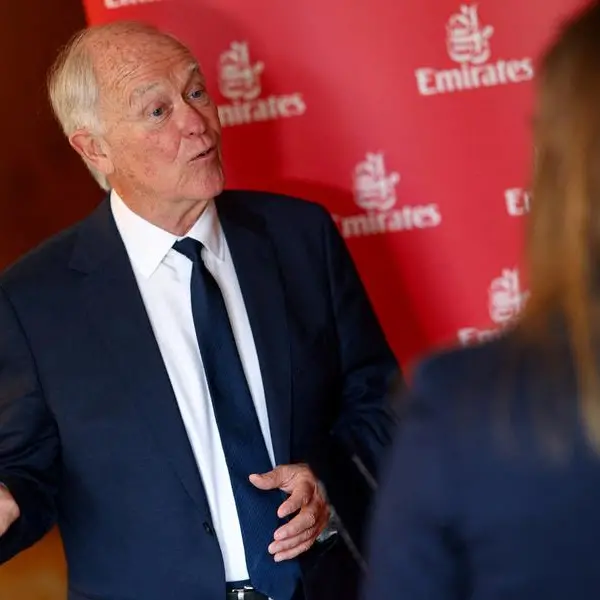
According to Graham Hayward, Middle East head of financial services at PricewaterhouseCoopers, disruptions and the global financial crisis (Euro) combined hit Bahrain with slower economic activity, tightening credit conditions and a drop in oil prices initially, and that took a toll on financial services. "Currently GDP is something like $27 billion with around twenty five percent of GDP via oil," he says. "Actually that's something like seventy percent of government revenue.
"The joint impact of unrest disruptions and euro challenging the economy is largely being offset by robust oil prices." While confidence continues to remain at a low point there are signs of recovery in Bahrain. After the initial hit to oil prices they have become very robust and this has helped the authorities there pump money into the economy in an effort to restore confidence. While the disruptions continue to affect Bahrain, this too has been brought under control to a large extent. The 2012 Grand Prix went ahead as planned and without trouble - a major achievement given the heightened media focus around such an event.
"I live in Bahrain with my family and having traveled to Libya and other countries around the region I think there is a bit of a misconception about Bahrain," says Hayward. "Bahrain has suffered some setbacks but I think most of those are really around confidence. The underlying issues behind the disruptions have been around for a number of years. It [The Arab Spring] heightened media focus around these issues and they have come to the fore."
While the levels of unrest in Bahrain are not comparable to other parts of the MENA region, continued unrest and the greater international focus on it created by the Arab Spring continue to undermine confidence. However, the Bahrain authorities have had a degree of success in overcoming these confidence issues, bolstered by strong oil revenues. New construction projects have begun across the island and previously stalled ones have restarted in many cases. The Middle East continues to be a high growth area for financial services and Bahrain has seen a share of new start ups despite the unrest, although perhaps not as many as it could have. "People clearly are making choices about where they want to be and once you have unrest maybe some other choices are being made, although I am sure Bahrain will come back as a prime choice" says Hayward.
Bahrain remains a business friendly environment and benefits from being part of the broader SAAAME (South America, Africa, Asia, Middle East) Axis, according to Hayward. This SAAAME Axis is at the core of a significant trade in natural and humans resources, and continues to hold great potential for development especially given its high levels of liquidity.
"If you look on that axis in terms of their GDP growth, their ability to manufacture, they are way out ahead of anybody else right now," says Hayward. "So when you are looking at growth opportunities it is those type of dynamics that you've really got to consider as part of a portfolio for global growth. As far as international hubs go in the Middle East, the main contenders are Bahrain, Qatar and Dubai. These are the centres that have targeted international business and are where it gravitates towards. While Qatar and Dubai both developed offshore-type centres, Bahrain did not go down that route and retains a more open environment. It is also a well-tested environment in terms of regulation, according to Hayward. As in many Financial Centres more could be done in terms of enforcement and compliance, but economic conditions at the moment dictate a fairly pragmatic approach by the authorities.
"I think they have a great basis," says Hayward. "The main current issue is around governance and how this is managed for a sustainable future, the core point that the more this is managed transparently, the more confident the market becomes for investment and retention of funds." While Bahrain has been through tough times recently and while issues that have led to unrest are yet to be fully solved they appear to be being addressed and the medium to long-term outlook is good, according to Hayward. Greater cooperation among the GCC bloc is a positive trend for the region.
"You are looking at a GCC convergence," says Hayward. "Already there is a level of free movement of capital and free movement of people provided you are from a GCC origin. That is evolving now to the point where there are some strong steps towards a monetary union. If a monetary union happens it will be the second largest union globally, right behind the euro and as a result of that trade, between the GCC countries would be stronger." Clearly some key learning points from the euro will need to be taken into account as they progress.
Cooperation already extends to pseudo-shared facilities, particularly across the oil sector, within the GCC, which demonstrate a growing desire to work together. In addition, Saudi Arabia amongst others has demonstrated a desire to see the GCC region prosper, and particularly Bahrain, by supporting it both economically and also jointly from a security perspective in recent times.
"If you are looking at the growth drivers I think that convergence is key," says Hayward. "The alignment of a lot of Middle Eastern economies in this way can only be good for these economies the same way as for Europe. Europe has its own issues right now in terms of how that's getting managed by each individual entity but certainly there is a strong economic impact and case for driving that together. "Whether that is labour, whether its natural resources, there is a good case for bringing countries together, including the trading bloc that forms with the rest of the world. Saudi is a G20 member and therefore has a voice on a very significant global stage. How things like that start to then work when you've got a big currency and economic bloc working together, really can only help."
The next four to five years will also be crucial for Bahrain in how it develops as a financial hub linking the growing Asian economies with developed markets in the West. Islamic finance could play a part in strengthening Bahrain's hand in this respect. Bahrain is the home of Islamic finance in the Middle East, according to Hayward, and could use this fact to its advantage in forging links with Malaysia in particular. There remain risks that could push the country's positive outlook off track of course. Prolonged social unrest, or an escalation of the situation, could damage confidence further. Public debt, which is around thirty four percent of GDP, remains a worry given its growth rate combined with Bahrain's reliance on oil. While the current oil price level provides money to pump into the economy, a slump in oil prices could be a challenge, and current spending levels would need to be reconsidered.
"If oil prices start to fall away economic performance may start to flatten," says Hayward. "Many of the others in the Middle East would have the benefit of less debt, in terms of percentage of GDP. Acting more as a club in how these imbalances are embraced may be a key feature across the Middle East similar to what we are currently seeing in Europe."
© MENA Fund Review 2012