There are too many flashpoints in the Middle East at the moment.
Egypt is wracked by political tensions between two different ideologies, Syria is in the grip of a tragic civil war, Tunisia, Yemen, Bahrain have not yet recovered from the Arab Spring events over the past two years, and Iraq and Jordan remain unstable and appear to be teetering dangerously on the edge of internal crises.
Much of it is driven by Arab citizens' desire to be included in the running of their affairs and to have a say and stake in the future of their nations.
"It is no accident that the Arab Spring commenced in Tunisia instead of, say, Syria or Yemen," said Vali Nasr, in a recent International Monetary Fund publication. "It started there because of the promise of prosperity and growth. It started there because of the country's large, literate middle class. It started there because of that middle class's relatively liberal political outlook and thirst for the political freedoms that accompany economic prosperity."
Clearly, this is not the old Middle East where autocracies and dictatorships could easily suppress dissent. The landscape has changed and Middle East governments, monarchs and even elected officials will have to alter their strategy to bring peace and prosperity to their countries rather than chaos and civil wars.
The challenges are formidable.
"A comprehensive reform program needs to provide clear goals for the economic transition," wrote Masood Ahmed, director of the IMF's Middle East and Central Asia Department in an IMF publication.
"Unlike the transformation of Eastern Europe more than 20 years ago, during which many countries turned toward the European Union (EU) and its economic model, today's Arab countries in transition lack a clear role model for their final economic destination. But like oarsmen racing a rowboat, only if people act jointly, driven by a common goal, can they excel."
Bid to build economic bridges
At the moment, there are few attempts at cohesion. The Gulf Cooperation Council project, which aims to economically unite the six Gulf states, has not lived up to its expectation as a collective economic engine, nor has it been able to secure any meaningful trade deals with other economic blocs such as the European Union. GCC efforts to include Jordan and Morocco are also driven by political consideration rather than an economic strategy.
Regional rivalry between Saudi Arabia and Iran has also divided the region, while the ever-present threat of Israel strikes on Iran hang like a dark cloud on the region.
In the West, the troubled North African states remain beholden to their low-growth European trade partners, while failing to capitalize on Africa's blistering growth over the past few years.
"Empirical evidence suggests that increasing the region's openness to equal that of emerging Asia could raise annual per capita GDP growth by almost a full percentage point," said Amine Mati, analyst at IMF's Middle East and Central Asia Department.
"MENA oil importers also trade little with their immediate neighbors. Given their close proximity (distance is one of the most important determinants of trade), these countries could be exporting about 50% more than they currently are."
The IMF believes five important rules can help the Middle East North Africa region emerge as an economic engine that can serve the hopes and aspirations of its people and eliminate decades of uncertainty, infighting and political instability.
Rule number 1: Economic reform will not work without parallel political reform
While Arab governments have made some efforts to initiate economic reforms, it has not been backed by political openness. This is true in oil-rich states, but oil-importing states have also tried to substitute political reforms with economic programs to satisfy the immediate needs of its citizens.
"In Egypt, neither of the two transitional governments that followed the toppling of President Hosni Mubarak was able to sign an agreement with the IMF to get a badly needed loan, precisely because they were unelected and feared public reaction," said Marwan Muasher, Vice President for Studies in the Middle East Program of the Carnegie Endowment for International Peace.
"By contrast, the government formed after the election of Muslim Brotherhood candidate Mohamed Morsi is now negotiating a financial arrangement with the IMF, which has historically been suspect in that country."
Part of the reason for the current stalemate between the IMF and Egypt is Cairo's reluctance to enforce unpopular policies at a time of political upheaval and the IMF's insistence on linking the USD 4.5-billion loan to better governance and focus on job creation.
Rule number 2: Growth policies must be more inclusive
This is happening to a certain degree in places like Saudi Arabia where the government is trying to raise educational standards and bring Saudi citizens into the workforce and give them a stake in the prosperity of their country.
Still, economic policies in Middle East countries (including Saudi Arabia) has given rise to an elitist class that controls much of their country's wealth and the riches have not trickled down to the people in the form of job-creating policies or improved basic services.
The absence of a stake in Egypt, Tunisia, Syria and Bahrain led people to spill out on to the streets and demand greater economic, political and social say in the running of their countries.
This also means reforming the subsidy frameworks in most countries which are inefficient and huge burden for governments.
Risk consultancy Maplecroft says that even Saudi Arabia - the region's richest economy - will need to consider cutting subsidies in the near future.
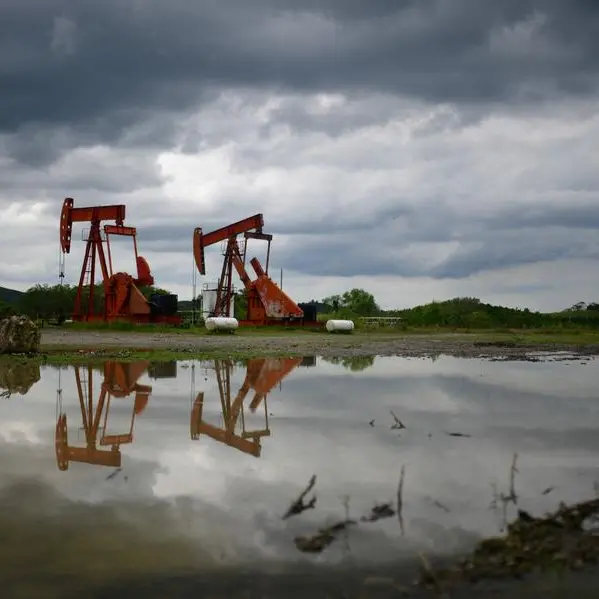
"Diversification is likely to become increasingly important as oil revenues are expected to decline by around 15% by 2017," said the consultancy. "The use of fuel subsidies as a means to dampen calls for political change is also likely to continue to drive domestic consumption and this is likely to diminish export volumes."
How Saudi Arabia communicates that subsidy cut would be crucial in ensuring political stability.
Rule number 3: Economic reform plans must be prepared with society's input
Muasher offers the example of Bahrain's National Action Charter, which addressed some of the demands of the public but was implemented by the Bahraini government without consultations with various political stakeholders.
"Despite these programs' lofty goals, they failed to deliver - the elected house does not exercise true legislative power, and the kingdom is not a true constitutional monarchy," said Muasher. "The Bahraini public remains disillusioned by the government and continues to demand change."
Similarly the Egyptian government's effort to change the constitution has been met with great opposition as it does not reflect the aspirations of most Egyptians.
Rule Number 4: Economic reform plans must be measurable and point to a final goal
Too often, well-meaning economic programs don't have an end target or are evaluated periodically to determine whether they have been successful or need to be revamped. Citizens need to understand why subsidies might be changed and what possible benefits could be attained with such a cut.
Annual budgets need not only be forward-looking but also highlight certain programs that were implemented in the past year and note their progress.
Greater transparency in the running of the government will provide citizens an insight on the challenges and perhaps greater understanding of the sacrifices they are being asked to make.
Rule Number 5: Communication must be a key policy tool
Clarity on new initiatives, public consultations and clear communications in multiple languages can help business certainty and remove doubt.
Availability of key ministers and public governments to the media are central to this policy as is the use of social media to communicate to a greater audience within the country and outside.
"The Arab Awakening spurred citizens to expect more from their government. Political change will stall without greater prosperity for more people in the region," said Muasher. "At the same time, economic change will not succeed without empowering the key institutions necessary to enable and support the development of more efficient and transparent economic processes."
© alifarabia.com 2013