September 2009
Project finance vanished from the headlines over a year ago as bank vaults slammed shut and spreads on credit default swaps widened to canyon-like proportions. But change is in the air. Are the days of ECAs, EPC costs, BOTs and PPPs returning? Mike Gallagher goes wildcatting for green shoots Project finance. Remember that? Remember the halcyon days of mega-Sukuk, covenant lite, sky high EPC (engineering, procurement and construction) costs and oil at $147 a barrel? Probably not, but project finance is slowly and cautiously being spoken of again in Middle Eastern banking circles.
"Project finance is quietly picking up again. The resilience of the local market is quite impressive," Christophe Mariot, Regional Head of Project Finance at BNP Paribas told Robin Wigglesworth in the Financial Times.
"There is a need for project finance and if there is not enough volume in the market in terms of liquidity, alternative structures have to be used," David Wadham, Managing Partner at Ashurst, told Emirates Business. "We have seen people tweak the model and bring in banks; we have seen some drop their tenors so what we see is that people are trying to get liquidity to enable projects to get done".
While project finance activity in the rest of the world has almost vanished, it hasn't completely disappeared in the Middle East and North Africa (MENA) region and Islamic project finance has, in the last year, offered more hope than its conventional counterpart.
Qatar Islamic Bank (QIB) recently signed a $200 million Murabaha financing deal with Qatar Petrochemicals Company (QAPCO). The money will be used for QAPCO's new Low-Density Polethylene-3 (LDPE-3) project and related operations. There was no word on the terms or conditions.
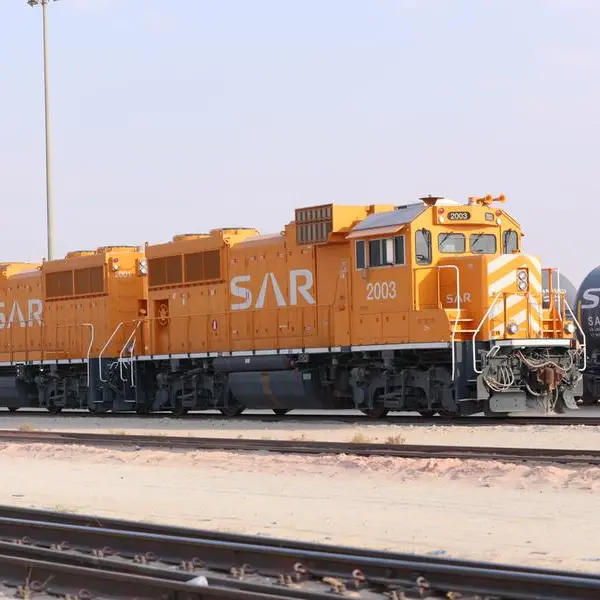
A lot of the attention, post slowdown, has been on Saudi Arabia and, to a lesser extent, Egypt, despite the collapse in Sukuk issuance. Both countries have big plans to overhaul their infrastructure and Egypt, which controls access to the Suez Canal is giving a considerable amount of attention to transport. Saudi Arabia is throwing billions at plans to build 3000km of new rail track, including one linking the Red Sea with the Gulf.
The Western Railway part will require 750km of new lines being laid which will run from Jeddah to Mecca, and northeast to Medina and Yanbu, and another section will include a 1300km mineral line running north from Riyadh to Hazm Al-Jalamid.
"The Landbridge project will create a new dimension in land transport across the Saudi Arabian Peninsula, transforming the existing rail network into a world-class freight and passenger rail system," Dr Jobarah Al-Suraisry, the Saudi Arabia Minister of Transport said. "The Landbridge rail network will link Saudi Arabia`s three largest ports: from Jeddah Islamic Port in the west, annually handling 2.4 million twenty-foot equivalent units (TEUs), through Riyadh`s Dry port, with 0.25 million TEUs, to Dammam`s King Abdul Aziz Port, with 0.75 million TEUs, in the east."
National River Transportation Company (NRTC), one of Citadel Capital's transportation and logistics platform companies, has obtained an EGP 325 million ($58.1 million) syndicated loan to assist in the financing of part of its planned fleet of over 90 river transport barges.
Banque Misr is the lead arranger and facility agent and is providing EGP 122 million ($21.8 million). It is joined by Arab African International Bank as lead arranger and security agent (with EGP 108 million/ $19.3 million) and the Bank of Alexandria as lead arranger (with EGP 95 million/ $17 million).
"This financing package is an important step for NRTC, which is building the nation's first end-to-end transportation and logistics network centered around the Nile," said Hisham El-Khazindar, Citadel Capital's Managing Director and Co-Founder.
"Egypt is heavily dependent on road transport, with more than 95 per cent of all goods in the country being transported by truck, which places a heavy burden on the infrastructure of roads and highways. Comparatively, the volume of river transport currently accounts for less than one per cent of total goods transported, despite it being more fuel efficient and more environmentally friendly," he added.
But is the lower price of oil putting a dampener on all the fantastic plans to build big cities in Saudi Arabia and mile-high towers in Dubai? A Dun & Bradstreet report on Kuwait said that 33 per cent of the business units there plan to hold back or decrease investment plans in the wake of tight project finance (there have been allegations that Kuwait's oil reserves are only half those officially stated). Fitch reckons that Kuwait has reserves of 100 billion barrels of oil, or 100 years worth of production (roughly 10 per cent of the world's total), but a 2006 article in Petroleum Intelligence Weekly (PIW), citing a government paper that it had seen, said proven and non-proven oil reserves are about 48 billion barrels.
Kuwaiti Oil Minister Sheikh Ahmad Al-Abdullah Al-Sabah said he hoped oil would stay at $70 to $80 a barrel until the end of the year. "We do not want to see oil prices exceeding $100, as this will only drag the economy into the quagmire of recession," the minister said.
"Even if oil prices have come down significantly, what we've seen is the trade-off between lower oil prices and the falling costs of construction. Now is the time to move ahead with a lot of the strategic infrastructure projects," Dr John Sfakianakis, Chief Economist at Saudi British Bank (SABB) told Gulf Business.
Sovereign Wealth Funds (SWFs), some of which suffered large losses after they piled into real estate and financial stocks, are now making the most of lower EPC costs and are again looking at infrastructure.
Dolphin Energy, which is 51 per cent owned by one of Abu Dhabi's many SWFs (in this case Mubadala Development Company), has managed to get $4.1 billion to help refinance its debt and partially fund the construction of the Taweelah-Fujairah Pipeline project, as well as pay the fees associated with the refinancing.
Multinational oil company Total is another of Dolphin's shareholders, with a 24.5 per cent stake and Occidental Petroleum Corporation (Oxy) owns the other 24.5 per cent.
Dolphin managed to secure financing commitments of $3 billion in April 2009, with $2.6 billion coming from a mix of local, regional and international lenders, while a further $400 million in export credit financing ended up being insured by Italy's export credit agency SACE.
Then, in late July, Dolphin went out and priced its debut project bond issue which created what it described as "strong investor demand globally," with an order book of $4.7 billion.
Dolphin raised $1.25 billion from the bond market which allowed it to scale back the commercial bank and SACE facilities to $1.4 billion and $218 million respectively. However, that was then backed up with Total and Oxy contributing $1.2 billion to the project. All of the debt facilities are fully amortising over 10 years, and the total debt package is $4.1 billion.
The margin on the commercial bank facility starts at 275 bps over Libor for the first three years, rising to 300 bps for the next three years and then 350 bps for the rest of the period. The SACE facility pays a margin over Libor of 175 bps, while the bond pays a coupon of 5.888 per cent.
The total amount raised through the refinancing will be used to repay a $3.45 billion loan dating back to 2005, will provide 70 per cent of the construction costs of the 240km Taweelah-Fujairah pipeline and pay for the financing fees related to the refinancing. The debt-equity ratio is less than 70:30, which Dolphin claims is "a highly conservative capital structure for an enterprise such as Dolphin." Moody's has given the bond an Aa3/Stable rating and Fitch has gone for A+/Stable.
The Royal Bank of Scotland (RBS) got the job of financial advisor on the bond, while the joint lead managers are RBS, BNP Paribas, Abu Dhabi Commercial Bank and National Bank of Abu Dhabi. The bond co-managers are Calyon, Societe Generale, Bank of Tokyo-Mitsubishi UFJ.
The Mandated Lead Arrangers for the commercial bank facility are: Abu Dhabi Commercial Bank, BayernLB, BNP Paribas, Calyon, Export Development Canada, First Gulf Bank, National Bank of Abu Dhabi, Samba Financial Group, Societe Generale, Sumitomo Mitsui Banking Corporation Europe, The Bank of Tokyo-Mitsubishi UFJ, RBS, WestLB, Arab Bank, Arab Banking Corporation, Credit Industriel et Commercial, Europe Arab Bank, HSBC, KBC Bank, Lloyds TSB, National Australia Bank, Natixis, Standard Chartered, The Commercial Bank of Qatar and Union National Bank.
But difficult credit conditions, bailout or no bailout, mean that banks are still wary of becoming involved in anything but the biggest government-backed projects. A lack of transparency, made worse by the mayhem and confusion over bank's exposure in the Al Gosaibi / Maan Al Sanea debacle, as well as a lack of direction/ information/ transparency from some central banks, has added to increased concerns amongst banks' credit committees, hence the re-emergence of export credit agencies ECAS (remember them?) and their role of providing capital.Sace, mentioned previously, is one of them.
The Export-Import Bank of the US EXIM is participating in the $1.6 billion loan as part of the limited recourse financing of the $2.1 billion Al-Dur Independent Water and Power Producer (IWPP) project, the largest privately-owned industrial project in Bahrain.
Political risk
A syndicate of 20 international and regional commercial and Islamic banks, in addition to US EXIM is expected to contribute $229 million to the financing once its contribution has been approved by the US Congress. The Korean Export Insurance Company provided commercial and political risk cover for part of the financing. Also on board is Export Development Canada.
A report in Middle East Economic Survey (MEES) claimed that ECAs "are expecting to significantly increase their project finance business this year. Most are staffing up, either internally or through help from outside contractors in order to keep up with demand.
"This means the system is working as one of the primary purposes of ECAs is to facilitate the financing of projects when there are capacity constraints in the financial markets," Robert Minyard, Treasurer at ExxonMobil Development Company told MEES.
The project will deliver electricity and water to Bahrain's Electricity and Water Authority (EWA) under a 25 year Power and Water Purchase Agreement (PWPA).The first phase of the project will start early in the summer of 2010, with full capacity being achieved in the summer of 2011. The project consists of a Combined Cycle Gas Turbine power plant and a Reverse Osmosis (RO) technology desalination plant. The complex will have a capacity of 1,240 MW of power and 218,000 cubic metres per day (48 million imperial gallons per day) of water. The project is the third IWPP being developed in Bahrain.
The others include the Jubail Water & Power Co, the largest water and power plant in the world with 2,750 MW and 176 MIGD capacity (and $3.2 billion of total cost) in which Gulf Investment Corporation (GIC) owns a 20 per cent share and the Shuqaiq Water & Power Co, the second WEC IWPP with 850 MW and 48 MIGD capacity and $1.9 billion of total cost in which GIC also has a 20 per cent share.
GIC and GDF Suez are the two big names behind the Al-Dur IWPP and the project is almost 30 per cent completed.
The Social Insurance Organisation of Bahrain, Instrata Fund, Capital Management House, Bahrain Islamic Bank and First Energy Bank have joined GDF SUEZ and GIC in the project, and GDF Suez will remain the largest shareholder with a 45 per cent stake.
Banking syndicate
The banking syndicate was led by Calyon, Mashreqbank and Standard Chartered Bank as the original MLAs. The syndicate includes Al Rajhi Bank, Arab Bank, Arab National Bank, Banque Saudi Fransi, the London branch of Bayerische Landesbank, Credit Industriel et Commercial (London Branch), Dexia Credit Local, Export Development Canada, Fortis Bank, HSBC Bank, KBC Bank (Dublin Branch), KFW IPEX-Bank, National Australia Bank, Societe Generale, Bank of Tokyo-Mitsubishi UFJ, The Islamic Bank of Asia and WESTLB (London Branch).
The big question now is how many other ECAs, especially Chinese and Indian ones, will become involved in project finance in the Middle East over the next year or two. Banker Middle East 2009
Project finance vanished from the headlines over a year ago as bank vaults slammed shut and spreads on credit default swaps widened to canyon-like proportions. But change is in the air. Are the days of ECAs, EPC costs, BOTs and PPPs returning? Mike Gallagher goes wildcatting for green shoots Project finance. Remember that? Remember the halcyon days of mega-Sukuk, covenant lite, sky high EPC (engineering, procurement and construction) costs and oil at $147 a barrel? Probably not, but project finance is slowly and cautiously being spoken of again in Middle Eastern banking circles.
"Project finance is quietly picking up again. The resilience of the local market is quite impressive," Christophe Mariot, Regional Head of Project Finance at BNP Paribas told Robin Wigglesworth in the Financial Times.
"There is a need for project finance and if there is not enough volume in the market in terms of liquidity, alternative structures have to be used," David Wadham, Managing Partner at Ashurst, told Emirates Business. "We have seen people tweak the model and bring in banks; we have seen some drop their tenors so what we see is that people are trying to get liquidity to enable projects to get done".
While project finance activity in the rest of the world has almost vanished, it hasn't completely disappeared in the Middle East and North Africa (MENA) region and Islamic project finance has, in the last year, offered more hope than its conventional counterpart.
Qatar Islamic Bank (QIB) recently signed a $200 million Murabaha financing deal with Qatar Petrochemicals Company (QAPCO). The money will be used for QAPCO's new Low-Density Polethylene-3 (LDPE-3) project and related operations. There was no word on the terms or conditions.
A lot of the attention, post slowdown, has been on Saudi Arabia and, to a lesser extent, Egypt, despite the collapse in Sukuk issuance. Both countries have big plans to overhaul their infrastructure and Egypt, which controls access to the Suez Canal is giving a considerable amount of attention to transport. Saudi Arabia is throwing billions at plans to build 3000km of new rail track, including one linking the Red Sea with the Gulf.
The Western Railway part will require 750km of new lines being laid which will run from Jeddah to Mecca, and northeast to Medina and Yanbu, and another section will include a 1300km mineral line running north from Riyadh to Hazm Al-Jalamid.
"The Landbridge project will create a new dimension in land transport across the Saudi Arabian Peninsula, transforming the existing rail network into a world-class freight and passenger rail system," Dr Jobarah Al-Suraisry, the Saudi Arabia Minister of Transport said. "The Landbridge rail network will link Saudi Arabia`s three largest ports: from Jeddah Islamic Port in the west, annually handling 2.4 million twenty-foot equivalent units (TEUs), through Riyadh`s Dry port, with 0.25 million TEUs, to Dammam`s King Abdul Aziz Port, with 0.75 million TEUs, in the east."
National River Transportation Company (NRTC), one of Citadel Capital's transportation and logistics platform companies, has obtained an EGP 325 million ($58.1 million) syndicated loan to assist in the financing of part of its planned fleet of over 90 river transport barges.
Banque Misr is the lead arranger and facility agent and is providing EGP 122 million ($21.8 million). It is joined by Arab African International Bank as lead arranger and security agent (with EGP 108 million/ $19.3 million) and the Bank of Alexandria as lead arranger (with EGP 95 million/ $17 million).
"This financing package is an important step for NRTC, which is building the nation's first end-to-end transportation and logistics network centered around the Nile," said Hisham El-Khazindar, Citadel Capital's Managing Director and Co-Founder.
"Egypt is heavily dependent on road transport, with more than 95 per cent of all goods in the country being transported by truck, which places a heavy burden on the infrastructure of roads and highways. Comparatively, the volume of river transport currently accounts for less than one per cent of total goods transported, despite it being more fuel efficient and more environmentally friendly," he added.
But is the lower price of oil putting a dampener on all the fantastic plans to build big cities in Saudi Arabia and mile-high towers in Dubai? A Dun & Bradstreet report on Kuwait said that 33 per cent of the business units there plan to hold back or decrease investment plans in the wake of tight project finance (there have been allegations that Kuwait's oil reserves are only half those officially stated). Fitch reckons that Kuwait has reserves of 100 billion barrels of oil, or 100 years worth of production (roughly 10 per cent of the world's total), but a 2006 article in Petroleum Intelligence Weekly (PIW), citing a government paper that it had seen, said proven and non-proven oil reserves are about 48 billion barrels.
Kuwaiti Oil Minister Sheikh Ahmad Al-Abdullah Al-Sabah said he hoped oil would stay at $70 to $80 a barrel until the end of the year. "We do not want to see oil prices exceeding $100, as this will only drag the economy into the quagmire of recession," the minister said.
"Even if oil prices have come down significantly, what we've seen is the trade-off between lower oil prices and the falling costs of construction. Now is the time to move ahead with a lot of the strategic infrastructure projects," Dr John Sfakianakis, Chief Economist at Saudi British Bank (SABB) told Gulf Business.
Sovereign Wealth Funds (SWFs), some of which suffered large losses after they piled into real estate and financial stocks, are now making the most of lower EPC costs and are again looking at infrastructure.
Dolphin Energy, which is 51 per cent owned by one of Abu Dhabi's many SWFs (in this case Mubadala Development Company), has managed to get $4.1 billion to help refinance its debt and partially fund the construction of the Taweelah-Fujairah Pipeline project, as well as pay the fees associated with the refinancing.
Multinational oil company Total is another of Dolphin's shareholders, with a 24.5 per cent stake and Occidental Petroleum Corporation (Oxy) owns the other 24.5 per cent.
Dolphin managed to secure financing commitments of $3 billion in April 2009, with $2.6 billion coming from a mix of local, regional and international lenders, while a further $400 million in export credit financing ended up being insured by Italy's export credit agency SACE.
Then, in late July, Dolphin went out and priced its debut project bond issue which created what it described as "strong investor demand globally," with an order book of $4.7 billion.
Dolphin raised $1.25 billion from the bond market which allowed it to scale back the commercial bank and SACE facilities to $1.4 billion and $218 million respectively. However, that was then backed up with Total and Oxy contributing $1.2 billion to the project. All of the debt facilities are fully amortising over 10 years, and the total debt package is $4.1 billion.
The margin on the commercial bank facility starts at 275 bps over Libor for the first three years, rising to 300 bps for the next three years and then 350 bps for the rest of the period. The SACE facility pays a margin over Libor of 175 bps, while the bond pays a coupon of 5.888 per cent.
The total amount raised through the refinancing will be used to repay a $3.45 billion loan dating back to 2005, will provide 70 per cent of the construction costs of the 240km Taweelah-Fujairah pipeline and pay for the financing fees related to the refinancing. The debt-equity ratio is less than 70:30, which Dolphin claims is "a highly conservative capital structure for an enterprise such as Dolphin." Moody's has given the bond an Aa3/Stable rating and Fitch has gone for A+/Stable.
The Royal Bank of Scotland (RBS) got the job of financial advisor on the bond, while the joint lead managers are RBS, BNP Paribas, Abu Dhabi Commercial Bank and National Bank of Abu Dhabi. The bond co-managers are Calyon, Societe Generale, Bank of Tokyo-Mitsubishi UFJ.
The Mandated Lead Arrangers for the commercial bank facility are: Abu Dhabi Commercial Bank, BayernLB, BNP Paribas, Calyon, Export Development Canada, First Gulf Bank, National Bank of Abu Dhabi, Samba Financial Group, Societe Generale, Sumitomo Mitsui Banking Corporation Europe, The Bank of Tokyo-Mitsubishi UFJ, RBS, WestLB, Arab Bank, Arab Banking Corporation, Credit Industriel et Commercial, Europe Arab Bank, HSBC, KBC Bank, Lloyds TSB, National Australia Bank, Natixis, Standard Chartered, The Commercial Bank of Qatar and Union National Bank.
But difficult credit conditions, bailout or no bailout, mean that banks are still wary of becoming involved in anything but the biggest government-backed projects. A lack of transparency, made worse by the mayhem and confusion over bank's exposure in the Al Gosaibi / Maan Al Sanea debacle, as well as a lack of direction/ information/ transparency from some central banks, has added to increased concerns amongst banks' credit committees, hence the re-emergence of export credit agencies ECAS (remember them?) and their role of providing capital.Sace, mentioned previously, is one of them.
The Export-Import Bank of the US EXIM is participating in the $1.6 billion loan as part of the limited recourse financing of the $2.1 billion Al-Dur Independent Water and Power Producer (IWPP) project, the largest privately-owned industrial project in Bahrain.
Political risk
A syndicate of 20 international and regional commercial and Islamic banks, in addition to US EXIM is expected to contribute $229 million to the financing once its contribution has been approved by the US Congress. The Korean Export Insurance Company provided commercial and political risk cover for part of the financing. Also on board is Export Development Canada.
A report in Middle East Economic Survey (MEES) claimed that ECAs "are expecting to significantly increase their project finance business this year. Most are staffing up, either internally or through help from outside contractors in order to keep up with demand.
"This means the system is working as one of the primary purposes of ECAs is to facilitate the financing of projects when there are capacity constraints in the financial markets," Robert Minyard, Treasurer at ExxonMobil Development Company told MEES.
The project will deliver electricity and water to Bahrain's Electricity and Water Authority (EWA) under a 25 year Power and Water Purchase Agreement (PWPA).The first phase of the project will start early in the summer of 2010, with full capacity being achieved in the summer of 2011. The project consists of a Combined Cycle Gas Turbine power plant and a Reverse Osmosis (RO) technology desalination plant. The complex will have a capacity of 1,240 MW of power and 218,000 cubic metres per day (48 million imperial gallons per day) of water. The project is the third IWPP being developed in Bahrain.
The others include the Jubail Water & Power Co, the largest water and power plant in the world with 2,750 MW and 176 MIGD capacity (and $3.2 billion of total cost) in which Gulf Investment Corporation (GIC) owns a 20 per cent share and the Shuqaiq Water & Power Co, the second WEC IWPP with 850 MW and 48 MIGD capacity and $1.9 billion of total cost in which GIC also has a 20 per cent share.
GIC and GDF Suez are the two big names behind the Al-Dur IWPP and the project is almost 30 per cent completed.
The Social Insurance Organisation of Bahrain, Instrata Fund, Capital Management House, Bahrain Islamic Bank and First Energy Bank have joined GDF SUEZ and GIC in the project, and GDF Suez will remain the largest shareholder with a 45 per cent stake.
Banking syndicate
The banking syndicate was led by Calyon, Mashreqbank and Standard Chartered Bank as the original MLAs. The syndicate includes Al Rajhi Bank, Arab Bank, Arab National Bank, Banque Saudi Fransi, the London branch of Bayerische Landesbank, Credit Industriel et Commercial (London Branch), Dexia Credit Local, Export Development Canada, Fortis Bank, HSBC Bank, KBC Bank (Dublin Branch), KFW IPEX-Bank, National Australia Bank, Societe Generale, Bank of Tokyo-Mitsubishi UFJ, The Islamic Bank of Asia and WESTLB (London Branch).
The big question now is how many other ECAs, especially Chinese and Indian ones, will become involved in project finance in the Middle East over the next year or two. Banker Middle East 2009