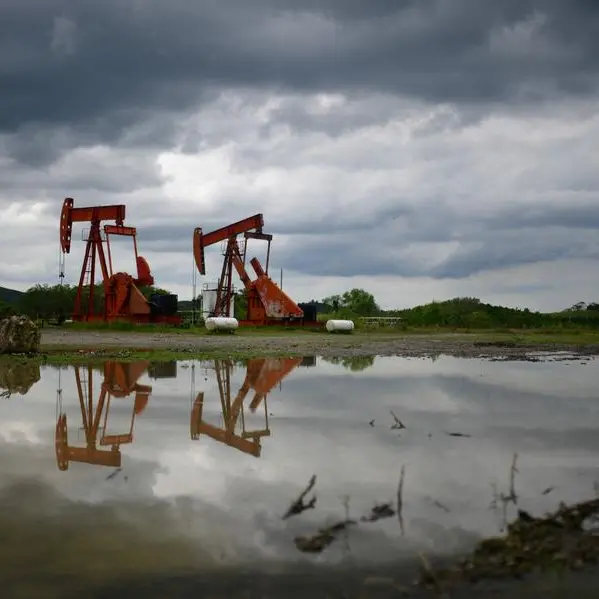
A spate of new announcements from international oil companies suggests Egypt's mature oil and gas sector remains formidable.
Despite significant political and economic problems in Egypt and falling crude production levels, the country's oil and gas sector remains attractive to international companies.
Oil and gas was the second-fastest growing sector in terms of investments in the country in the last fiscal year of 2010/11, rising nearly 17%, second only to the construction and real estate sector.
This is particularly impressive given that the last fiscal year was the worst for Egypt in years, with the overall economy contracting by just under 1% or barely rising, depending on which data you believe.
As the country aimed to pick up the pieces after the ouster of Hosni Mubarak, the second half of the year saw a 1.9% contraction in GDP, with overall investments in the country falling 17.6%, according to CI Capital Research.
A series of bloody protests and the Egyptian public's confrontation with the Supreme Council of Armed Forces (SCAF) was interspersed by successful elections to usher a new, democratic parliament.
Much to the dismay of the Egyptian army and western governments, the Muslim Brotherhood's Freedom Justice Party (FJP) and Nour party (Salafi movement) scored big victories in the election and secured a combined 72% of the votes.
January also saw the first parliamentary session since the January 25 Revolution, with Freedom and Justice Party (FJP) member Saad el Katatni elected as the parliament speaker.
While an economic recovery remains fragile, the Egyptian Stock Exchange is up 42% year to date (by February 20), compared to a 49% decline last year.
Source: CI Capital Research
In addition, the Egyptian government seems on course to secure a USD3.2-billion from the International Monetary Fund (IMF) at favourable rates, further helping the country's fragile fiscal situation.
In such a backdrop, while international investors are still wary of investing in the financial services sector, tourism and real estate, a number of announcements in the hydrocarbon's sector over past few weeks are heartening and may present in a new growth spurt in a mature area of the economy.
The Muslim Brotherhood's FJP is also paying special attention to the sector and is said to be reviewing "all oil and gas export deals" to generate $18-billion.
"This is a wildly hypothetical estimate, as it assumes trade partners, most notably Israel, will agree on changing terms of agreements," said economist Mohamed El Dahshan in a note.
Regardless of the FJP's estimates, there appears to be a growing interest in the country's oil and gas sector, and there is a desire to build on the country's oil output of 700,000 barrels per day of oil, despite significant challenges.
On February 20, U.S.-based Apache Corp, said that it is expanding its operations in Egypt's oil and gas sector, and has earmarked USD1-billion by 2013.
The company produced 103,000 barrels per day from Egypt, according to its latest filing, which is close to a third of its overall oil production.
Apache also produces 355,000 million cubic feet per day from its Egyptian operations.
Meanwhile, Shell reported that its joint venture with the Egyptian government made five new oil and gas discoveries in the Western Sahara region, as part of its USD600-million efforts to explore for fossil fuels in the country.
Kuwait Energy's partnership with Dover Investments and Egypt-based Beach Petroleum also yielded its fifteenth discovery in the country, taking its overall production to 17,700 barrels per day.
Others small players such as Qarun Petroleum, Sea Dragon, Dara Petrolum, BoraPetco and Pharaonic Petroleum are also investing in the country's hydrocarbon sector and have recently announced discoveries and investments in the country.
Sharjah-based Dana Gas also has substantial interests in the country. During 2011, Dana Gas Egypt produced gas, LPG, condensate and crude oil at an average rate of just over 42,500 boepd. This is similar to 2010 production, despite natural decline of production from existing fields and a slower pace of drilling of new production wells, the company said.
Other main foreign operators in oil exploration and production are BP (UK), Eni (Italy) and Repsol (Spain), which operate in the framework of production-sharing agreements (PSAs), with the state-owned Egyptian General Petroleum Corporation (EGPC).
In July 2010 BP and RWE of Germany announced that they would invest USD9 billion in exploring and extracting oil and gas on Egypt's Mediterranean shore. The fields are estimated to contain five trillion cubic ft of natural gas and associated condensate. In addition, the UK-based BG, Petronas of Malaysia and the EGPC plan to invest a further USD2 billion in their north-western Delta concessions.
Business Monitor International notes that there is no indication yet that the 2011 political changes will result in an adverse upstream business environment for foreign investors. "The delayed 2011 licensing round was delayed but reinstated, with a bidding deadline of end-January 2012," BMI said in a report.
SOLID INFRASTRUCTURE
Egypt's oil and gas infrastructure is on solid footing and may serve as a platform to build on. The country also has a ready transport hub in the Suez Canal, which may serve as an alternative route to the troubled Strait of Hormuz. Egypt's geographical proximity to the European and Asian markets does not hurt its viability as an energy exporting country either.
The North African country's proven oil reserves were recently increased to 4.4 billion barrels per day from 3.7 billion barrels per day in 2010.
"Despite new discoveries and enhanced oil recovery (EOR) techniques at mature fields, crude oil production continues its decline," says the U.S. Department of Energy (EIA).
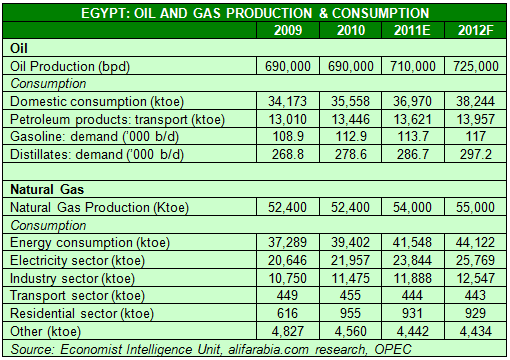
Oil consumption is estimated to be close to 710,000 bbl/d, almost equal to its production capacity.
"Oil imports are expected to continue with some refined product exports in the short-term, but are still contingent on domestic demand growth. The country did register a small volume of net oil imports in 2010."
Egypt also has the largest refining sector in Africa and its 975,000 bpd refining capacity now exceeds domestic demand, with the largest refinery being the government-owned 146,300-bbl/d El-Nasr refinery at Suez.
"The government has plans to increase production of lighter products, petrochemicals, and higher octane gasoline by expanding and upgrading existing facilities and promoting new projects," says the EIA. "Current plans call for expansion of refining capacity by over 600,000 bbl/d by 2016 and even further expansions into the next decade - requiring large amounts of foreign investment."
In January, Citadel Capital said it has raised USD3.7bn to build an oil refinery, with construction set to start in the second quarter and take four years to complete.
The country's oil output has been declining since 1996 when it peaked at 935,000 barrels per day, and most analysts don't expect the country to revisit that level any time soon.
BMI does not hold out much hope for Egypt's oil production sector and expects it to fall from 650,000 barrels per day in 2011 to 584,000 bpd by 2021. Meanwhile consumption will reach 1.02 million bpd by that period compared to the current consumption levels of 736,000, making Egypt a permanent net importer of oil.
PROMISE OF NATURAL GAS
Egypt's natural gas sector remains promising, especially as new natural gas field production has led to increases in the production of natural gas liquids and lease condensates, offsetting some of the declines in total oil liquids production.
The EIA notes that Egypt's natural gas sector has quadrupled between 1998 and 2009. According to the Oil and Gas Journal, Egypt's estimated proven gas reserves stand at 77 trillion cubic feet (Tcf), an increase from 2010 estimates of 58.5 Tcf and the third highest in Africa after Nigeria (187 Tcf) and Algeria (160 Tcf).
According to the latest available figures, Egypt produced roughly 2.3 trillion cf and consumed 1.6 Tcf in 2009.
With the ongoing expansion of the Arab Gas Pipeline, and LNG facilities, analysts expect Egypt to remain an important supplier of natural gas to Europe and the Mediterranean region.
In 2009, Egypt exported close to 650 billion cubic feet (Bcf) of natural gas, around 70% of which was exported in the form of LNG and the remaining 30% via pipelines to Lebanon, Jordan, Syria and Israel.
While exports to Israel have been a bone of contention in the post-Mubarak era, observers are divided whether Egypt will discontinue supplies to Israel due to the commercial agreements and political reprisal from the United States.
Egypt also has three LNG trains: Segas LNG Train 1 in Damietta and Egypt LNG trains 1 and 2 in Idku, with a combined export capacity of nearly 600 billion cubic feet per year with plans to expand these facilities.
The United States was one of the biggest importers of Egyptian LNG, but the number has fallen from 119,528 million cubic feet in 2006 to 72,990 in 2010 as the U.S.'s own domestic gas production takes off.
However, Spain, France and the rest of Europe are eager takers of the LNG, as Egypt's looks to exploit its close proximity to the gas-hungry north.
"Although gas production is expected to grow from 62.5bcm to 86.5bcm in 2011-21, consumption will also rise significantly, from 46.5bcm to 70.3bcm," notes BMI. "As a result, gas exports (LNG) will rise modestly in 2011-15, but then gradually fall to 16bcm by the end of the forecast period."
Indeed, there are many challenges to gas exports.
"Gas is heavily subsidised on the domestic market and plans to wean household consumers off butane and on to natural gas have made little progress, given that gas remains the more expensive of the two fuels by far," notes the EIU. "Heavy end-user subsidies have limited Egypt's scope to offer international oil companies competitive prices for deepwater exploration, and natural gas production has stagnated as a result."
Egypt's own gas consumption has doubled over the past decade to reach 39.4 million tonnes of oil equivalent. The country's electricity demand is rising at an average of 4.7%, which is expected to be met by gas-fuelled power plants.
CONCLUSION
The renewed developments in the oil and gas sector bodes well for Egypt, but it will require significant investment and exploration to turn Egypt into a net exporter - a position it enjoyed till 2009-2010.
Looking past the short-term challenges - which remain significant - Egyptian authorities have to provide for a rising population, which is set to hit 100 million by 2020 from an estimated 86 million in 2011.
The prospect of a rising oil import bill will hopefully compel the new government to attract more investments into the sector to take advantage of Egypt's natural resources.
The country is also looking at export options given its proximity to Europe and Asia, and its dire need for precious export revenues. But that may have to wait as the country first looks to meet its rising domestic demand.
© alifarabia.com 2012