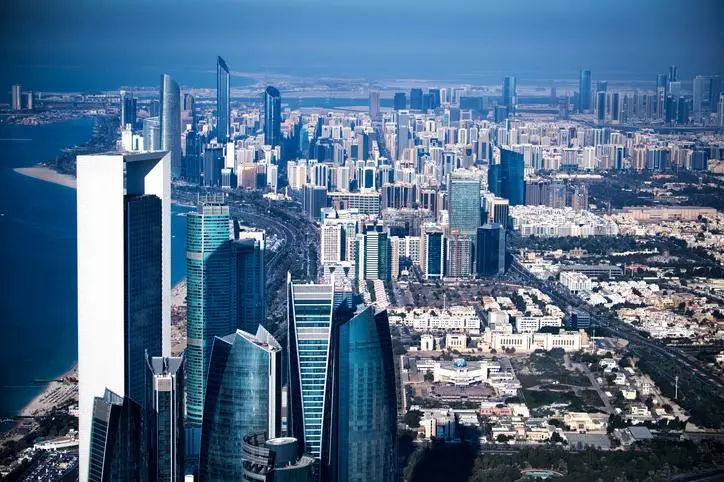
An unfortunate by-product of rapid development and phenomenal economic growth is waste. Dubai generates around 8000 tons of waste daily. Collection, treatment and proper disposal of this waste could be a logistical and ecological nightmare so it becomes imperative that measures are taken for the emirate to face a sustainable future. The Department of Environment of Dubai Municipality is responsible for ensuring that the Emirate is clean, healthy and safe to live in.
Dubai Municipality (DM) has its work cut out. It has to make sure that Dubai enjoys sustainable development which meets the needs of the present generation without compromising the needs of future generations.
The Environment Department's mission is to provide Dubai with an environment that is pollution-free and one which ensures community safety and sustainable development. This department is in charge of waste management which involves collection, treatment and safe disposal of all waste. Adopting the most advanced pollution control and monitoring technologies this department also implements innovative projects and programmes for the protection of the environment.
"Waste management is one of the oldest services in Dubai Municipality. Dubai Municipality was established over 50 years ago, and waste was already a top priority in those days. It's a service for the city," says Environment Department Director Engr Hamdan Al Shaer.
The Environment Department has three main sections, which collectively manage the waste generated in Dubai. The Waste Services Section is responsible for keeping the city clean. The Waste Treatment Section supervises and ensures safe disposal operations of waste produced in Dubai, either general waste produced out of domestic activities, hazardous waste from commercial and industrial development operations in the emirate, and medical waste (healthcare waste). The third section is the Environment Protection and Safety Section, which oversees environment planning, public safety, marine and sanctuaries protection and environment control concerns.
Managing waste in Dubai
With around 8,000 tonnes of waste generated everyday, waste management is a major concern for Dubai. It involves the proper handling of all types of waste to ensure a safe environment for the people while also reducing environmental risk. This will include collection, storage, transportation and ultimate disposal of all kinds of waste.
The Waste Services Section (WSS) is in charge of solid waste, a term used to describe domestic household waste and horticulture waste. These are the main activities, for which DM uses its own resources. "We are in charge of the whole city and we have dedicated more than 70 compactors for daily collection of waste from different parts of the city," explains Al Shaer.
WSS handles the collection, cleaning (including supervision of cleaning services provided by private contractors) and enforcement of regulations concerning public cleanliness. They even distribute biodegradable waste bags to the people.
The WSS is one of the busiest sections of the department, operating round the clock. According to Al Shaer, "In Europe or America probably this service is being done once a week. In Dubai, this is a daily, free service for collection and emptying of containers. In fact, there are some areas like Al Ras or in Central Business Districts like Al Ras and Bur Dubai where we do collection sometimes three times a day."
Private companies transport 55 per cent of the waste they generate to the department's disposal and treatment sites. "It's privatised in such a way that all these new developments like Nakheel or Emaar do their transporting by themselves. It's something that we've pushed for - these investors or businesses to do it themselves and spare the municipality, which could then concentrate on providing service for the city."
The collected waste is then brought to sanitary landfill sites (for general wastes) and to the municipality's Hazardous Waste Treatment and Disposal Facility (HWTDF) in Jebel Ali for hazardous and medical wastes. These treatment and disposal facilities are under the supervision of the department's Waste Treatment Section (WTS).
The hazardous waste facility is an integrated treatment plant for all hazardous waste from industry and medical institutions. Earlier each hospital had its own incinerator but Al Shaer informs us, "We got rid of these incinerators because the hospitals are within the city. We have a system or a Code of Practice for handling and transporting and dealing with medical waste. WSS do a proper segregation and collection and they store this waste in a refrigerated vehicle for transportation to this facility for proper incineration."
Challenges and initiatives
In a rapidly developing city like Dubai, and a burgeoning waste situation, one of the challenges faced by the city is a continuous pursuit of innovative methods of waste management. For example, while segregation of waste from source might already be practiced in many major cities in the world, this has not yet really taken off in Dubai. Dubai Municipality and the private sector have introduced efforts towards this end, but the practice itself presents a challenge to the Environment Department.
"We don't have what's called segregation at source," says Al Shaer. "Here, the system is not equipped to do this because the focus is on cleaning the city as fast as possible and as efficiently as possible. We introduce segregation of waste at source, but this will affect efficiency. In Europe - they can do it because collection is once a week. In our case, I can't do it because I have a truck which I have to take from point A to point B at a certain time so that the vehicle could return and do the whole thing over again. The routing has been studied carefully in order to cover more than 12,000 containers, which is a huge number. And this is being done so that nobody will complain that their waste has not been collected and it may create overflow on the road. Despite that, I admit, there are some overflowing bins, but if you imagine the effort, which have been deployed to deliver this service and on a daily basis so that we can get rid of 8000 tons everyday - that is something, which is too much," explains Al Shaer.
Hope burns brightly because Dubai Municipality is slowly but surely introducing this practice to Dubai residents, and is working with companies like Emarat for such an initiative. "We encourage people to use our recycling centres," says Al Shaer. "In Emarat petrol stations, you will find these recycling centres. I think this can be done. I believe some companies have already started it like Emaar and Dubailand - they are studying this. There are many initiatives in Dubai, which is after all, part of Dubai Municipality. These companies have their own management, so they can start from Day 1. If you deal with this issue from Day 1, it will be easy."
Dubai Municipality has formed a committee to study how waste can be converted to energy, which would then become a source for power generation. To this end they formed a special committee which has visited different countries such as Japan and Germany to see incinerators and study how to convert waste into energy. These countries have proper incinerators, which incinerate the waste and produce heat from which they generate an energy source. "This is under study," says Al Shaer. "We've seen some companies operate this service, but it's under deliberation and will take some time."
Code of Practice for the hospitality industry
Recognising the emergence of the hospitality industry as a major economic contributor, and therefore a major waste generator, the Environment Department, issued a Code of Good Environmental Practice for Hotels and Tourism Operators in Dubai in the year 2000. "This code has some requirements for good environmental practices for hotels and tourism operators. These are general requirements, which will engage a hotel, for example, to be environment friendly," says Al Shaer.
Although there are no exact figures yet about how much waste the hospitality industry generates. Al Shaer says, "It is important to those in this industry to conduct their businesses in an environmentally friendly manner to present a positive environmental image of Dubai, which in turn will help our guests to behave in an environmentally responsible way as well."
The Code provides a guide that addresses key issues pertaining to waste generation, littering, water and energy resource conservation, disturbance of natural habitats, noise pollution, safe use of chemicals as well as safe waste disposal in the hospitality industry. It prescribes a three-level approach in addressing these issues, which include auditing, training and communication of good environmental practices to industry stakeholders.
Hotels are also subject to pay Cleanliness Fees, "For commercial operations, they pay fees called Cleanliness Fees. These fees support the operation of waste management within Dubai. Hotels are large contributors. If you see the fee structure - the highest fees have been levied on hotels. Five-star hotels pay Dhs80,000; four-stars pay Dhs60,000; three-stars pay Dhs40,000; two-stars Dhs20,000; and one-star Dhs10,000 per annum. They are high cleanliness fees, but hotels have another option. If they hire a private contractor they need pay only 25 per cent of these fees."
While many Dubai hotels now have adopted environment-friendly practices on their own initiative - Al Shaer believes that more can be done. His wish list includes more green hotels in Dubai. "We need more hotels applying green building concepts in which waste management, power saving, water conservation, etc are considered in the design. It's a concept, which we need hotels to consider. This is something, which we need to have - a green hotel."
Al Shaer emphasises that his department is always ready to work with those in the hospitality industry on environmental issues. "I'm extending my offer to all the people in the hotels if they require any assistance, for example, they require people to lecture to their staff, we can do it. We are ready to deploy our people to send someone to them."
For information: Tel +971 4 2064645, info@dm.gov.ae, www,environment.gov.ae
For pull quote
"Waste management is a concept, which involves the proper handling of all types of waste to ensure a safe environment for the people while also reducing harm to the environment"
"Dubai Municipality is committed to the ways of sustainable development - a development, which meets the needs of the present generation without compromising the ability of future generations to meet their own needs"
Clean up the World is one of the world's largest volunteer clean-up drives, which attracts more than 40 million volunteers from over 120 countries every year in an attempt to increase public awareness and initiate practices for keeping a safe and healthy environment. Clean up the World originated in Australia and was the brainchild of Ian Kiernan.
Dubai Municipality has been organising the campaign for 13 years, starting in 1994 and growing to attract an increasing number of individuals, institutions, companies and various government institutions. In 2006, over 15,000 volunteers took part in the campaign during which 3,514 tonnes of waste including debris, abandoned vehicles, etc, were collected and disposed.
This year, the Clean up the World campaign takes place from November 20 to 23.
© Hospitality 2007