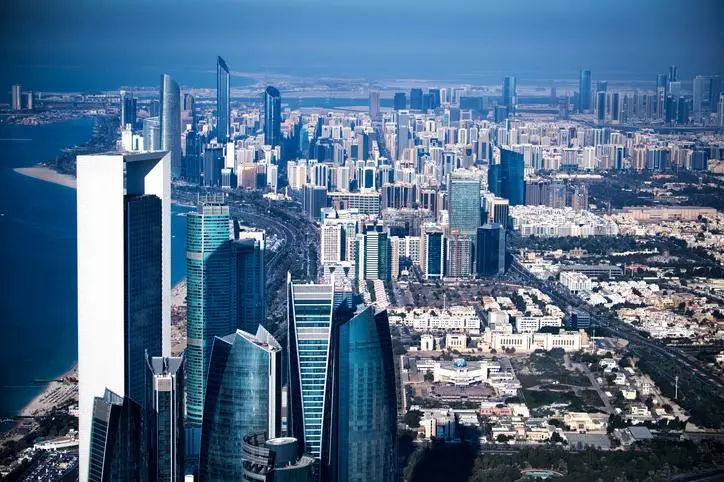
UBS ranks Dubai as the 27th most expensive city in the world, but as prices in the emirate have come down considerably, the purchasing power of its citizens is now greater than those in Hong Kong, Moscow and Shanghai.
Dubai is the 27th most expensive city in the world according to the latest UBS survey of 73 countries - a considerable drop from the UBS's 2009 survey which placed the city at 19th spot.
Interestingly though, Dubai's ranking is not better than previous surveys when Dubai was ranked 37th (in 2006, at the height of the boom) and 41st (in 2008, just before the global financial crisis) out of 73 global cities.
The reasons are manifold. Foremost is the major currency fluctuations, which have made many European and Australian cities much more expensive and many American cities much cheaper. Given the UAE's peg to the U.S. dollar, the cheaper currency has made it a more affordable place to live and visit, according to the survey which looks at a basket of 122 goods and services and then weighs them as 'representatively as possible.' New York is chosen as the base city.
"Since 2009, the US dollar has slipped by more than one quarter against the Swiss franc, the euro is down roughly 20 percent on the Swiss franc from two years ago when the "Prices and Earnings" data was last compiled, while the Australian dollar appreciated against the US dollar by more than 40 percent," says the Swiss bank.
Indeed, New York is no longer one of the most expensive cities in the world, dropping out of the 10 most expensive cities in the world, which is certainly a reflection of the economic lethargy of the American economy, but, on the plus side, also suggests that the capital of the financial world has become less costly.
RENTAL CUTS
Average residential price in Dubai declined 52% between the third quarter of 2008 and the second quarter of 2010, but the market continues to plumb new depths. Average rental rates have fallen a further 19% year on year basis in the emirate, according to a second quarter report by CB Richard Ellis.
Still, prices in Dubai are higher than Los Angeles, Shanghai, Amsterdam and Hong Kong, and certainly more expensive than neighbouring Doha - placed at 55 -, Manama, at 62, and Cairo, placed 69th out of 73 cities.
The difference between Doha and Dubai prices suggest that even after a massive real estate price correction and depreciating dollar, Dubai remains expensive at least at a regional level.
PRICE LEVELS | |||
| City | Excluding Rent New York = 100 | Including Rent New York = 100 |
1 | Oslo | 139.1 | 108.9 |
2 | Zurich | 135 | 105.5 |
3 | Geneva | 133.1 | 106.5 |
4 | Copenhagen | 118.4 | 89.4 |
5 | Stockholm | 117.5 | 88.5 |
6 | Tokyo | 112.6 | 94.2 |
7 | Sydney | 107.7 | 89.1 |
8 | Helsinki | 103.5 | 81.5 |
9 | Toronto | 102.8 | 82.1 |
10 | Singapore | 102.4 | 88.3 |
11 | Vienna | 102 | 75.2 |
12 | Paris | 100.9 | 82.8 |
13 | Luxembourg | 100.1 | 77.1 |
14 | New York | 100 | 100 |
15 | London | 99.8 | 82.5 |
16 | Munich | 99.7 | 75 |
17 | Montreal | 99.4 | 77.6 |
18 | Frankfurt | 98 | 76.3 |
19 | São Paulo | 96.5 | 74.5 |
20 | Dublin | 95.7 | 78.8 |
27 | Dubai | 89.7 | 82.7 |
37 | Hong Kong | 82.3 | 76.5 |
45 | Bangkok | 72.4 | 50.5 |
49 | Shanghai | 69.6 | 53.1 |
55 | Doha | 64.3 | 59.2 |
62 | Manama | 59.5 | 48.7 |
69 | Cairo | 50.5 | 35.6 |
73 | Mumbai | 40.2 | 32.5 |
Source: UBS |
WAGES NOT THE SAME AS PURCHASING POWER
While Dubai may be the 27th most expensive city in the world, it is the 37th best place in the world for wages, easily the best in the region.
But this disparity between price and wage levels highlights the reasonably high cost of living still persisting in the city. The five most expensive cities - Oslo, Zurich, Geneva, Copenhagen and Stockholm (in that order) also happen to be among the best paying with Zurich, Geneva, Copenhagen and Oslo (in that order) as the top four; Stockholm comes in at number six.
Dubai ranked 32 in domestic purchasing power, Doha 45th and Cairo residents' purchasing power was ranked 65th.
These metrics highlight the high quality of life - high prices, but equally high wages - which is where European cities appear to have the advantage.
"Although emerging markets exhibit high to very high economic growth rates, most of them cluster in the lower part of the rankings," says UBS.
"This means that the countries with the highest growth rates may move up in the rankings, but will require a long time to leave the emerging market cluster. Examples are Shanghai and Doha, which on the back of high growth rates moved up by one and three places respectively, but still find themselves in the emerging market cluster."
WAGE LEVELS | ||
| City | Gross New York = 100 |
1 | Zurich | 144.1 |
2 | Geneva | 138.8 |
3 | Copenhagen | 134.8 |
4 | Oslo | 116.9 |
5 | Sydney | 111.3 |
6 | Stockholm | 101.9 |
7 | New York | 100 |
8 | Luxembourg | 95.5 |
9 | Munich | 94.5 |
10 | Los Angeles | 91.3 |
11 | Frankfurt | 90.6 |
12 | Brussels | 90.2 |
13 | Helsinki | 87.4 |
14 | Toronto | 85.4 |
15 | Montreal | 84.2 |
16 | Dublin | 83 |
17 | Amsterdam | 82.7 |
18 | Berlin | 81.3 |
19 | Tokyo | 80.8 |
20 | Chicago | 80.6 |
37 | Dubai | 41.5 |
41 | Moscow | 36 |
42 | Singapore | 35.8 |
43 | Hong Kong | 35.2 |
49 | Manama | 25.8 |
53 | Doha | 21.7 |
67 | Cairo | 11.6 |
73 | Mumbai | 6.9 |
Source: UBS |
SOME WAY TO GO
Despite the decreasing cost of living, Dubai's denizens and residents still do not appear to be paid in line with the price levels prevalent in the city.
DOMESTIC PURCHASING POWER | ||||
| City | Hourly pay | Hourly pay1 | Annual |
1 | Zurich | 106.7 | 110.5 | 106.9 |
2 | Sydney | 103.4 | 109.5 | 97.1 |
3 | Luxembourg | 95.3 | 107.6 | 97.5 |
4 | Miami | 101.4 | 104.8 | 101.8 |
5 | Los Angeles | 103.7 | 104.7 | 101 |
6 | Dublin | 86.7 | 101.7 | 92.6 |
7 | Geneva | 104.3 | 100.6 | 93.8 |
8 | New York | 100 | 100 | 100 |
9 | Chicago | 97.9 | 96.3 | 88.8 |
10 | Nicosia | 76.2 | 93.7 | 80.1 |
11 | Montreal | 84.7 | 89.1 | 84.1 |
12 | Berlin | 93 | 88.9 | 77.1 |
13 | Brussels | 96.7 | 88.1 | 75.8 |
14 | Helsinki | 84.5 | 86.4 | 76.7 |
15 | Toronto | 83.1 | 86 | 80.7 |
16 | London | 79.8 | 84.9 | 75.3 |
17 | Copenhagen | 113.8 | 84.8 | 71.9 |
18 | Amsterdam | 93.8 | 84.1 | 74.6 |
19 | Frankfurt | 92.4 | 84.1 | 73.4 |
32 | Dubai | 46.2 | 63.9 | 67.7 |
36 | Manama | 43.3 | 57.4 | 62.4 |
37 | Moscow | 47.1 | 55.2 | 49 |
40 | Hong Kong | 42.8 | 53.8 | 59.8 |
45 | Doha | 33.7 | 46.6 | 54 |
47 | Singapore | 34.9 | 40.7 | 42.5 |
61 | Shanghai | 25.6 | 27.5 | 26.9 |
65 | Cairo | 23 | 24.9 | 28.1 |
66 | Bangkok | 18.9 | 24.8 | 26.7 |
Source: UBS |
"We expect inflation in 2011 to average 2.5 per cent owing to an increase in prices of grains, sugar and other basic items. However, low housing costs will keep inflation at a manageable level, at an average of 2.2 per cent in 2011-15," notes the EIU.
The UBS survey echoes the Mercer Survey published in July, which ranked Dubai as the 81st most expensive city in the world, a drop of 26 places from the previous year.
"Dubai in particular has witnessed a reduction in accommodation costs since 2009 as the strong supply of property coming on to the rental market has reduced the shortage that existed in the several years prior to 2008," says Callum Burns-Green, head of Mercer Dubai.
"The Government has also announced plans to control inflation in other key areas such as the cost of food."
Like UBS, Mercer notes that cities in the Middle East have moved down the table reflecting a reduction in cost relative to other regions.
"Where the depreciation has been accompanied by political stability and good levels of security, such as in the UAE, all other things being equal, we would generally expect a favourable impact on those cities from an economic perspective as expatriates and their employers see a reduced cost of living and doing business there."
© alifarabia.com 2011