Friday, Oct 21, 2011
Gulf News
Dubai The news that rents are continuing to fall in Abu Dhabi as more property comes online would come as a surprise to few in the capital.
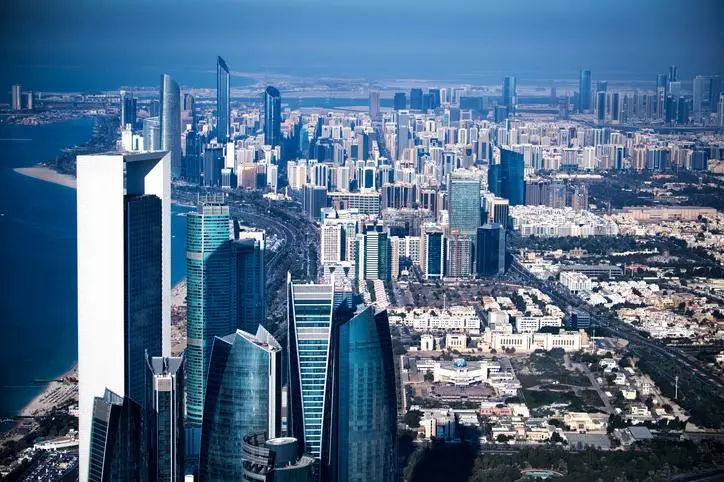
While construction appeared to slow down during the summer, the completion of the flagship project on Sowwah Island, the Abu Dhabi Stock Exchange, the long-awaited Salam Street and the Sorouh’s Sun and Sky Towers certainly seems to have got the ball rolling again.
But falling rents are always a double-edged sword. While it bodes well for residents — who for years have had to pay over the odds for sub-standard housing — concerns over a second global economic recession have constrained demand in the third quarter of 2011, causing worry among developers who have projects almost ready to come online.
With the expectation that rents will drop by 10-20 per cent throughout 2012, the Abu Dhabi government has decided to step in.
“The government is putting restrictions on funding the developers to slow down the delivery in order to control the oversupply in the market, which will push the prices down,” said Craig Plumb, director of research at Jones Lang LaSalle.
“The government seeks to supervise this matter and to help save incurring additional costs with increased vacancies and downward rental pressure.”
More options
But he pointed out that the higher completion levels currently filtering through are providing more options for tenants in both the office and residential sectors of the market. In 2010, increased supply and vacancies in new good quality buildings resulted in rent declines of around ten per cent for prime two bedroom apartments and more than 30 per cent for lower quality units. This trend is set to continue.
“The property market’s recovery may take a few more years given the immense size of the sector, although it can pick up if demand for properties increases against profitability in terms of lower profit margins, lower returns and lower finance,” said Masoud Al Awar, CEO of Tasweek.
“The UAE still has over Dh157.5 billion worth of projects in the pipeline with developers looking to diversify their property development projects to cater to rising demand from overseas clients who are showing strong interest to invest deeply across assorted property sectors.
“This is subsequently shaping up fundamentals in terms of reasonable and justifiable pricing, facilities, amenities, project quality, infrastructure, mortgages or real estate financing, availability of real data, and location differentiation,” he added.
But Al Award said that the biggest challenge facing the property industry is finance-related.
“The biggest challenge will be to improve real estate financing and legislation, which will be crucial in strengthening confidence in the UAE market,” he said.
He blamed developers who turned out to be mere contractors rather than real developers whose work is to fully finance the projects rather than seeking to be financed.
“Availability of real estate financing contributes to enhancing confidence and trust because the majority of banks and financial entities are now in a much stronger position with their high liquidity to offer fin-ancing facilities,” he said.
Demand for property, he added, has also been influenced by the growing population in addition to the significant increase in tourism nationwide.
Positive demand
Mohammad Nueimat, chairman of Al Husn Real Estate, believes that Abu Dhabi’s property markets are entering a new phase, one marked by enhanced supply, quality and increasingly value-conscious demand.
This will reward well-built and well maintained stock as rents continue to decline.
“There will be a positive demand for high quality units which provide parking and other amenities and services,” he said. Abu Dhabi has recently begun to offer higher quality and more affordable property choices in the office, retail and residential markets, he added.
“This is a trend that will impact the mood of property buyers and investors, who are now more circumspect when investing in real estate,” he said.
Earlier this month, Asteco Properties issued a report which showed rents for flats have fallen on average by six per cent compared with the second quarter, representing a small reduction in the rate of decline witnessed in the preceding three quarters. The report revealed villa rents remained relatively static in the popular villa communities in contrast to off-island private villas, which continue to fall by an average five per cent.
Favourable market
Elaine Jones, CEO of Asteco Property Management, said there was strong demand from people seeking to upgrade and secure better value for money.
“This trend is set to continue as future improved quality accommodation is handed over in the coming months,” said Jones.
According to LaSalle’s report, Grade A office stock across Abu Dhabi increased by 55,000 square metres to almost 2.4 million square metres in the third quarter, with further downward pressure on rents expected in both Grade A and B office sectors.
As for residential spaces, additional supply continued to enter the market during the third quarter with a further 2,800 units delivered, according to the report.
“With the current residential stock of 193,000 units rising to more than 246,000 units by end of 2013, the Abu Dhabi residential market will continue to be favourable for both buyers and renters,” the report said.
abu dhabi
shifting trend
30%
rental drop expected in lower quality units
10%
drop in rents for two-bed units in 2010
Dh157.5b
of projects in the pipeline across the UAE
ABDEL-KRIM KALLOUCHE/Gulf News archive
Property demand
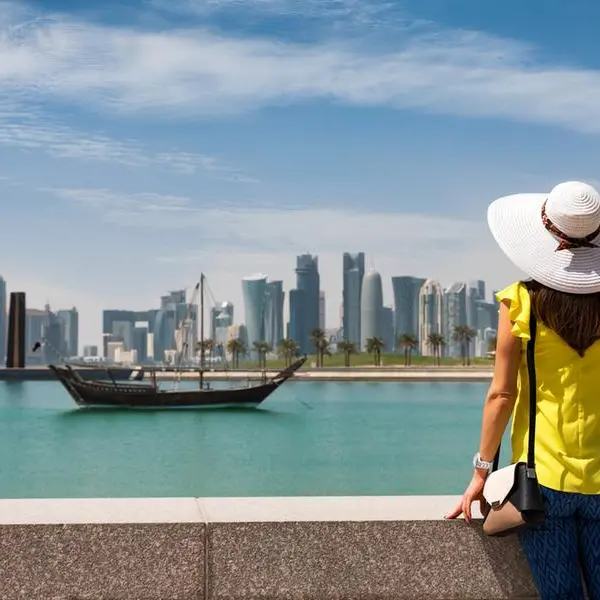
A family enjoys the weather around the Abu Dhabi Theatre, BreakWater. Rents in the emirate are expected to continue to drop in 2012 as more and more developments are announced and completed.
By Shehab Al Makahleh?Staff Reporter
Gulf News 2011. All rights reserved.