With major financial centres reeling from global turmoil, Dubai once again has a chance to attract the emerging economies' burgeoning financial services sector.
On Wednesday, Sandy Weill, the former chief executive officer of Citibank said four words that would have been unthinkable coming from a Wall Street legend just a few years ago: break up the banks.
This is perhaps a humbling acknowledgement from one of the biggest advocates of 'too-big-to-fail' banks. Clearly, the North American and European financial services sector is deleveraging, about to be broken up and lose their clout globally.
In the past few weeks alone, banks like Barclays, HSBC and JP Morgan have gifted regulators with the golden opportunity to cut them down size and burden them with excessive rules and policies.
The developed economies' financial centres and institutions are unravelling, leaving the door open for new players to take their place.
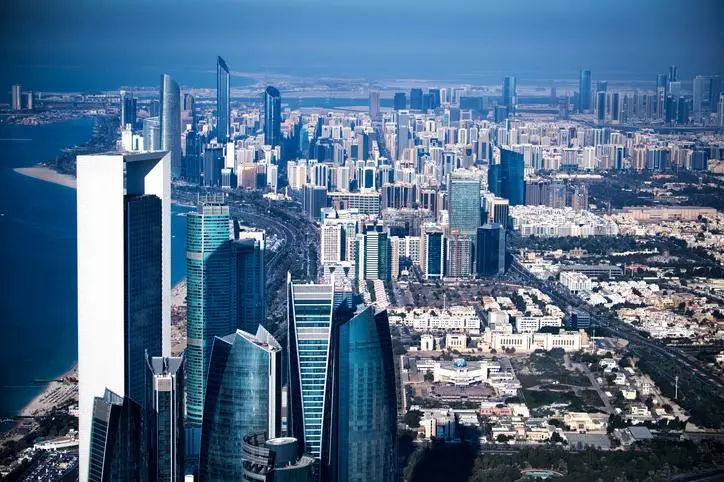
In that context, Dubai International Financial Centre's first annual report could not have come at a better time. Among the many items of note in the review was DIFC's intention to build an additional two million square feet of office space within the next few years.
That's just as well. Given DIFC's occupancy rate of 95%, the centre will need the space soon enough, especially if it's successful in tapping into the wealth of opportunities available in emerging economies.
"Growth in emerging markets have also contributed to DIFC's growth... we see an increase in the number of companies from the Middle East and Asia, mainly China and India, who register in DIFC," said Abdulla Al Awar, DIFC's chief executive officer, according to Zawya Dow Jones.
That should not come as a surprise. Emerging economies' financial services sector has practically exploded over the past few years.
After a lull during the global financial crisis, DIFC issued 135 new licences in 2011, a 19% growth over the previous year.
However, DIFC data shows that currently 53% of its clients are from either North America or Europe, with another 26% from the Middle East. Only 11% of firms registering in DIFC are from Asia, and another 9% from the rest of the world.
Clearly, Dubai has barely the scratched the surface of Asia's financial services sector.
FOCUS ON ASIA
Of course, that was the original idea in creating the DIFC - to focus on the region.
"The region is at the centre of a major shift in global capital flows from developed countries to growth markets," notes the DIFC report. "Comprising more than 42 countries with a combined population of approximately 2.25 billion people, this region has a nominal GDP of USD6.3 trillion (2011 estimate)."
DIFC got distracted, however, and getting a Wall Street or City of London bank on board seemed more prestigious than seeking out banks in Indonesia, China, India, Russia and Turkey. While the global financial crisis of 2008 was a setback to Dubai's ambition, the emirate is slowly returning to fine form.
Indeed, the current crisis in the developed world's financial services sector offers Dubai another opportunity to tap into the great legions of emerging market banks looking to spread their wings.
The scope of opportunities is truly breathtaking: As many as 39 emerging economies had at least five banks in The Banker's annual survey of the Top 1000 World Banks at end-2011, up from 24 countries at the end of 2004. The total number of banks in these emerging economies in the Top 1000 has increased by 81% from 285 to 516 banks; now accounting for over half of all banks in this ranking.
"China has seen the biggest growth with a more than fivefold rise from 19 to 110 banks in seven years," notes a report from TheCityUK, a consultancy focused on promoting London as the world's premier financial centre. "The number of banks in India has grown from 22 to 36; in Russia from 24 to 30; and in Brazil from 16 to 21."
Bank assets in Russia has grown 481% in six years, while Brazil (426%), China (400%), India (264%) Indonesia (232%) have also posted impressive growth during the period.
At the moment emerging economies draw heavily on the financial centres of London and New York to finance infrastructure and other major projects.
Such cross-border borrowing has risen by 128% from USD1,989bn in 2005 to USD4,152bn in 2011, although it fell back from USD4,526bn in 2010, notes TheCityUK research. Brazil is the largest borrower of cross-border funds, with USD509- billion loans outstanding at end-2011. It is followed by China, with USD474- billion loans outstanding; Mexico USD335- billion; India USD276- billion; and Poland USD250-billion.
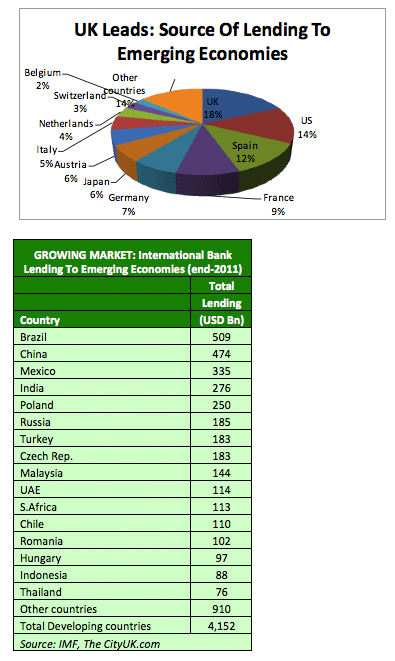
Dubai has a chance to grab a slice of that fast-growing market. Indeed, the emirate's proximity to some of the largest and most ambitious sovereign wealth funds in the world makes it an ideal meeting place for financiers and finance seekers.
But there is a long way to go. It will take a while for places like London, Paris and Luxembourg to give up their positions as premier financial hubs. Meanwhile, Hong Kong and Singapore are already more natural hubs for Asia Pacific economies, but Dubai could emerge as a gateway to greater Middle East, Africa and CIS States.
Of course, the emirate will have to put its own house in order. Dubai's own financial market has sputtered and has been unable to fulfill its potential of attracting small regional firms.
The emirate will also need to go beyond building swanky office space, and bolster its financial services regulations that are more transparent and predictable.
Dubai has all the other pieces of the puzzle well in place to emerge as a truly sustainable financial services hub - great communications, transportation and a logistic infrastructure, a strong retail, tourism sector and enviable quality of life.
After all, it won't be the first time the emirate has wrested initiatives from other markets.
© alifarabia.com 2012