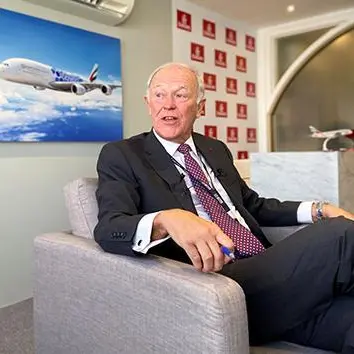
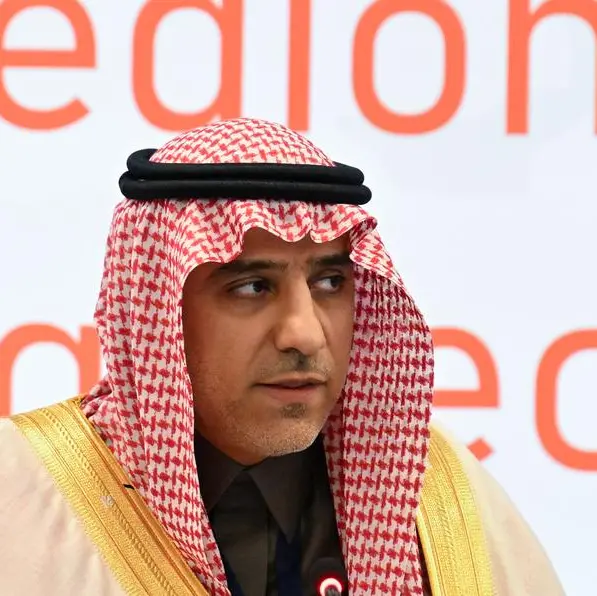
H.E. Mr. Ashraf Ahmed Moustafa El-Ghamrawy, Vice Chairman and Chief Executive of Al Baraka Bank Egypt and Adnan Ahmed Yousif, President of Al Baraka Banking Group and Chairman of Al Baraka Bank Egypt, spoke to Banker Middle East about the progress of the Islamic banking system under the auspices of the planned reforms for Egypt's banking system
With the change in Government, are you seeing regulatory changes to encourage the growth of Islamic banking and investment products?
El-Ghamrawy: The laws that regulate the banking sector in Egypt do not differentiate between conventional banks and Islamic banks. However, since the election of the Muslim Brotherhood party coming to power in 2012, talks have begun about probable amendments to the law by the Central Bank of Egypt that allows Islamic banks to expand more and obtain a bigger market share in the Egyptian banking market. A positive sentiment has emerged from the realms of the Egyptian Government towards a commitment to consolidate the role of Islamic banks and their expansion in the Egyptian banking sector and indeed in the Government's intent to launch religious products and services that agree with the provisions of Islamic law. This intent is cemented by the Egyptian Ministry of Finance having launched for the first time, variable return treasury bills that agree - to a great extent - with the provisions of Islamic law. In addition, preparations are underway for the issuance of Islamic certificates. Accordingly, we expect an amendment into the current law to be issued by the Central Bank of Egypt that accommodates the ethical fundamentals and compliant service orientations that fit Islamic banks.
Yousif: One of the main issues, there has been lot of debate over, is the Sukuk bill which has finally been approved. That will open the door for Islamic banks, because we like to invest part of our liquidity in Sukuk.
They are also trying to implement a new capital adequacy for Islamic banks, which would be in line with recommendations from the Islamic Financial Services Board in Malaysia. This shows that they are understanding Islamic banks better.
What is your opinion on the volume of business generated by Islamic Banks in Egypt? What is Al Baraka Bank's share and how will you drive this share over the next five years?
EL-Ghamrawy: The role of Islamic banks in the Egyptian banking sector is still relatively limited in comparison to the larger banking entities (especially the banks in the public sector) that operate in the conventional banking segment. There are three pure-play Islamic banks of which Al Baraka bank is one. There are 37 banks that operate in the conventional banking space with some of these operating Islamic branches and windows. However, we hope that in the near future - as we have pointed out - the role of Islamic banks will increase and the nature of their business and products will gain appreciation and more demand from the public that deals with banks; that the supervisory legislations would allow providing an appropriate business climate for such banks in the manner than enables them to obtain a bigger market share.
In pursuit of this, we would like to point to the good reputation that our bank enjoys in the Egyptian banking market and for our products that are recognised for their Shari'ah compliance, and have resulted in gaining deposits. It is worth mentioning that Baraka Banking Group is the main and strategic investor at the bank and has pioneered Islamic banking in Egypt. In addition, it has created an integrated platform of investment and savings products and services that accommodate the requirements of a greater expanse of our banking divisions and customers. The bank continuously aspires to update and develop its products in order to provide the best developed banking services in order to obtain the maximum degree of approval and satisfaction from its clients.
Yousif: Right now, Islamic banking penetration is very small. I don't think it's gone beyond 15 per cent. But there is a lot of potential and there are a lot of new projects coming that will be financed in two tranches, by both Islamic and conventional banks. This is a very good move; in the past, all these big projects were financed by traditional lending, so we were excluded. Some of the projects, especially in the oil sector and the petrochemical sectors, are very attractive and we are interested in participating.
In Egypt, there has only been Faisal Bank and Al Baraka Bank Egypt for 30 years. There is also a new bank which has just been acquired; the National Société Générale Bank has been acquired by Qatar National Bank which is a very good by the Qataris to expand in the market.
Al Baraka's market share in Egypt is around five per cent - not more than that. However, we are growing very fast; we are going to have about 30 branches by the end of 2013. We anticipate having 50 branches by 2015. We have already disclosed our profits for 2012 and there was a very good increase of 35 per cent, compared to 2011.
How are you growing market share (new branches, marketing campaigns)?
El-Ghamrawy: The current number of bank branches in Egypt totals 23 branches, apart from currency exchange offices. In 2012, the Bank obtained the approval of the Central Bank of Egypt to open nine new branches, a significant matter that reflects the strength of the financial position of the bank. This development falls within the strategy of Al Baraka Bank in terms of its expansion and geographic spread to satisfy the requirements of its customers. The bank has purchased new headquarters for its head office in New Cairo, an area that is currently being equipped with the latest infrastructure.
The bank is also seeking the biggest market share possible through continuing to develop its system of savings vehicles and by developing its financing programmes, whether at the corporate level or individual level. The bank looks towards greater vertical expansion by retaining and partnering further with its good and current clients that are active within the petroleum, gas, communications, imports and food consumption sectors, in addition to horizontal expansion with new clients that enjoy high credit worthiness.
Moreover, the bank endeavours a more cautious expansion in the retail financing programmes where the bank has launched products for clubs subscription, health treatment, schools, tourism and pilgrimage and minor pilgrimage related programmes, as well.
Yousif: Demand for Islamic banking is huge. We have a lot of Christians who like our activities, and we always say that Islamic banking is not just for Muslims, it is for everybody. Usury is also forbidden in Christianity, Judaism and many other world religions. Sheikh Saleh Kamel used to say that he would rather Islamic banking was named after the Prophet Ibrahim. It is for everyone.
Islamic finance, in general, goes to the real economy. This is very important because sometimes if you just lend for the profit you might hurt the economy. There has been a lack of understanding about this in Egypt. I opened two Islamic banks in the UK, and the UK was very good. They researched, saw its value and accepted it. I created the Islamic Bank of Britain and the European Islamic Investment Bank (EIIB). I was also the Chairman of EIIB. It takes a while for a country to understand and accept it. It is a business decision.
© Banker Middle East 2013