If policymakers don't start thinking particularly about particulate matter, the minuscule specks of toxic dust could continue giving construction workers respiratory trouble and hurt Qatar's image as an environmentally progressive country.
Qatar's carbon monoxide pollution levels are extremely low - one fortieth of the suggested limit, according to the Qatar Statistics Authority (QSA)'s recent Environment Day study. Ozone, sulphur dioxide and nitrogen dioxide levels lie well below their ceilings, too. So why is Qatar failing resolutely in one category, airborne particulate matter?
The annual standard for particulate matter - essentially airborne dust and mineral particles - in Qatar is 50 micrograms per cubic metre, according to Qatari legislation. Basically, Qatar seems to be breaking its own law; levels range from 105 to 185 micrograms per cubic metre at the Aspire Zone, Qatar University and the Corniche.
So the country gets a four-out-of-five for adhering to air quality standards, or a B- in most classrooms. But out of the five, particulate matter is the most hazardous to human health, according to the QSA.
Particle pollutants in Doha multiplied at a yearly rate of 5.4% between 2007 and 2010, according to QSA's 2011 Sustainable Development Indicators report. The study specified that the increase could be attributed mostly to sandstorms. The Middle East's natural sands and salt from the Gulf are well-known contributors to particle counts. A construction industry that seems to be raising buildings on fast-forward and increasing vehicle exhaust add to the total as well.
"This is a desert area, so it is natural," says Khalid Al-Shajra, Head of Monitoring and Evaluation at the Ministry of Environment (MoE).
But even if most particulate matter swirling around the city is an act of nature - which isn't proven, according to Al-Shajra - should the progressive GCC state be combating it anyway?
Construction dust from land clearing, diesel engines, demolition, burning, concrete mixing and wood cutting contributes to this airborne matter count, according to SustainableBuild.co.uk, an expert-based, eco-friendly construction website. Al-Shajra says that currently scientists are unable to confirm the exact sources of the offending particles in Qatar.
Work while wheezing
Dr Antony Joseph George of Aster Medical Centre doesn't deal in the causes of particulate matter pollution, but he regularly treats its effects. An internal specialist of 40 years, George has treated patients from the Industrial Area as well as residential neighbourhoods.
"Environmental health is a major factor in determining the health status of a society," he says. "The air can be contaminated through many factors. To humans it can cause or precipitate many diseases."
Particulate matter can make its way into the lungs with detrimental effects, according to SustainableBuild. Possible health problems include asthma, wheezing, coughing, bronchitis and chronic respiratory illness. But average Doha inhabitants won't necessarily feel these effects.
"Those who have more or less exposure to dust, for example industrial dust or raw dust, they have more problems," George explains.
He insists that companies functioning in polluted conditions must provide workers with sufficient eye and mouth protection. It is also pertinent that they go to clinics regularly for check-ups, regardless of their mask usage. And if the issues persist, he advises moving a sick employee to a job with less exposure.
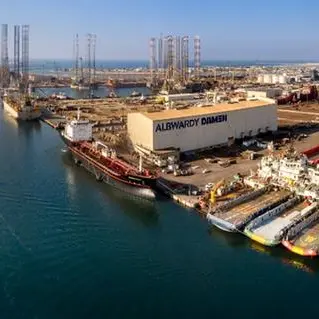
"We get a lot of patients from some particular industries," George says. "There are workers near the harbour, where a lot of sand is imported. It will produce a lot of atmospheric pollution with the dust, and we see many patients with chronic respiratory problems from the exposure to dust.
"Health education is very necessary to make them aware of the benefits of wearing the masks. The employer and employee, they should both have the understanding that [pollution] can produce health
problems."
In addition to relying on protective gear, companies can use water to bring the particles down to the ground, says Al-Shajra. Planting trees helps trap the dust on leaves, and heavy materials laid over construction areas stop the dust from rising into the atmosphere. Workers should only spend one to two hours at a time under the heavy materials, and should be provided air conditioners or filters.
CURRENTLY QATAR AIR QUALITY MEASUREMENTS DEAL WITH PM10, OR PARTICULATE MOLECULES THAT ARE 10 MICROMETRES OR SMALLER. MOE HAS BEGUN MEASURING PM2.5, AS WELL, WHICH ARE TINIER, HARDER TO PINPOINT AND MORE DANGEROUS TO HUMANS. QATAR HAS NOT YET SET ITS STANDARD FOR PM2.5. ONLY THEN WILL THEY HAVE AN ENTIRELY ACCURATE PICTURE OF PARTICULATE POLLUTION IN THE CITY.
THE US DEPARTMENT OF DEFENSE, IN COLLABORATION WITH THE DESERT RESEARCH INSTITUTE (DRI) IN NEVADA, CONDUCTED THE ENHANCED PARTICULATE MATTER SURVEILLANCE PROGRAMME (EPMSP) ON PM10 AND PM2.5 AT US MILITARY BASES THROUGHOUR THE MIDDLE EAST. TO DISTINGUISH AND QUANTIFY SOURCES OF DUST AND OTHER POLLUTANTS REQUIRES CHEMICAL ANALYSIS,AND MODELLING OF THE PARTICULARATE MATTER, SAYS JOHANN ENGELBRECHT, A RESEARCH PROFESSOR AT THE DRI.
The Industrial Area blues
It's a blustery day in the Industrial Area. Ezekiel Akujobi, a young Nigerian worker, stands to the side of Industrial Street clad in a blue jumpsuit hidden beneath layers of flaky beige. Unlike many others, he's eager to talk. "I'm a frank person," he explains simply.
Akujobi doesn't divulge what company he works for, but of the conditions he works in he says: "The environment is detrimental to our health.
"The worst part is the masks, it's not always available. It's a problem. There's no medical allowance. Most of the companies here.... are not competent, and the people tend to suffer more."
As Akujobi speaks, I recoil against the wind, covering my eyes and scooping grains of sand out of them.
"See?" He points at me, saying that he has developed eye problems since moving to Doha a year ago. When I ask about coughing, he says that "respiratory problems" are "rampant" among his co-workers.
One man from the Philippines, Ruben Caduyac, says that sometimes he gets a mask and sometimes he doesn't. He works for cement company Al Amar.
"It depends on the work," he says. "This area is cement, no problem in this area." I explain that even the cement industry can create harmful air particles, but he doesn't believe me.
Two other labourers, Rajesh Rajappan of Al Balagh Trading and Contracting and Mahendra Mandal of Gulf Trading and Contracting, agree that it depends on which company they're working for. Rajappan says he gets a mask or cloth scarf whenever he needs one, but Mandal says he isn't always given the equipment he needs.
Before becoming an employee at Qatar Engineering and Construction Company (Qcon), one must undergo safety training in accordance with company and state guidelines, according to Qcon's manager for health, safety, environment and security, Assad Salem.
"[The industry is] strictly regulated; whether we like it or not, expensive or cheap, it's absolutely mandatory," he says.
Forging ahead in research
"Policymakers" gave MoE, the Qatar National Research Fund, Qatar Foundation (QF) and a host of other actors the "green light" in 2011 to begin work on the Qatar National Research Strategy, Al-Shajra says. Set for completion in 2016, the strategy's goals include conducting "research on the health impact of air quality in Qatar".
For about two years, MoE, QF and others are studying the effects of particulate matter and ozone pollution. Next their focus will transition to decreasing those effects and making policy standards stronger. But only five experts out of about 50 have been hired so far, according to Al-Shajra, and 2016 is nearly peeking over the horizon.
"Our department does monitoring," Alshajra says. "We'll send [the results] to the Environmental Impact Assessment Centre to see how they can solve this problem."
His occupation doesn't require measuring particles emanating from Qatar itself, but he is confident that local industry isn't a main contributor. He cites national and international regulations on the cement industry, exhaust and gas emissions.
Two Ministry of Environment scientists, Tapas Kumar Bandyopadhyay and Utpal Mukherjee, head the Air Quality Monitoring Project. They use three main stations at the Corniche, Aspire Zone and Qatar University, as well as a mobile station, to continuously measure air pollution levels, according to US Environmental Protection Agency standards.
"There is huge growth in Qatar," Bandyopadhyay says. "It will continue to change, so we have to get the data to measure trends."
They haven't published any official studies yet, but they contribute this data to the ongoing Qatar National Research Fund effort.
"We really have to understand what type of air quality we breathe," Mukherjee adds .
© Qatar Today 2013