Tuesday, May 15, 2012
24x7 News
The Kingdom of Bahrain has emerged as the home of modern Islamic banking and finance. The Central Bank will continue to work tirelessly on the issue of human resources development for IFIs and standardisation of sharia’h products, according to a senior official at the Central Bank of Bahrain.
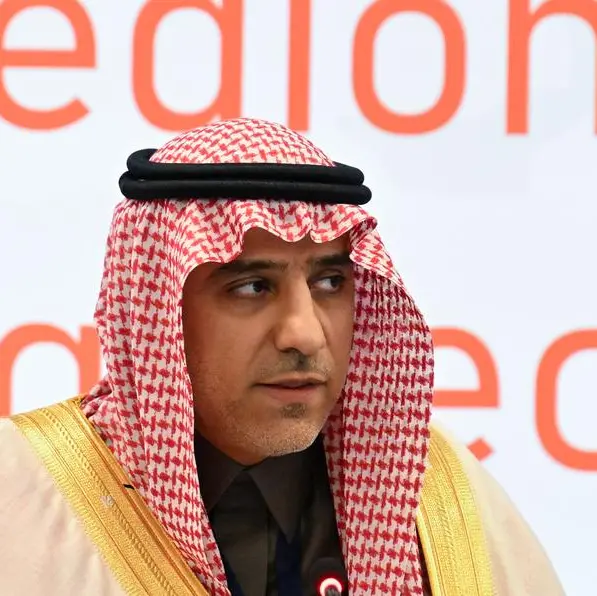
In his opening address at Indonesia – Bahrain: Exploring Smart Partnership on Islamic Banking and Finance, A. Rahman Al-Baker, Executive Director of Financial Institutions Supervision at CBB, said CBB intends to remain at the forefront of the Islamic banking and finance and we look forward to work closely with our Indonesian brothers and market players to develop this key industry.
“Our two nations are both very similar and yet hugely different. We are both identified as Muslim nations, and yet we both have other religious groups existing alongside the Muslim majority. Indonesia is a vast nation, with a population in excess of 238 million people, whilst Bahrain has a population of only just over 1 million people. Indonesia is a founder member of the Association of Southeast Asian Nations (ASEAN), as Bahrain is a founder member of the GCC. These are both major economic blocs within their regions. Within ASEAN, Indonesia is the largest country by population and GDP. Within the GCC, Bahrain is From the setting up of Bahrain Islamic Bank in 1978, through to the publication of the first set of Islamic finance regulations in 2001, Bahrain has been at the forefront of developments in Islamic finance. It is no surprise then that Bahrain has become the home of the various key infrastructure organisations of Islamic finance over the last 25 years. These include AAOIFI itself, the International Islamic Financial Market, the General Council for Islamic Banks and Financial Institutions, the Bahrain Institute for Banking and Finance and the Waqf Fund for financing training, development and research,” Al Baker told the audience of experts.
“The Waqf Fund is important because it works in partnership with the BIBF to offer training and education opportunities to provide professional qualifications such as the Islamic Finance diploma at the BIBF. In order for the Islamic financial sector to develop further, both here in Bahrain and in Indonesia, the continuing development of a skilled workforce through robust training and educational support is essential. It is only by developing expertise that the Islamic financial sector can build up the critical mass of qualified individuals necessary for Islamic finance to reach its full potential in the global marketplace.”
Talking about the HRD aspects of the Islamic banking and CBB’s vision on this vital dimension he said education and training in Islamic finance were especially important, because unlike conventional finance, the tools, structures, products, and standards and regulatory frameworks are still developing, and we in Bahrain have accordingly seen the need to invest actively in training initiatives.
“The BIBF through its Centre for Islamic Finance offers numerous qualifications including the advanced diploma in Islamic finance or the advanced diploma in Islamic commercial jurisprudence. Professional qualifications are an important part of development of a market and so ongoing contact with educational institutions is very important to ensure the right qualifications are being offered.”
“We have also witnessed important developments in the standardisation of wholesale Shari’a compliant financial instruments by the International Islamic Financial Market (IIFM) here in Bahrain. These include various master agreements, and also the profit rate swap and the interbank Wakala.”
“The Islamic International Rating Agency and the Council for Islamic banks and financial institutions are housed here in Bahrain. Together these various infrastructure organisations all perform a valuable role together to foster the development of a strong financial sector.
“But without liquidity, banks and banking centres are paralysed, as we have seen with the Eurozone Crisis over the past two years. And I am proud to say that the CBB has played a key role in its programs of Sukuk issuance since the first Sukuk issues in 2001. These Sukuk give banks and financial institutions an eligible liquid asset and a liquid form of collateral for secondary market trading and liquidity generation. With the IIFM we have worked towards standardisation of Islamic financial products in the wholesale market. But there is much yet to be done to see wide standardisation of products across lineup of Islamic finance products,” he said.
“And this brings me to the key constraints on growth. We are seeing continuing fragmentation in Islamic financial products. Unless products can be standardised, there will be less liquidity and documentation costs will remain higher than for conventional banks. Furthermore, Islamic banking needs to gain a larger share of the retail market by providing investment accounts that are as flexible as conventional deposit accounts and to continue its provision of retail credit products such as credit cards and other products which are flexible enough to be competitive with conventional products. And this is where teaming up scholars and bankers from different countries can facilitate developments. There needs to be a greater exchange of personnel between countries to facilitate exchange of ideas. Perhaps this Seminar is one of the ways to push this process forward.”
By Mahmood Rafique - www.twentyfoursevennews.com
24x7 News 2012. All rights reserved.