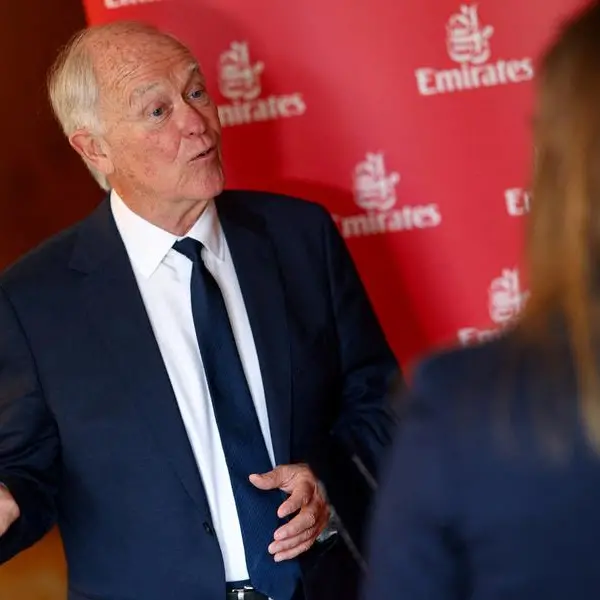
Dr Ali Qassim Jawad is a visiting scholar at Yale University and a senior advisor to governments on strategy, leadership, and innovation. He shares his views on transforming government entities and capacity building with Mayank Singh
Dr Ali has worked on number of research projects with Oxford University, Cranfield University, London School of Economics, and INSEAD. He is on the Advisory Board of Cranfield School of Management and the American University in Cairo School of Business. He also is on the Advisory Panel for Thinkers50 which is the definitive listing and ranking of the world's top 50 global business thinkers and gurus. Ali is a co-author of Leading Smart Transformation: A roadmap for world class government published by Palgrave Macmillan in March 2011.
You have advised a number of governments like Egypt, UAE and Oman in the region; in what capacity have you worked with these entities?
My area of specialisation is government transformation and effectiveness. I have been called to handle different projects by various government entities to review strategic plans being worked upon by various consultants to ensure smooth implementation. Strategy implementation is more challenging than just coming up with an attractively developed strategy. For example, I was invited by the Abu Dhabi government to work on the implementation of their five-year Strategy Planning and Economic Vision 2030. I was also involved in developing the transformational plan of one of the Abu Dhabi's government entities in 2007 which entailed not only re-structuring the organisation but also re-defining the role of that entity in order to become a more effective player for building a knowledge-based economy which is the core of vision. We did a benchmarking of that organisation against similar entities from 19 countries drawn from the G-7 and other countries which had been successful in their economic transformation and diversification efforts.
Your book titled Leading Smart Transformation - A Roadmap for World Class Government talks about this theme in detail. Can you explain the term Smart Transformation in a nutshell?
The book was published in March 2011 but was written in 2010 and it precedes the recent changes in the Arab World, but even while authoring this book we felt that governments in the region would soon come under pressure to change and transform in order to perform better. The book looks at what it takes to transform a government entity. We look at the key aspects that can drive this change and these are leadership, a transformation programme, and communication. There can be no smart transformation without smart leaders and this remains one of the major challenges in the region. Our research indicates that Leaders should have the ability to envision, translate that vision into a well defined roadmap, and finally communicate that vision and the map to all stakeholders, both internally and externally. These are what we called them in our book the 'smart enablers of change'.
You also talk about Project Management Office (PMO) as an important component of the transformation process. Why is the PMO so critical to success.
From research and experience, I can say that there has been so much emphasis in the region on developing strategies, which is very important. However, in my opinion, we tend to over strategise, while the biggest challenge is to transform this strategy into reality. One of the primary purposes of PMO should be to translate the vision, mission, and objectives, into specific well-defined initiatives. Then those initiatives should be monitored for performance. The monitoring should be from an efficiency point of view which sees whether we are utilising the right resources while the effectiveness is measured in terms of whether a particular initiative is having an impact on the core business of the organisation. I was involved in setting up PMO in one of the government organisations. They had 129 initiatives which needed to be carefully monitored for performance.
Usually, the PMO only looks into efficiency - as in whether things are getting done within a stipulated time and the budget, but in that particular project, we added a third dimension which is the link between each of the 129 initiatives and the national vision and this is what a smart PMO should focus on.
You have been associated with some of the best universities and institutes in the world; going by your experience, is it possible to replicate models which were developed in advanced countries in a region like the Middle East or GCC?
There is so much to learn from these models, but the ability to adapt them to the local needs is extremely critical, so while we need to comprehend these models we should also be in a position to adapt these model to the local needs and culture and this is a real challenge. In general, we tend to either reinvent the wheel by not learning from best practices or we try to adopt rather than adapt existing models as they are and both these approaches proved to have serious challenges in terms of effectiveness.
As you mentioned, your book was written before recent events in the region. Given the changed circumstances, are your hypothesis still valid?
The simple answer is definitely yes. Recent events in the region have added a third dimension to the performance equation. Till recently governments were expected to be high performing and this meant being efficient and effective, but now governments need to be not just high performing but also high(ly) responsive. This is something kind of new that governments have to deal with. What is happening now is not an incremental change; it is a major transformation. This requires a serious revisit to the role and contribution of government organisations.
The public sector with its entrenched bureaucracy is often seen as being inadaptable to change, given this proposition can governments become high responsive?
My simple answer is, yes. Governments can become high responsive and currently I am working on a research titled, 'High Performing Bureaucracy' and we have a number of such examples around the world. Norway is one example that comes to mind, Singapore is another. There are a number of elements that a high responsive government needs to have. Among the most important ones is aligning strategy with available capabilities. Unfortunately, I have seen many strategies which were not aligned with national or organisational capabilities, therefore, we end up producing wishlists rather than strategic objectives. Talent is the core of such capabilities.
Talent building has been a major area of discussion lately, does the region have local skill sets that are commensurate to the best or is there a need to do more in terms of education ?
There are two issues here: capacity and capability. Countries within the region differ from one another.
Some countries suffer from both capacity and capability shortage, as they neither have enough nationals to implement their vision, nor do they have the right talent to do so. Other countries have the capacity but not the capability. In Oman, I believe that we certainly have the capacity, The issue is whether we have the right capability or even whether we are developing the right one! In general, the biggest challenge in the region is aligning education outcomes with the national agenda. In other words, building the right talent to contribute effectively to the socio-economic development of the country.
That is something that needs to be carefully addressed by policy and decision makers of the country. I often get invited to talk about the impact of training and development programmes and how we can measure such an impact.
In my opinion, developing talent is all about developing knowledge, skills, and behaviour. This is not something that can be achieved by a single government entity. Different entities will have to work together in order to develop the right policies, regulations, infrastructure, and programmes - the whole 'Talent Echo System'. Otherwise, the work will be incomplete and partially ineffective. I am very positive that this can be achieved in Oman since we have a leader who believes in developing the right talent and creating the right opportunity for them as indicated in His Majesty's recent speech.
© Oman Economic Review 2012