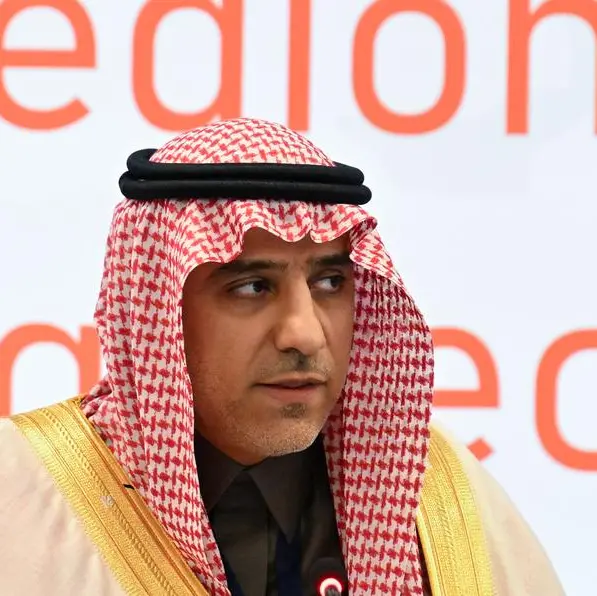
JEDDAH: It is not possible to depend fully on the banking sector to finance projects, says National Commercial Bank's Senior Vice President and Group Chief Economist Said Al-Shaikh.
"As banks are holding assets of customers, they can contribute only part of the financing while the government pumps another part through its sovereign funds. The other means of financing include initial public offering (IPO) of the concerned companies, as well as issuing bonds and securities," he told a press conference.
The occasion was the release of the Business Optimism Index for Saudi Arabia for the second quarter of 2012 by the National Commercial Bank, in association with Dun and Bradstreet South Asia Middle East Ltd. (D&B).
The D&B Business Optimism Index is widely recognized as a key measure of the pulse of the business community, serving as a reliable benchmark for investors, policy makers and other observers of the economy worldwide. As the latest addition to D&B's global series, the Business Optimism Index on Saudi Arabia, done in association with The National Commercial Bank, is issued on a quarterly basis.
The next Business Optimism Index on Saudi Arabia will be released in July 2012.
Commenting on the findings of the survey, Al-Shaikh said: "The government, undeterred by the financial difficulties faced by advanced economies, continued to span its capital expenditure, and in turn stimulating economic growth. Geopolitical tensions in the region, which have dominated the sentiment in the oil market, also brought with it higher Saudi production and prices and higher government oil revenues as reflected by the second quarter BOI of the hydrocarbon sector."
With positive oil outlook and government commitment counter balancing global economic uncertainty, the second quarter BOI of non-hydrocarbon sector remained steady, showing only minor changes from previous quarter. Confirming this, 33 percent of the respondents do not anticipate any negative factor coming into play in Q2 2012 compared to 31 percent in Q1 2012.
Al-Shaikh said 2011 was an extraordinary year both globally and locally as far as the oil sector is concerned.
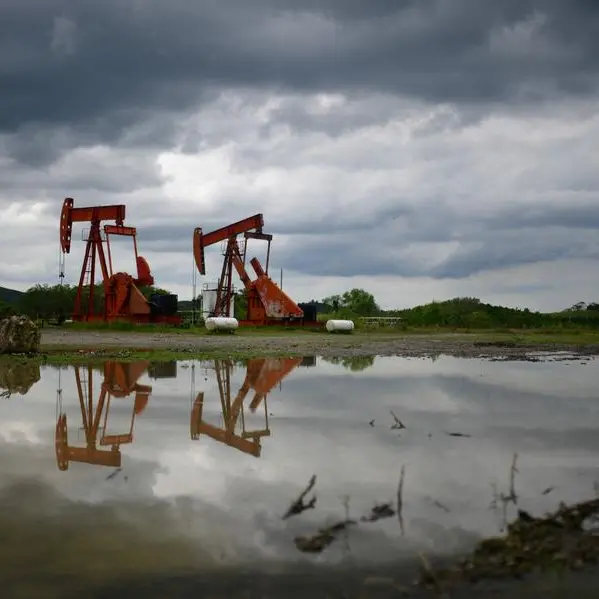
"The recent developments in the Arab region, especially in Libya, resulted in a fall in the global oil output. There was a drop of 1.2 million bpd oil due to the political turmoil in Libya," he said while pointing out that Saudi Arabia came forward to pump adequate supply of oil into the global market in order to solve the crisis following Libya's halting of oil export. The Kingdom raised its production to 9.4 million bpd last year.
Said Al-Shaikh also expected that the Kingdom's average oil production would reach 9.9 million bpd during the current year due to the situation in the region, especially as a result of a possible embargo on Iranian oil, in addition to the growing global demand.
A bank statement said the survey for the Business Optimism Index for Q2 2012 was conducted in March 2012, amid an environment of stronger than expected economic data in some countries.
This has led to a slightly improved outlook for the second half of the current year. The continued recovery in the US, supported by the improving manufacturing sector and job market as well as household spending, and growth in China along with other emerging economies will drive the global economy in 2012.
In the US, GDP growth accelerated sharply during Q4 2011, reaching an annualized rate of 3 percent, up from 1.8 percent during the previous three months. Lower cutbacks in state and local government spending, increased consumer spending driven by job creation and wage growth, strong non-residential investment, and buoyant exports should continue to support growth in the world's largest economy.
In Europe, there has been some stabilization in the performances of financial markets and the region's economies. The European Central Bank has decided to grant banks unlimited three-year loans at a very low interest rate of just 1 percent, which will remove some pressure from the banking sector and the risk of a systemic panic in global financial markets. Growth in the emerging markets will be underpinned by strong infrastructure investment, a soft landing in China rather than an abrupt deceleration in activity and favorable terms of trade for commodity exporters. The Japanese economy is expected to do better this year compared to 2011, being supported by normalization of manufacturing production and an increase in pace in post-quake reconstruction investment.
Commenting on the findings of the survey, Prashant Kumar, senior manager of Dun and Bradstreet South Asia Middle East Ltd., said: "Saudi businessmen remain steady in their outlook for the second quarter 2012; the survey reveals that optimism levels have dropped only marginally. The hydrocarbon index has increased to 43, reflecting the positive optimism of industry players with respect to oil prices. Oil prices have been high in recent months due to the risk premium associated with concerns over Iran's nuclear program. Despite some moderation in the composite index scores, all other sectors continue to have a robust outlook going into 2012."
© Arab News 2012