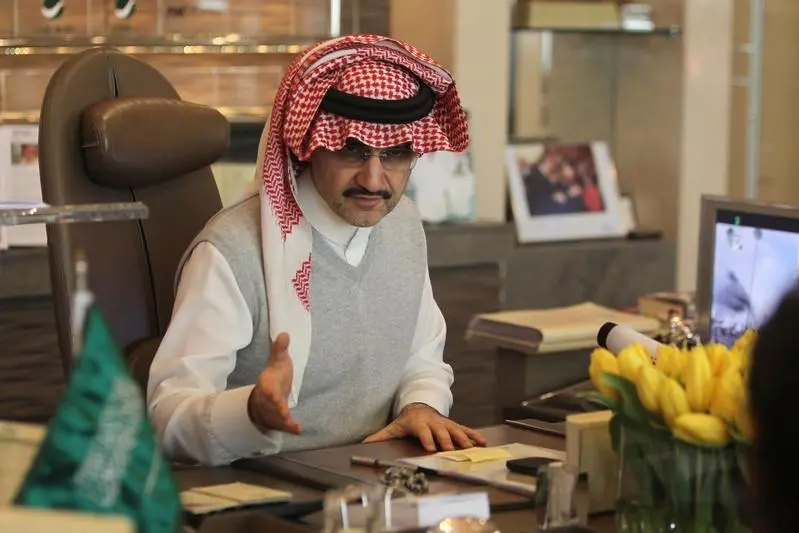
The private livestock industry needs increase its involvement in the Kingdom's economy, says Hassan Al-Yamani, CEO and board member of Anaam International Holding Group.
"The Kingdom's livestock sector still doesn't contribute much to the GDP. Our production in terms of livestock doesn't cover even 50 percent of the local needs," Al-Yamani told Diana Al-Jassem of Arab News in an exclusive interview.
"The Kingdom's livestock export is estimated between 45,000 and 50,000 tons per month about half a billion Saudi riyals in terms of value," Al-Yamani said.
He says the process of Saudization must continue but the Ministry of Labor needs to review it in cooperation with the private sector.
Al-Yamani says the high rate of unemployment calls for stronger efforts to ensure the country's safety and security.
He stresses that the Ministry of Labor is within its power to impose taxes (on expatriate workers), but it should take a fresh look at this important issue, especially in the interest of Saudi employers who need foreign expertise at their workplaces.
Al-Yamani holds a Bachelor of Science in civil engineering from King Fahd University of Petroleum & Minerals (KFUPM), Dhahran, and an MBA from Wharton Graduate School. His career track record includes managing a private equity firm Crescent Point, CEO and founder of Tamlik Ltd., and CEO and founder of LEASA, Saudi Arabia's "first non-bank" leasing company.
The following are excerpts from the interview:
What is the strategy followed by Hassan Al-Yamani to solve Anaam International Holding Group's problems?
It's a strategy imposed by the board members taking the next 10 years into consideration. In the first three years, when I joined Anaam, I was looking to overcome the difficulties the company faced. Achieving sustainability and growth in the company was my main aim. After we (board council) managed to raise our sales by five times, we succeeded in increasing the capital. Solving all of Annam's problems is not an easy task, so I preferred to build an internal system to ensure transparency and credibility. This way, we can successfully determine the weaker points.
What are the external challenges you are facing while managing the company?
One of the main obstacles is the cattle trade. Cattle imports need to be regulated properly. Although we have big markets for cattle, we still don't have an organized management.
What is your opinion about the Saudi trading system, and what are your suggestions to boost this sector?
We have a great import system, where we don't face obstacles. In terms of exports, the country still bans the export of feed and livestock to preserve underground water. We produce a huge amount of dairy products and export them to other countries. This huge production entails the use of a huge amount of underground water. I wish to import a bigger amount of feed in the next few years. Our production in terms of livestock doesn't cover even 50 percent of the local needs. Therefore, the Kingdom exports between 45,000 to 50,000 tons per month. This amounts to half a billion Saudi riyals per month. I wish the private sector involves itself more in livestock production in order to increase its GDP contribution. I have to admit that livestock business is not easy. It requires special locations, research, health control, hygiene, and many other things.
At Anaam International Holding Group, we are studying a new startup unit for livestock production. We are considering the production of 200,000 chickens a day. We want to ensure a well-organized plan in order to process this project. We took the first step in January 2013 when we hired an expert to take the responsibility of the project.
What are the difficulties you faced while dealing with the Saudi labor market. And how do you evaluate the current changes?
When I started my career, the Kingdom was facing many challenges in economic terms. In the beginning of the 1980s, we did not have loans and funding facilities. The infrastructure also was very poor. Fresh graduates of the past were very much different from their counterparts today. The government tries its best, but the capabilities are very limited. In the past, anyone could start his own business with a small capital, but now any startup business is tough to survive in the face of established companies.
What are the target markets for your company and what are the new markets it is looking to reach?
We are importing frozen meat and chicken, fish and fruits from aboard. We cooperate with international companies to satisfy the needs of the Saudi market. We have also started growing in terms of importing rice. Selling rice would give an added value to our activities. We also own 100 million square meters of land in Al-Jouf, where we produce feed and corn. In the next five years, we will reduce feed production and start the production of olive. We will be the third olive production company in the Kingdom. We are starting this activity as we believe that such types of agricultural involvement will not consume a lot of underground water. In 2014, we will start olive production where our plan is to have ten million trees. Then, we will produce olive oil, soup, shampoo and all related industries.
You earlier spoke about the company's plan to invest in property rather than only livestock. Tell us about the company's agenda in this regard.
We are planning to build stores and rent them to other companies. In addition, we want to boost our transportation line to serve the livestock industry. I expect these new projects to be launched this year. Therefore, we have increased the capital to SR 180 million to develop the logistics, including stores and transportation.
What is your evaluation of the Saudi agricultural sector and why is the Kingdom still lagging behind?
The culture of Saudi society has led us to a weak and limited agriculture sector. In our society, people prefer fast returns. For example, when the country supported wheat production, all Saudis started working in this sector. This adversely impacted the availability of underground water. Then the government stopped encouraging this sector. The Ministry of Agriculture should take the responsibility for changing the mindset of the people for quick returns. We are having a big gap between supply and demand in terms of agriculture. We have witnessed many mistakes in official quarters in the past; we hope to see further changes in the next few years.
How has the unrest in neighboring countries affected the trade in the Kingdom?
There has been both direct and indirect impacts. Syria is the gate for the Kingdom to receive trucks from Lebanon and Turkey. What is happening now in Syria has affected trade for sure. In addition, clashes in Egypt raised the fear of businessmen to have deals with Egyptian investors.
The Ministry of Labor recently forced expatriates to pay a tax of SR 2,400 in order to support Saudization. Tell us your opinion regarding the Saudization plan?
Talking about Saudization requires me to put myself in the position of the government. In Saudi Arabia, we still depend on the private sector and don't support the Saudization program. The high rate of unemployment requires huge efforts. The ministry is fully justified in imposing the new levy, but such taxes should be reviewed. I hope to see open discussions between the Ministry of Labor and the private sector with a view to finding suitable solutions. We as businessmen shouldn't be selfish. I am with the Ministry of Labor's general plan, but I am against their mechanism.
What are your suggestions to achieve sustainable development in Saudi Arabia?
I wish Custodian of the Two Holy Mosques King Abdullah issues a directive offering home to each citizen. Such a step will ensure safety and sustainability. We could try to apply the Singapore experience, as I think it is an effective one. Giving loans to facilitate housing ownership is not a worthy step. Rather it costs the country a lot. We can import expertise for designing big residential units with all needed services. The gated communities' experience is the solution for our housing problem.
What are the main challenges are we facing in the Kingdom?
Sustainable economic development, housing and employment creation are the main challenges we are facing. These three challenges are the priority for me as a businessman. Unfortunately, we woke up after the crisis. We have to be aware of the problems that we have. The Jeddah flood is an example.
© Arab News 2013