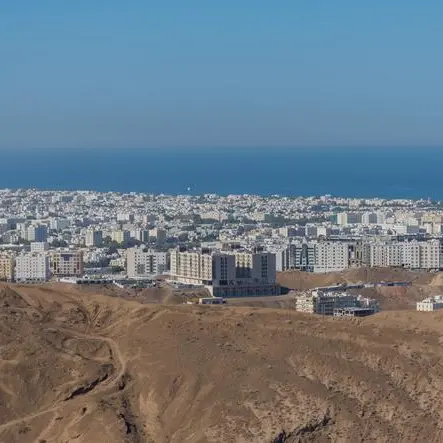
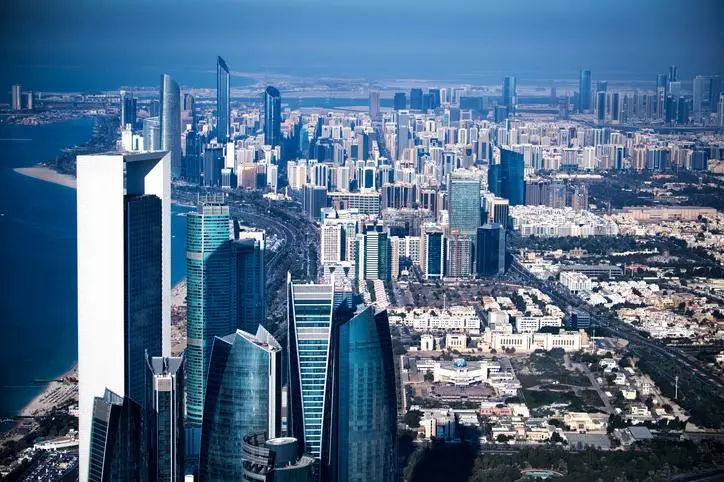
Water, water everywhere, nor any drop to drink." Poet Samuel Taylor Coleridge wrote these words to describe the plight of stranded sailors. But it's a feeling that's understood by many in the Middle East, where millions reside in arid deserts abutting the sea.
Egypt, like most of the region, is facing a severe water shortage. Since 2004, the country's water supply has dipped below the so-called international water poverty line of 1,000 cubic meters per person annually, the figure the United Nations deems sufficient to meet the needs of households and agriculture. This almost seems paradoxical in a country with more than 2,900 kilometers of coastline, from which one can gaze on azure seawater as far as the eye can see. What Egypt is facing is not so much a water crisis as a freshwater crisis.
While this problem is most pronounced in countries like Egypt where salt water abounds but there is little freshwater, the disparity echoes a global phenomenon. Only about 2.5 percent of the water on the planet is fresh, much of which is frozen in glaciers or locked up as moisture in soil. The other 97.5 percent comprises the world's salty oceans, seas and aquifers. Unlocking the potential of all that water is therefore the most promising, realistic solution to solving shortages in Egypt and elsewhere around the globe.
Techniques for the desalination of ocean water go back to the beginning of recorded history. Greek sailors constructed evaporation stills, while the ancient Romans used sand and clay to filter salt. In the eighth century, Arab chemists wrote scientific papers on the subject. Today, with populations growing exponentially in the face of a fixed water supply, hitting on an effective method of desalination has become more important than ever. And while the technology has improved immensely, modern desalination methods still rely on the same two basic techniques used in ancient times: thermal distillation and filtering.
The first method draws on the same principle employed by the ancient Greeks, which involves mimicking the natural water cycle in a controlled environment. Put simply, salt water is exposed to heat, which evaporates the pure H2O. Instead of being allowed to escape into the atmosphere, however, the water vapor is condensed on glass or plastic, from which the condensate--pure, distilled freshwater--can finally be collected. Incorporating a few tweaks to improve efficiency--using a parabolic shape that focuses the sun's heat and a solar-powered pump to keep salt water flowing through the system at an optimal rate--this technique is being employed by Sumamed, a project lead by University of Alexandria Professor Boshra Salem in which small rooftop stills are being installed in remote desert areas in northern Egypt. Each system produces enough freshwater for a single family, and the technology, she explains, is simple enough that residents can maintain the systems themselves. It is particularly well-suited to out-of-the-way areas that have abundant seawater or brackish groundwater but are not connected to the national water or electrical systems.
More sophisticated processes like multi-stage flash distillation also draw on this simple principle of vaporization and condensation, with the addition of multiple evaporation chambers and carefully calibrated adjustments to temperature and pressure to speed-up and standardize the process. The second basic technology has its roots in the sand and clay filters used by the Romans. Filtration technologies--the most widely used one is known as reverse osmosis filtration--rely on pushing seawater through membranes that filter out salt and other impurities. These mechanized processes do not depend on sunlight and are easier to manage on a large scale than evaporation stills. Large plants in the Persian Gulf rely on both multi-stage flash and reverse osmosis desalination to produce drinking water, as do tourist-focused developments along Egypt's Mediterranean and Red Sea coasts. Recently, officials have also relied on reverse osmosis to supply municipal pipes, with the U.S. government funded LIFE SINAI project financing the construction of three desalination plants to meet residential needs in the northern Sinai Peninsula.
These facilities are essential to keeping Egypt's beach tourism economy humming, and they provide a lifeline for communities far removed from the Nile Valley.
However, the technology has its drawbacks. "With the energy problem that we are facing now, desalination everywhere has two problems," says Hani Sewilam, a professor of sustainable development and water resources management at The American University in Cairo. The first drawback is high energy consumption, and the second is negative environmental impact. "With desalination, you take the water, and you leave the salt," he explains. It takes a huge amount of power to run these plants, and they discharge hot, salty brine, often contaminated with chemicals that are used to clean and maintain the equipment. Presently, desalination accounts for about 0.76 percent of Egypt's water supply, according to the government. As that ratio inevitably inches up, so too will the adverse impacts.
Consider, for example, the concentration of desalination plants serving hotels along the Red Sea. Local environmental regulations require that all brine be discharged into the ground at least 500 meters from the sea, which helps somewhat, explains Greenpeace representative Ahmed el Droubi. But in coastal areas, any liquid pumped into the ground eventually trickles out to sea. "It all mixes at the end of the day," he says. In the fragile environment of the Red Sea, where virtually all marine life is concentrated in the shallow waters just off the shore, changes to the salinity, temperature or turbidity of coastal waters can be potentially deadly, killing off aquatic flora and fauna and the tourism that depends on it. "If it's one hotel or if it's 10 hotels" that are releasing this runoff, "we don't have an issue," says Droubi. "When you're talking about hundreds of hotels, an ever increasing number, it will definitely have an impact, sooner or later."
Energy use is a big problem, too, and a more immediate one for Egypt. In Saudi Arabia, desalination plants burn through some 1.5 million barrels of oil a day. But that oil-rich, sparsely populated nation can afford energy-intensive desalination systems (though it is still investing heavily in alternative solutions). Egypt, where fuel and funds alike are currently scarce, cannot. On the other hand, as Sewilam points out, accomplishing desalination while solving the twin challenges of energy conservation and environmental preservation pose enormous opportunities for innovative companies. "Whoever is going to solve this problem fast will be leading this business in the Middle East," he says.
Worldwide, scientists make important breakthroughs every year. On March 18, U.S.-based aerospace and defense giant Lockheed Martin was awarded a patent for a new molecular filtration material called Perferene that can be used to purify water. Five hundred times thinner than currently available filters, the new membranes promise to dramatically reduce the energy requirements of salt water filtration. Closer to home, both Saudi Arabia and the United Arab Emirates already have solar desalination plants up and running and have committed billions of dollars to improving the technology.
Other regional projects point to potential new directions for technologies that convert seawater into fresh. In January, the Norway-based Sahara Forest project launched a pilot facility in Qatar that integrates solar energy, desalination, agriculture and desert reclamation. As Sahara Forest CEO Joakin Hauge explains, the project's groundbreaking innovation isn't new, high-tech systems so much as in the way it cleverly combines simple, already existing technologies. It works by piping sea water into a solar energy station, where it cools the systems. From there, the heated salt water flows into special cardboard panels where hot desert air evaporates the freshwater, which is used to cool and humidify greenhouses. After this initial evaporation, the remaining brine is piped outside and undergoes yet another evaporation process, producing H2O that cools and humidifies desert grasses before ending up in ponds, where the salt can be harvested for sale. Meanwhile, the solar panels provide energy to desalinate water for plant irrigation, and the excess power is fed to the local grid. The project is still in a pilot stage, but its potential is strong enough that it's attracted commercial partners such as Yara, the world's largest maker of nitrogen fertilizer, and Qafco, a Qatari fertilizer giant. Egypt has the right conditions to house a similar project--a lot of sunshine and low-lying coastal areas--notes Hauge. Sahara Forest doesn't presently have any concrete plans to set up shop here, he says, though Egypt "is certainly among the most interesting countries that we are looking at."
Local solar outfits say they've already seen an increasing interest in solar-powered desalination. It's "definitely a growth industry," says Yumna Madi, chief business development officer at Karm Solar, an Egyptian firm. With solar-powered water pumps as its initial focus, Karm has begun importing American standalone solar desalination units. Solar Energy Environment Technology Group, another local company, has also recently jumped into the game in response to growing customer demand. SEET Managing Director Hussein Rizk says he's already fielding orders from companies abroad. "I'm going to concentrate on this area, desalination, because it's going to get more and more important," he declares.
The local industry still faces several obstacles, note local researchers and businesspeople. For one, says Rizk, even though the cost of desalination is decreasing, water and fuel subsidies from the government handicap these firms from effectively competing, as they are not enjoyed by solar and desalination technologies. "If you consider a non-subsidized price, we're not too far from it," says Rizk. Furthermore, research and development money is extremely scarce here. Of 144 countries surveyed by the World Economic Forum's 2012/13 Global Competitiveness Report, Egypt ranked a dismal 116th on company spending on R&D, and 128th on academic-industry R&D collaboration. Global technological advances benefit Egypt, but they still must be adapted to local conditions, and researchers and companies need to work together to bring these advances to market. Eventually, pioneers of these new technologies hope the nation's growing need for new and better ways to fulfill its water needs may succeed in spawning a new industry here. Says Droubi: "I don't think there is any other choice."
© Business Monthly 2013