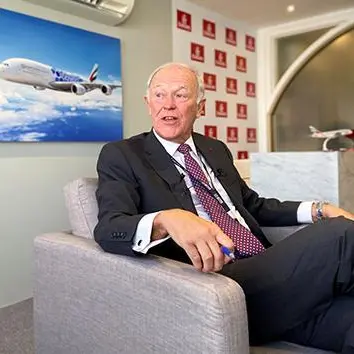
Mohammed Abdullah, who has been at Sharjah Islamic Bank since 1997, took over as chief executive in October 2006. He spoke to John Foster about his vision for the future
Formerly known as National Bank of Sharjah and founded in 1975, it became the first bank in the world to convert successfully to Islamic banking in 2002.
How are you coping with the saturation of the market?
When we converted our bank, we became the second Islamic bank in the UAE. We were the first bank in the world that converted to Islamic from conventional banking. The only competitor we had in the UAE was Dubai Islamic Bank. We then heard about the plans of other banks to enter the Islamic market in the next few years.
However, this did not worry us. We were not new to banking. We had been a conventional bank before we became an Islamic bank and we had the knowledge, the systems, the processes and the people to compete. Our team had a history of dealing with customers and worked hard to learn how to be Islamic bankers.
I welcome the entry of new Islamic banks into the market. It adds value. I do not consider the new banks as competition. They help us as we can form partnerships with them and start getting involved in large deals together. Yes, they might take some of our customers away from us, but they give us more back in return.
I know it sounds a strange thing to say, but let me explain: We give other Islamic banks in the Middle East many opportunities to get involved in partnership deals, deals that they would not be involved in if Sharjah Islamic Bank was not the initiator. However, other banks give us opportunities that we would not have. For example if Dubai Bank converted into an Islamic bank, and started operating in Islamic finance, they have a portfolio of very large clients, the sort of clients that we do not usually have access to. But they open up access to these clients for us. My opposite number at DIB might come to SIB and say: "Look we have a client that needs a transaction of $200 million. Would you like to share this business with us?"
They have given us an opportunity; hence they do not count as competition.
With the large international banks getting involved in Islamic banking, this partnership idea gives our bank access not just to the GCC or MENA, but the world. There are always large syndicated or club deals happening on a daily basis somewhere in the world of Islamic finance, and working in partnership with the new entrants to the market gives us so much more opportunity.
Are you not worried about the huge international banks coming into the market?
It worries me in a way, as the repercussions of large foreign banks entering the market will hurt the smaller Islamic banks. It will be difficult for the smaller banks to compete with the large multinationals, especially if these foreign banks bring their own customers with them from abroad to invest in the country. The only way out of it is to bulk up in the face of this competition and look to merge with other smaller banks. But right now there are advantages to having big foreign banks in the region. They have the facility to improve and strengthen the economy of the country. They bring new liquidity into the market. For investors their presence offers the advantage of access to cheap funding, as they try to increase their business in the country.
It is not just a one-way process. When the foreign banks first come to this country, they need the know-how of the local banks here. The local banks should welcome the foreign banks and seek to cooperate with them, but we also need to get together and try to create larger local banking companies to ensure that we can deal with the competition either through merger or by setting up new, large local Islamic banks.
How is Sharjah Islamic Bank organized?
SIB started its Islamic activities in 2002, but we had been a bank since 1976. We always have had a big stake in the UAE market, but this increased when we went Islamic as there was so much demand for Islamic banking. Our bank offers almost every product demanded by all levels of clients in the UAE. We operate in three fields now: Retail, corporate and investment banking. We are also expanding into different subsidiary businesses, which we have established or purchased.
One is Sharjah Islamic Financial Services; this is an equity brokerage business. We set this up last year. The bank also acquired Sharjah National Hotels, and in doing so entered into a new business sector, tourism. This sector can only grow in Sharjah, and we are excited by the acquisition.
Retail banking is a new area for SIB. We used to have a retail presence, but it was not very concentrated. We now have a full retail offering, with a wide product line and a large sales team. Our corporate banking side has a very targeted business model, especially in trade financing. On the investment banking side, we only started 2003 and now manage over $270 million.
We are going to expand in 2007, and will expand out of the UAE; we want a presence abroad either with a branch or in partnership with other institutions, establishing banks. Therefore investment banking is taking on a growing importance with SIB, but I cannot say that one side of the business is more profitable than another; we are advancing on all fronts.
So you are following something of a three-pronged strategy?
Exactly. We are pushing forward in the three core areas, but also developing a diversified business outside of banking.
What do bankers know about broking or running a hotel?
Islamic banks are not just involved in banking. Islamic banking activity diversifies into so many sectors. We are not like conventional banks. It makes sense to diversify your income. We are not diverting our entire business into different sectors; we are continuing with our core banking activities. We are not sparing any effort to increase our classic banking activities, but at the same time diversifying away into different income generating sectors can only be a good thing, and you increase your value as a business to your shareholders and customers through diversifying into high income generating sectors. I do not see any harm in operating in alternative sectors, just as long as it is professionally managed. I am not going to manage a hotel, and I am not going to send one of my bankers off to run the hotel. That is not his job. He does not know anything about running a hotel and would bankrupt the business pretty quick if we let him get involved. Yes we are investing in that business, but we are providing professional, relevant management.
So it is like a private equity deal?
Yes. We have the capital, buy into the company and work with the management to make that business a profitable business.
But you will not see someone like Barclays doing something like this.
Well that is because this type of diversification is not their core. But Islamic banking is different. Conventional banks have their restrictions. The commercial banks are just wishing that they could involve themselves in the areas we can.
With the opening of the brokerage will you be looking into fund management?
The brokerage is limited to certain activities. It cannot become a fund manager. They can only buy and sell financial instruments, and then take commission on that. But the bank has a strategy to do this. We have already established equity funds through Shuaa. We have investment vehicles in airplanes and sea-going vessels. We have a series of white label funds. We will continue to extend our range. The funds we have, have not been massively profitable, but this is a regional issue; all equity funds have done badly.
Did you have enough people with the right skills to start an Islamic bank?
This is one of the weaknesses that Islamic banks face, because today the new Islamic banks will take your resources. Therefore it is important to have a plan. We are trying to train all our people in Islamic banking. We have a full programme of training for staff. Before we started our Islamic activities we had very concentrated training for almost all the members of staff in the bank. So when we began, everyone had full knowledge of Islamic banking. However, the people who joined after conversion did not have this advantage. There is a great shortage of trained people in the market, and there is a great deal of demand for them. You just will not find enough people in the market; you have to work on your people to make them as good as you possibly can.
But should the Islamic banking community not come together and try and create a standardised training structure to provide enough Islamic bankers for the future to create a central pool of talent?
If you are talking about an institution to provide something like this, you have the International Centre for Education in Islamic Finance in Malaysia, who can train people on Islamic products and their graduates can assist Islamic banks. But if you are talking about the banks themselves coming together, it is a good idea, but it will fail. We still do not have one understanding across the industry, as each bank has its own Shari'ah board that decide on different products and service and issue their own Fatwas. But all banks are different, and there are some products that SIB offers that would not be acceptable to other banks, as their board do not recognise them. There is major, generalist training, but at a company level there are so many differences, it is not practical.
How are you finding your new job?
I always was the second man in the bank, since 1997. So it is a little like being a first officer on the flight deck of a jet plane, with the chief executive as the pilot. I had a different mission to do, when you are sitting in the co-pilot's seat. You have to read the gauges and navigate, whilst the pilot flies the plane to its destination. When the pilot steps down, you have to move into his seat, and then your mission changes. Your vision, strategy and functions change. I always walked side by side with the pilot, so I knew what he was thinking and I was ready to take the position. We already decided where we were going with the last chief executive, and I have continued this with little changes. I just have to see if this strategy works and play it from there.
How is Islamic banking better than conventional banking?
I do not consider it a better way. But I think Islamic banking has some principles that are better. It is all about fairness, transparency, integrity and quality. These principles, when applied to any business, will lead to customer satisfaction. We have seen a great migration from conventional banks to Islamic banks, as people believe in these principles. And it is not only Muslims that are moving, non-Muslims are moving as well as they see fairness and transparency in Islamic banking.
As retail and institutional customers become more sophisticated, what new products and services do you think the Islamic banking industry has to develop?
There is a product which is available in Islamic banking that is not very active. It is called Mudarabah. Why is Mudarabah not very active? It is because the product has a lot of risk involved in it. It means that the bank will provide the liquidity and the customer will invest that liquidity in his business. The bank then shares the profits and the losses with the customer. Therefore it is a bit risky. But if Islamic banks properly activate this product, believe me; it will be beat every product in the banking system.
Why?
Most customers would prefer to deal in this way, sharing profit and loss with the bank. They are not fully responsible to repay the bank if they are not successful with the business. If you borrow money from a conventional bank, you are liable to pay all the money you borrowed, plus interest, and the bank does not care if you have done well with your business or lost your business. If Islamic banks started activating this product, they would do very good business.
So it is like private equity for individuals?
Yes it works for individuals and for companies. You just have to provide the bank with a feasibility study to offer the bank some comfort that they are becoming involved in a profitable enterprise. But if things do not go right, it will not be your problem. You just have to prove that the problem was out of your control.
You said in December that SIB was eyeing expansion outside the GCC. When will you be implementing these plans and can you tell us more about what you are doing?
Expansion will be out of the UAE and outside the GCC. But I am not ready to say more about it. I have my plans, but I prefer to have things finalised before I announce anything. I need to make sure everything is in place, but it will happen this year.
Emiratisation. Is it a good idea and why?
I would consider Emiratisation as a national mission. Everyone should look at it positively, as the resources of a country are the people of the country. I think we should concentrate on this because it is an investment in the country. I insist on recruiting nationals, even if I do not have space for them. I consider them the future. I do not consider them the present. When I invest in these people, I know they will deliver to me in a few years. I will train them up, and although you cannot replace an expatriate workforce overnight I will take on Emiratis as trainees. Even if the Emairatis decide to leave SIB after we have trained them, let them. It is an investment in the country. We do not get taxed here, so using five per cent of your income on training is a way of investing in your country.
What merger and acquisition activity do you see happening in the Islamic banking sector in the near future?
I do not see M&As happening in 2007, or 2008. They will happen in the coming five to 10 years, as the logic of this is not realised by the local banks. But when they see the competition coming in from overseas banks, the local banks will realise that the only way that they can survive is through coming together.
Would you look to acquire other banks in the next five to 10 years?
If the opportunity arose, yes I would.
Banker Middle East 2007