Gulf countries invested an estimated USD 26 billion in healthcare projects in 2011, research shows. The number for Egypt stands at USD 9 billion in 2010, the most recent data available show.
However, the big growth is yet to come. The Cerner Company, specialized in the healthcare information technology field, estimates that investment in the healthcare sector in the Middle East will increase to USD 60 billion by 2025, as these countries need to add 120 to 140 hospitals, or about 30,000 additional beds, by 2020 in order to meet growing demand.
According to Al Masah Capital research, Saudi Arabia is the top spender in healthcare, followed by Egypt, the UAE, Kuwait and Qatar.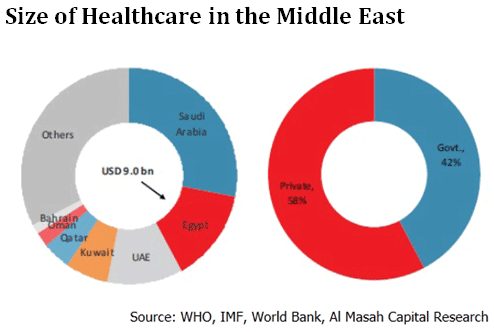
Alpen Capital said the healthcare market in the GCC countries is growing at an annual rate of 11%, and is expected to reach USD 43.9 billion by 2015, after reaching USD 25.6 billion in 2010. The healthcare services provided to outpatients and inpatients are expected to contribute 82% and 18%, respectively, to the size of the domestic market, and the markets of both the KSA and UAE are expected to be the fastest growing markets.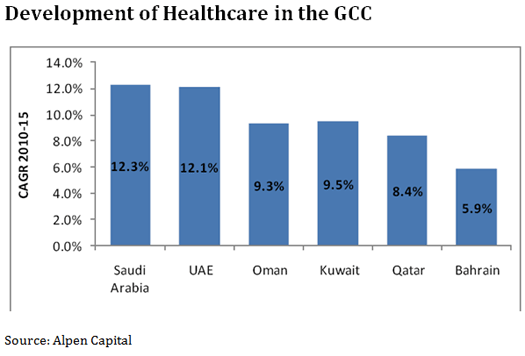
Alpen expects the demand for hospital beds to increase to around 93,992 by 2015, from the 8,669 level in 2010. This fact is in line with the expected supply given the projects under implementation, and the number of beds is still in line with the rates of the GCC countries that are lower than American and European rates.
However, the gradual improvement in the standards and health infrastructure of the GCC countries, as well as the spread of insurance, will increase the number of patients who choose local treatment, which will lead to an increasing demand for hospital beds.
According to Alpen, the GCC countries may need more than 25,000 additional beds by 2020 to meet the growing demand.
GCC Healthcare Snapshot - 2011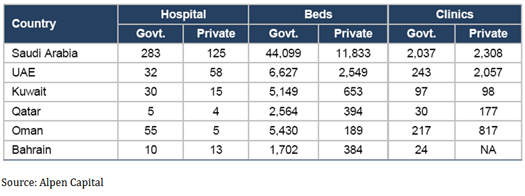
Saudi Arabia
Saudi Arabia was considered the largest healthcare market in the Middle East in 2009, as it spent around USD 18.5 billion, or 5% of its GDP, on healthcare. The average per capita health expenditure reached USD 714 in 2009, according to Al Masah data.
On January 1, 2012, the Saudi Ministry of Health announced the signing of healthcare project contracts estimated at SAR 3 billion. The most prominent projects signed were the establishment of Hail Hospital with a capacity of 300 beds with residence, at a cost of SAR 249.67 million, the establishment of Abqaiq General Hospital with a capacity of 100 beds at SAR 134.12 million, the establishment of medical warehouses at SAR 114.55 million, non-medical operating and medical maintenance of King Khaled Eye Specialist Hospital at SAR 119.619 million, as well as seven contracts for the provision of laboratories and blood transfusion services supplies, hospital equipment and supplies, and X-ray machines, at a total cost of SAR 643.839 million.
According to Alpen, the healthcare market in KSA is expected to grow at a compound annual growth rate (CAGR) of 12.3%, which requires spending of around USD 25.7 billion in 2015, compared to USD 14.4 billion in 2010.
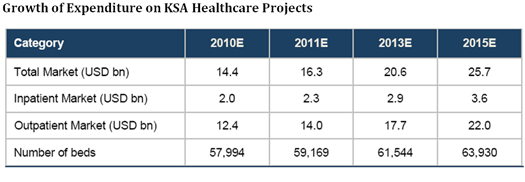
Source: Alpen Capital
According to research by the Saudi Arabian General Investment Authority, or SAGIA, the Saudi health system abounds in investment opportunities that are an opportunity for the private sector to contribute to its development.
There are special projects in the urban and modern construction structure, including the economic cities, and with large financial subsidies, the private sector is conducting unprecedented investments to support healthcare, as well as the complementary sectors (such as scientific research), in the economic cities and other places in KSA. Such investments require a strong partnership from the private sector in order to meet the huge demand expected for these services and to achieve leadership in the region.
The report of the Investment Authority added that the Saudi market attracts healthcare investments for several reasons, including:
- The available opportunities to provide supply for the continuous demand for healthcare services, including medical education, research, facilities, procurement and compensation.
- Changes in the services structure and addition of the modern step in the compulsory insurance system that will include all Saudis.
- The exceptionally prevalent spread of major diseases in KSA, including diabetes, heart diseases and congenital disorders.
- Private hospitals, pharmaceutical companies and manufacturers of medical equipment looking for international partners.
- Big growth of the market volume, as the demand for hospital beds is expected to increase from 51,000 beds this year to 70,000 beds by 2016. The number of hospitals will also increase from 364 hospitals this year to 502 by 2016.
- Increase of consumption in the healthcare field, supported by the increase of private wealth of persons and investments in the public sector.
Egypt
According to a statement issued by the Egyptian Cabinet on the first of January, the Health Committee, headed by the Cabinet, decided to support the health sector with additional EGP 700 million, 100 million of which to be addressed to the primary healthcare units in villages and 600 million for the hospitals to provide free treatment for citizens, and manage the funding to offer meals for the basic education students throughout Egypt.
According to a study conducted by the Egyptian General Authority for Investment on the reality of healthcare investments in Egypt, the Government expenditure on the healthcare sector increased by 200% during the past fifteen years. The healthcare sector is one of the most important growth sectors, as its investment volume increased by 15% between 2002 and 2006 and the high demand for the modern and advanced healthcare services allowed foreign investors and providers of healthcare services to enter the market. In this regard, joint ventures programs between the Government and the private sector are considered the most important means to invest in the healthcare sector in Egypt as, since their implementation in 2006, they work on improving the healthcare services provided by promoting investments in infrastructure projects, such as the construction, renovation and re-equipment of healthcare centers.
Egypt is considered the second largest healthcare market in the Middle East, according to a study conducted by Al Masah Capital Limited concerning healthcare in the Middle East. The study indicated that the Egyptian Government spent USD 9 billion in 2009 on healthcare, i.e. around 5% of Egypt's GDP, and the per capita healthcare expenditure was of USD 112. The private sector participated with a rate reaching 58% of the expenditure volume on healthcare while the Government share reached 42%, which reflects clearly the role of the private sector in healthcare projects in Egypt, according to the report.
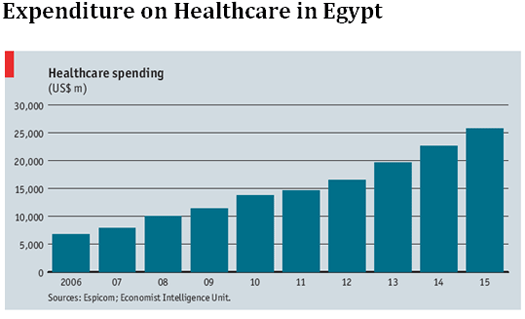
According to a study conducted by the Egyptian Ministry of Finance, the Government invited investors and businessmen to invest in the healthcare sector and allocated additional EGP 10 billion in the financial year 2011 - 2012 budget, with an increase from 3 to 10% per year over a time frame not exceeding three years.
The Egyptian Financial Supervisory Authority (FSA) prepared a study on a new draft law to supervise the healthcare companies in Egypt and organize their activities. The law includes the establishment of a senior joint consultation committee that includes representatives from the FSA and the Ministry of Health, and a representative of the healthcare sector. This committee will take in charge the establishment of regulations and working conditions for healthcare companies in Egypt, while regulating the relationship between them and the various medical bodies.
Dr. Adel Moneer, Deputy Chairman of the FSA, pointed out that the draft law will contribute in the entry of global healthcare companies to the Egyptian market, which will increase the competition and be positively reflected on Egyptian citizens.
Dr. Mohamed Rabie, former Director of the Egyptian Serum and Vaccine Center, believes that the healthcare projects in Egypt need to pump more investments, exceeding EGP 100 million per year, especially with the development of services provided by private hospitals, which started to receive middle-class patients and witnessed an increased demand during the past three years.
UAE
Spending on healthcare sector in UAE has tripled in the last five years, and the public expenditure on this sector has amounted to 2.5% of the GDP.
UAE has invested USD 2.9 billion in healthcare sector projects, contributing by 6% to non-oil GDP, says InnoVest's report. Estimates suggest that the healthcare sector will grow from USD 3.2 billion this year to AED 43.7 billion (USD 11.9 billion) by 2015.
The Cabinet had approved last October the adoption of a AED 698 million additional federal expenditure, AED 144 million of which were allocated to the Health ministry, to back up the ministry's healthcare programs and improve its medical services in hospitals.
In another report, "Cerner", a specialized supplier of complete technology systems to healthcare services providers, expected that the Emirati healthcare sector will witness a growth of AED 43.7 billion by 2015.
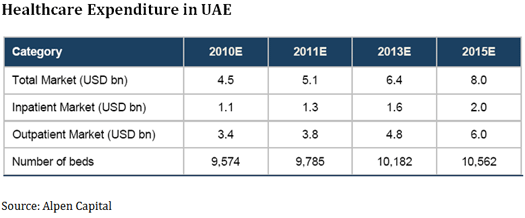
Government expenditure on healthcare insurance coverage accounts for 2.5% of the GDP, as the government spends yearly around AED 4,000 per capita for healthcare services, while the private medical sector contribution in providing healthcare insurance services accounts for 30.1%.
Mohamed Abdulkarim, National General Insurance (NGI)'s sales executive, says that insurance companies are still negotiating with hospitals and health centers that raise their treatment costs almost every year. At the end, the affected party between the two would be the customer who will have to bear the increase in insurance premiums, noting that UAE insurance premiums amount to AED 4.5 billion.
Regarding the UAE insurance market future, Mohamed Abdulkarim says that if Dubai decides to adopt the mandatory health insurance like Abu Dhabi, insurance premiums will rise significantly. If a company makes AED 100 billion a year as premium income, this amount will double.
Qatar
Qatar spends generously on its citizens' healthcare projects, health and education sectors being top priorities. Qatar's actual budget, which expires by next April, includes big allocations worth QAR 8.8 billion for the public health sector expenditure, compared to QAR 8.5 billion in last budget, increasing by 3.6%.
Public Health Minister Abdullah Al-Qahtany had said in previous statements that real expenditure on healthcare projects in 2010 reached QAR 9.5 billion (USD 2.61 billion). The following table (4) shows the development of expenditure on healthcare in Qatar by 2015.
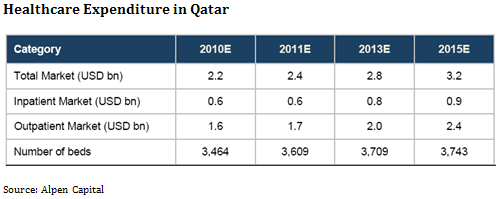
Consequently, Dr. Khaled Bin Ibrahim Al-Sleity, financial expert and former official in many public and private departments, expected that real expenditures on healthcare in Qatar will exceed QAR 10 billion (USD 2.74 billion) by the expiration of the actual financial budget. He noted that the year 2011 witnessed the inauguration of many huge health projects, the most prominent of which was Al-Wakra hospital.
Qatar spends hugely on human resources development, considered the most important and effective investment for the future, Al-Sleity added, expecting that health sector's allocations will exceed QAR 9.5 billion in the next Government's budget that will be ratified next April.
Al-Sleity noted that the government incurs a great deal of expenses every year to support the health sector and provide advanced healthcare services, free for citizens and semi-free for residents. He also added that health and education sectors will remain the keystone to develop the Qatari society, as they are to any society in the world.
Today Qatar has a variety of around 10 hospitals throughout the country, equipped with more than 4,000 beds. The Hamad Medical Corporation, considered as Qatar's health sector front, has recently managed to introduce a new automatic medical errors reporting system, making Qatar in the second country in the Middle East region and one among 7 countries in the world to implement this advanced system.
Ali Al-Janahy, business development manager at Hamad Medical Corporation, said that the corporation is working on developing its capacities in the quality development and improvement field, noting that the automatic medical errors reporting system is one of the most advanced mechanisms the corporation is implementing, and added: "This new system comes in the context of the comprehensive development that the Hamad Corporation and the Qatari health sector in general are witnessing".
Kuwait
A report published by the Kuwaiti social studies company (Skill) suggests that the government's failure was behind the flow of billions of dollars investments in establishing new and advanced private hospitals, reducing subsequently the need of treatment abroad. According to the study, Kuwait is home to 15 public and specialized hospitals, a number that has not changed since 2006 until the end of 2010. However studies are being carried out to establish a new large public hospital, thus adding to the pressure on public hospitals as the population, including residents, increased from 2.5 to 3 million.
Finance professor at Kuwait University Dr. Youssef Al-Mteiry defines the reasons for the investment growth in varied health projects, of which he mentions:
1- The patient's trust decline in public hospitalization, and the long waiting periods that last sometimes for 6 months.
2- The profits made by hospitals that started at the beginning of 2009, and the fact that they acquired a large number of international health expertise, allowing them to provide world standard health services.
3- The Government's refrain from establishing new health centers to the point that it has not built a single hospital during 4 years.
Dr. Youssof Al-Mteiry expects that investments in health projects from 2008 to the start of next year will witness a 40 to 45% growth, and a likely increase to 50%, in a trend expected to allow the Kuwaiti private health sector over the next ten years to provide healthcare to the largest percentage of patients, especially that health services are being provided today at very competitive prices, due to the great number of private hospitals.
Dr. Sameh Al-Adawi sees the importance of investing in health projects in attracting excellent medical expertise and competencies, the thing which changed the nature of treatment in Kuwait and motivated many medical university professors to come work in Kuwaiti hospitals equipped with modern technologies and offering high salaries. Dr. Al-Adawi estimates that there are more than 200 experts from Britain, Germany, Egypt and Lebanon working today in private hospitals.
Residents' treatment remains a major concern for the government. However the government adopted the health insurance project which payment is mandatory with residency renewal, which allows the resident to benefit from limited services and medicaments. However, this did not solve the problem of overcrowded hospitals, but lead to a great deterioration in public health services, says Dr. Al-Adawi.
The following writers contributed to this report:
Ayman Younes in Egypt; Samira Hoda in the UAE; Mona Ibrahim in Saudi Arabia and Mustafa Salmawi in Kuwait.
Zawya 2012