As Egypt awaits the outcome of its first democratic presidential election - to choose a successor to Hosni Mubarak - the country's banks attempt to get back on their feet following last year's uprising. BME looks at the challenges ahead...
Since the beginning of the popular uprising in Egypt in January 2011, ratings agencies have come down hard on the banking sector.
Standard & Poor's recently lowered the ratings on Egyptian banks by up to four notches and maintained a negative outlook on the country's banks.
"Egyptian banks' credit exposure to domestic sovereign debt has increased at a time when Egypt's creditworthiness has deteriorated markedly," said Standard & Poor's credit analyst Nicolas Hardy.
"Apart from sovereign credit risk, we expect that the banks will likely confront toughening operating conditions in the coming months, possibly prompting a drop in asset quality," he added.
Moody's Investors Service also said the outlook for the Egyptian banking system is negative in its Banking System Outlook report. It rates the five largest banks (National Bank of Egypt, Banque Misr, Commercial International Bank, Banque du Caire, Bank of Alexandria), which represent 50 per cent of total banking system assets, according to the Central Bank (as of Dec 2011).
Moody's said the outlook reflects:
- The high and rising exposure of local banks to the B2-rated sovereign
- The challenging operating environment, which faces heightened downside risks
- Weak capital ratios and asset-quality metrics
It added though that the negative considerations are counterbalanced by "the resilience shown to date in Egyptian banks' deposits (which account for 75 per cent of assets) during the social and political unrest."
OPERATING ENVIRONMENT
Moody's said Egypt's operating environment will remain "challenging" over the next 12-18 months, underpinned by weak economic growth prospects and a negative investment climate. "While we anticipate real GDP growth of 1.5 per cent for the fiscal year ending June 2012, growth remains below the 5.9 per cent average recorded between 2005-2010."
It added that the adverse events may further weigh on growth over the outlook horizon. "Specifically, we believe that a failure to secure a loan agreement with the International Monetary Fund (IMF) would likely trigger a loss of confidence and further weaken business sentiment."
The Government has restarted talks with the IMF and is seeking to secure a $3.2 billion loan.
In view of Government financing needs stemming from its large budget deficit (equivalent to 10 per cent of GDP in fiscal year 2012), Moody's expects the banks to further increase their already significant sovereign exposures. During 2011, Egyptian banks' Government debt holdings increased to 550 per cent of equity, from 430 per cent in December 2010, linking banks' credit profiles directly to the credit risk of the sovereign, it said.
ASSET QUALITY and CAPITAL
Moody's noted that the banks' capital levels are "weak" and stated risk-adjusted capital ratios are "overstated" due to the banks' high exposures to zero-risk-weighted Government securities. "We expect asset-quality metrics to deteriorate over our outlook horizon, with the ratio of non-performing loans (NPLs) to gross loans reaching 15-18 per cent by the end of next year.
FUNDING & LIQUIDITY
The sector is faced with increasing liquidity challenges, Moody's said, as indicated by a reduction in the banking system's core liquid assets (consisting of cash and bank placements) to 17 per cent of total assets at December 2011, down from 23 per cent a year earlier.
"The relaxing of liquidity requirements by the Central Bank in March also points to a liquidity squeeze, which stems mainly from the sovereign's increased reliance on the banking system to finance its growing deficit," the report said.
PROFITABLITY
Moody's expects profitability to be negatively affected by the challenging macro conditions. Specifically, it forecasts that higher provisioning levels will affect bottom-line profits, whilst subdued business growth will affect both interest and non-interest revenue, despite expectations of rising interest margins.
The rating agency identified the strengths and weaknesses it sees in the Egyptian banking sector:
Strengths
- The banks' deposit-funded profiles are stable and have shown resilience thus far
- Egypt is an under-banked environment with loans at around 36 per cent of GDP, thereby providing significant lending and growth opportunities for banks over the medium term
Weaknesses
- High credit exposures to the Government have made the banking system's solvency increasingly susceptible to a possible sovereign default
- The operating environment - characterised by a high degree of political instability, internal clashes between different political factions and the Government's weak fiscal position - is exerting negative pressure on business conditions
- Despite improvements during the five year period prior to Arab Spring, asset-quality ratios remain weak and material deterioration during the outlook horizon is likely
- The banking system's capital position remains weak
NEW BANK
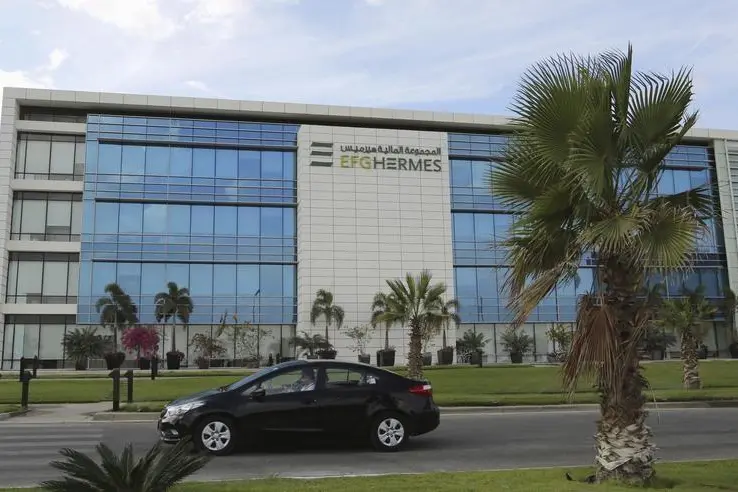
In May Egypt's EFG Hermes and Qatar's Qinvest said they had reached an agreement on the creation of a joint investment bank with operations across the Middle East, Africa, Turkey and Asia. Qinvest will hold a controlling 60 per cent stake in the new bank, which will be known as EFG Hermes Qatar.
"EFG Hermes' position as the largest provider of investment banking, asset management and brokerage services across the Arab world will be strongly complemented by Qinvest's financial strength and client base," the two banks said in a statement.
© Banker Middle East 2012